


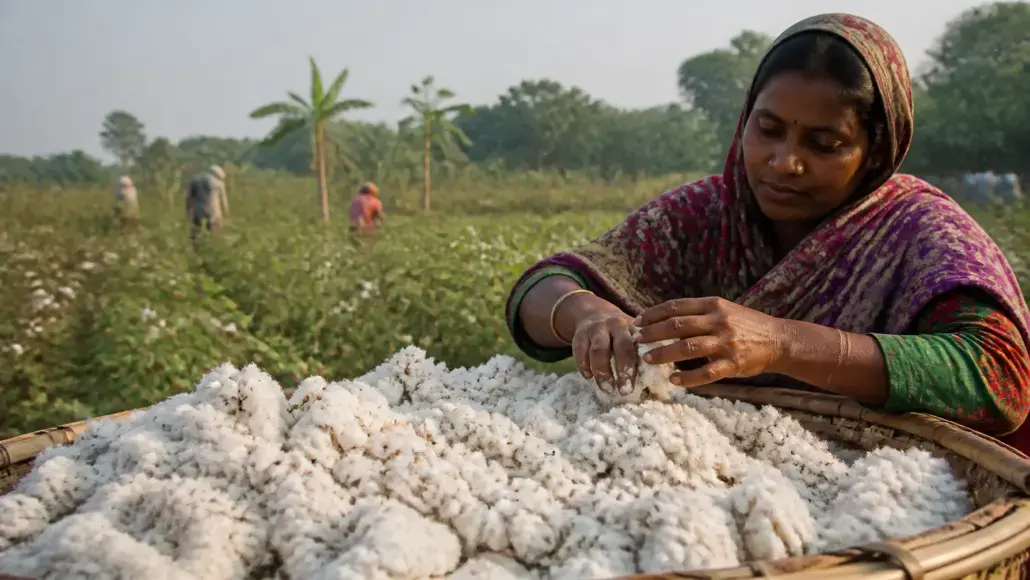
Two new cotton initiatives — one rooted in the United States, the other anchored in Bangladesh — are addressing very specific, practical barriers to more sustainable cotton sourcing. While the challenges differ in geography and scope, both efforts share a common thread: making it easier to document how cotton is grown and ensuring the fiber finds its way back into productive use. Together, they reflect a growing push across the global cotton sector to build systems that support sustainable cotton practices from farm to fabric and beyond.
Better Cotton Initiative Teams Up with FarmRaise to Ease Grower Reporting
The Better Cotton Initiative (BCI) has announced a partnership with agricultural technology company FarmRaise, aiming to significantly cut down the time and administrative effort that U.S. cotton growers currently spend on program reporting. The collaboration was formally announced and is set to roll out to growers and field-level partners participating in BCI’s U.S. program beginning January 2027, ahead of the 2027-28 cotton season.
The FarmRaise platform is built to allow growers and group managers to reuse existing farm data, while also enabling them to review and update their records on a seasonal basis. Beyond record management, the platform consolidates information on available programs, market access opportunities, evolving requirements, and key deadlines — all in one accessible location.
Ashley Barrington, senior manager of BCI’s U.S. program, explained the core problem this partnership is designed to solve: “Today, cotton growers can spend a tremendous amount of time documenting program participation and practice implementation each season. FarmRaise can give them valuable time back by streamlining that process and bringing key information together in one place.”
The announcement follows BCI’s earlier acquisition of Co:Farm, a digital platform developed to simplify farm data collection and support the adoption of regenerative practices. BCI has also recently announced its transition to a regenerative standard system, under which certified cotton producers are required to introduce improvement plans covering at least three of six designated areas: soil health, biodiversity and natural habitats, water management, pesticide use, fertilizer application, and livestock practices.
FarmRaise is specifically intended to support growers in documenting the implementation of these regenerative agriculture practices. Todd Straley, CEO of Quarterway Cotton Growers — a Texas-based BCI partner — captured the perspective of growers on the ground: “For producers, regenerative agriculture starts with what makes sense on the farm, not with paperwork.”
According to BCI, its licensed U.S. growers produced more than 330,000 metric tons of BCI cotton during the 2024-25 season, underscoring the scale at which this streamlined reporting solution will eventually operate.
Cotton Loop Bangladesh Expands the Sustainable Cotton Conversation Beyond the Farm
While BCI’s U.S. initiative focuses on what happens at the farm level, a parallel effort in Bangladesh is pushing the concept of sustainable cotton sourcing further along the supply chain — into textile waste recovery and recycling.
The Cotton Loop Bangladesh Impact Cluster project formally launched in Dhaka on November 4, with the three-year initiative led by Raddis Cotton and funded by the Netherlands Enterprise Agency, known as RVO. The consortium bringing this project to life includes Zeeman, Company Fits, Common Era, Avans University of Applied Sciences, and Reverse Resources, with Advance Consulting and Clean & Unique serving in advisory roles. The project is scheduled to run through September 2029.
At its core, the initiative is designed to connect regenerative cotton cultivation with the practical recovery and recycling of textile waste. Specifically, it will test the recovery of factory cutting waste and used garments across two recycling cycles, with the goal of retaining the cotton’s commercial value throughout the process.
Reverse Resources, one of the consortium partners, confirmed that four factories within Zeeman’s supplier network have already joined the pilot program. Site visits have been completed, and existing cutting-waste flows have been mapped to establish a working baseline. As part of the pilot, participating factories will be required to keep cotton cutting scraps separate and record quantities on a fortnightly basis.
Reverse Resources’ responsibilities within the project span sorting protocols, on-site training, and digital traceability — tracking material movement from cutting tables through to recyclers across both recycling cycles. As the organization described in a LinkedIn post on the pilot: “What changes is who buys it — a handler who is compliant, trained and traceable.”
Together, these two developments — BCI’s FarmRaise integration in the United States and the Cotton Loop Bangladesh project — highlight how the textile industry is approaching sustainable cotton sourcing from multiple directions simultaneously. One effort is simplifying the documentation burden for farmers committed to regenerative agriculture; the other is extending the life of cotton fiber through traceable textile waste recycling. Both are grounded in the same underlying need: making responsible cotton production more practical, more measurable, and more commercially viable.