


![Row of white conical filter cartridges hanging in an industrial filtration system.]","altTexts":["Row of white conical filter cartridges hanging in an industrial filtration system."]}[]} Wait formatting wrong. Let's provide proper JSON. We must only output the JSON object.](https://www.globaltextiletimes.com/wp-content/uploads/2026/10/Parkdale_CiCLO_Acquisition_Yarn_Manufacturing-1024x683-1-218x150.webp "Parkdale Advanced Materials Acquires Full Ownership of Ciclo Technology")























Argentina’s textile manufacturing sector is grappling with a crisis that goes far beyond a temporary market slowdown. As of October 2026, industry output has declined by more than 22% compared to the same period last year — a fall that points unmistakably to deep structural issues rooted in the condition and utilization of fixed assets, rather than short-term demand fluctuations.
The Machinery Problem at the Core
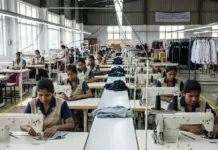
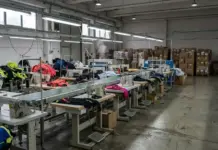
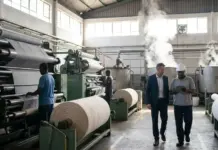
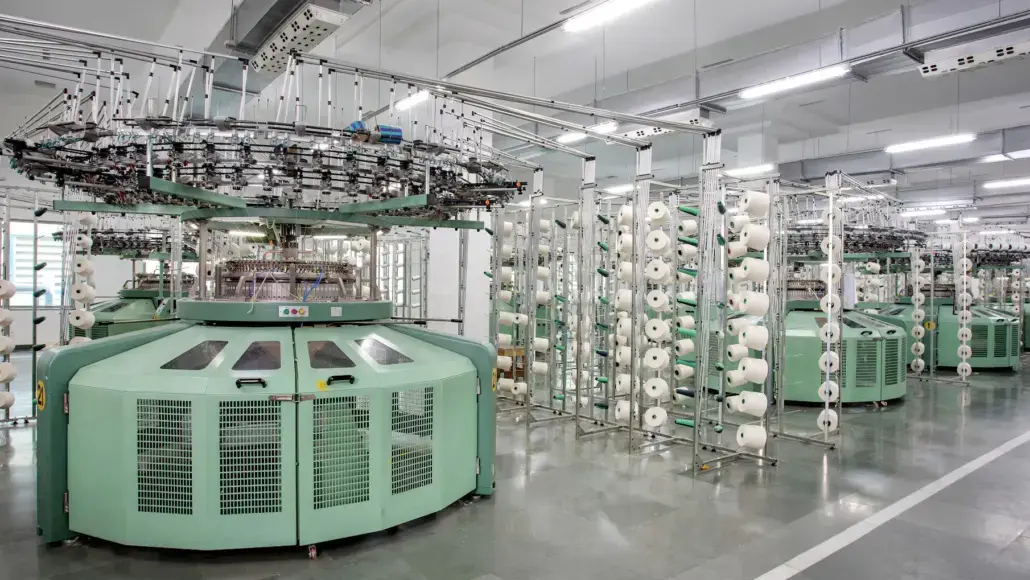
The most telling indicator of this capacity crisis is the utilization rate of existing equipment. In six out of every ten textile plants across the country, the majority of machinery remains idle. These machines are physically present on factory floors but are generating no economic value. This stark disconnect between installed capacity and actual production underscores a troubling reality: the Argentina textile industry’s theoretical output potential far exceeds the effective demand from either domestic or export markets. Alternatively, operational costs and a severe shortage of orders have rendered running this equipment financially unviable.
The machinery utilization gap has become one of the defining metrics of the sector’s current condition. Rather than being a reflection of planned maintenance or scheduled upgrades, idle equipment now signals a prolonged and deepening operational paralysis.
Shifting Production Logic
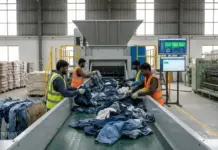
The operational consequences of this production output reduction are reshaping how facilities function at a fundamental level. Rather than expanding shift hours or maximizing line loads, plants are moving toward consolidation. Sections of production complexes are being placed into reserve, while logistics operations and human resources are being restructured to align with actual activity levels rather than projected capacities.
For companies across the textile manufacturing sector, this translates into halted production cycles, a push to identify new sales channels, revisions to product assortments, and efforts to lower unit costs through automation of the remaining active lines. The industry is no longer thinking in terms of growth — it is thinking in terms of survival and cost containment.
Investment Plans vs. Market Realities
There is now a visible and widening gap between announced investment plans and the realities on the ground. With a significant portion of the machinery fleet sitting in standby mode, the conversation has shifted entirely away from capacity expansion. The focus is now on maintaining the viability of existing production loops.
In this environment, industrial stagnation has redefined what efficiency means for the sector. It is no longer measured by the volume of installed technology or the scale of production infrastructure. Instead, efficiency is now judged by the ability to generate sufficient cash flow to sustain the approximately 40% of equipment that remains operational.
Conservation Mode Takes Hold
The Argentina textile industry has entered what can best be described as a conservation phase. Minimizing fixed costs has taken clear precedence over increasing output volumes. The sector is not in a position of managed decline with a clear recovery path in sight — it is in active preservation mode, where every operational decision is driven by the need to keep remaining productive capacity viable for as long as possible.
This structural industrial stagnation reflects a broader challenge: the gap between what the industry was built to produce and what the current market will absorb has grown too large to bridge through conventional adjustments alone. Whether through deeper automation, market diversification, or structural reform, the path forward will require more than incremental responses to what is now a systemic issue within textile manufacturing in Argentina.

