


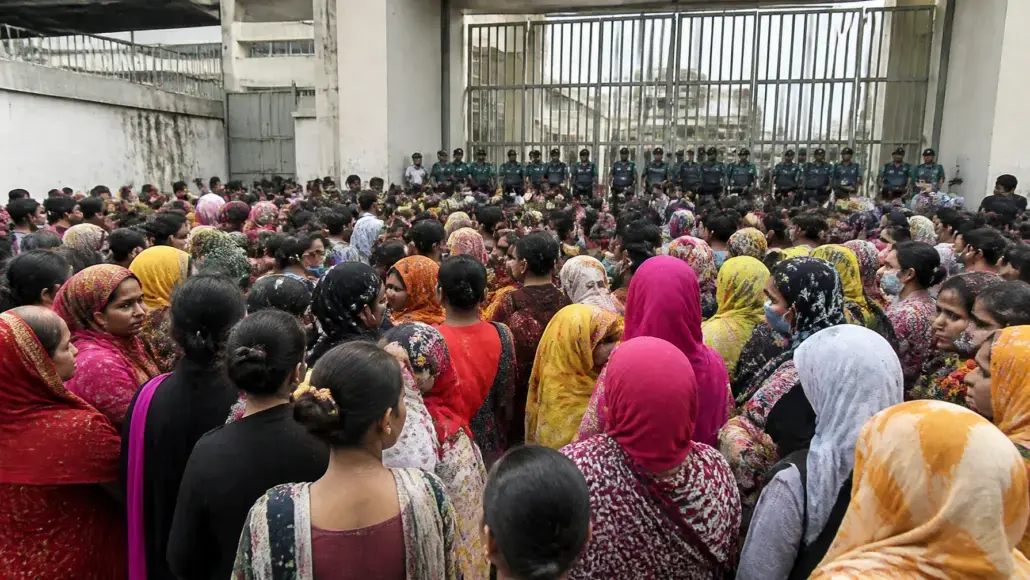
Bangladesh’s textile industry has ground to a near halt as thousands of garment workers across the country walk off production floors, refusing to accept a proposed 25% wage increase that they say falls far short of what is needed to keep pace with the country’s rising cost of living.
The unrest has spread rapidly through major garment manufacturing hubs, leaving factories idle and raising serious concerns among industry stakeholders about the near-term stability of one of the world’s most important apparel supply chains. Bangladesh textile workers have made it clear that the offer on the table is insufficient and that they are prepared to continue their protests until a more substantial revision is made.
The Wage Dispute at the Core of the Crisis
The Bangladesh Garment Manufacturers and Exporters Association had put forward a proposal to raise the monthly minimum wage for garment workers by 25%, a figure the industry body presented as a meaningful step toward addressing worker grievances. However, Bangladesh textile workers have overwhelmingly rejected this proposal, arguing that the increase does not adequately reflect the sharp rise in food prices, transportation costs, and overall household expenses that workers have been absorbing over recent months.
Workers have been demanding a significantly higher minimum wage, with many calling for a monthly salary that would better align with actual living conditions in the country. The gap between what manufacturers have offered and what workers are demanding remains wide, and that distance is at the heart of the ongoing standstill gripping the Bangladesh textile industry.
Factory Closures and Production Disruptions
The scale of the disruption has been considerable. Factories across key industrial areas have been forced to suspend operations as workers gather outside gates, refusing to return to work under the current wage framework. Some facilities have reported damage during the course of the protests, adding another layer of concern for factory owners who are already navigating tight margins and global order pressures.
The Bangladesh garment sector supplies clothing to some of the world’s largest retail and fashion brands, making the current disruption a matter of global supply chain concern. Buyers and brands sourcing from Bangladesh are closely watching the situation, aware that prolonged unrest could affect delivery timelines and production volumes.
Government and Industry Response
Authorities have been engaged in attempts to mediate between worker groups and factory owners. The government convened discussions involving representatives from both sides, seeking to find a resolution that could bring Bangladesh textile workers back to the production floor while also remaining viable for manufacturers operating in a highly competitive export environment.
Despite these efforts, a firm agreement had not been reached at the time of reporting, and the standstill in the Bangladesh textile industry continued. The minimum wage Bangladesh garment workers are entitled to has remained a contentious issue for years, with periodic rounds of negotiation producing agreements that worker advocates have consistently argued lag behind real-world economic conditions.
A Sector Under Pressure
The Bangladesh garment sector is the country’s largest export industry and a critical source of employment, particularly for women in both urban and peri-urban areas. The sector’s contribution to national export earnings makes it a cornerstone of the broader economy, which is why the current wave of unrest has drawn attention at the highest levels of government and industry.
The textile factory strike activity seen in recent weeks is not an isolated event but part of a longer pattern of tension around wages, working conditions, and the pace at which compensation has kept up with economic realities on the ground. Bangladesh textile workers have staged similar actions in previous years, and each cycle has reignited the broader debate about how sustainable wage structures can be established within a globally competitive manufacturing environment.
The outcome of the current standstill will carry significant weight, both for the livelihoods of the workers involved and for the future operational landscape of the Bangladesh textile industry.