
























The Asian Development Bank (ADB) and Modern Syntex Limited (MSL) have formally signed a $50 million loan agreement aimed at expanding MSL’s energy-efficient polyester chips manufacturing facility in Bangladesh. The agreement marks a direct investment into one of the country’s most critical industrial sectors — its textile and ready-made garment industry.
Expanding Production Capacity and Reducing Import Dependence
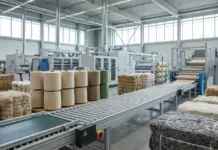
Under the terms of the ADB Modern Syntex loan, the financing will support MSL in scaling up its polyester chips production capacity from 107 tonnes to 407 tonnes per day — nearly a fourfold increase. A portion of the funds will also be used to refinance existing short-term local working capital loans.
The expanded facility is designed to manufacture high-intrinsic-viscosity polyester chips, which are used in higher-value textile and apparel products. By increasing the domestic supply of polyester chips in Bangladesh, the project is expected to reduce the textile sector’s heavy reliance on imported synthetic inputs, shorten lead times, and improve overall manufacturing efficiency for local textile producers.
MSL Managing Director Abu Sufian Chowdhury stated: “We greatly value ADB’s support as it enables MSL to significantly expand polyester chips production, strengthen local supply chains, and reduce dependence on imported inputs. By investing in advanced energy-efficient technology, we are improving our competitiveness while supporting a more sustainable textile industry.”
Energy Efficiency and Environmental Commitments
The project will introduce advanced energy-efficient machinery expected to generate measurable environmental benefits. Specifically, the new equipment is projected to save approximately 4,840 megawatt-hours of electricity and reduce around 2,222 tonnes of carbon dioxide equivalent emissions annually. The initiative will also support MSL’s pursuit of Leadership in Energy and Environmental Design (LEED) Platinum certification for its building and factory — reflecting a clear commitment to sustainable industrial practices within the Bangladesh textile industry.
Strengthening Bangladesh’s Textile Value Chain
Bangladesh’s textile and ready-made garment sector remains one of the primary engines of the national economy. However, as ADB Country Director for Bangladesh Qingfeng Zhang highlighted, the industry continues to depend heavily on imported synthetic inputs — a structural challenge that this project directly addresses.
Zhang said: “ADB’s long-term financing will help MSL expand efficient domestic production, deepen backward linkages, strengthen supply chains and support higher-value textile manufacturing.”
The ADB Modern Syntex loan is expected to contribute meaningfully to the development of the Mirsarai Economic Zone in Chattogram, where MSL operates Bangladesh’s first continuous polymerisation facility. The zone benefits from close proximity to major port and logistics infrastructure, positioning it as a strategically important hub for industrial growth.
Job Creation and Inclusive Workforce Practices
Beyond production and environmental gains, the project is expected to create approximately 100 new jobs and promote greater participation of women through inclusive recruitment practices — adding a social dimension to the economic and environmental objectives of the investment.
MSL’s Industrial Footprint in Bangladesh
MSL is part of the T.K. Group and is the operator of Bangladesh’s pioneering continuous polymerisation facility located at the Mirsarai Economic Zone in Chattogram. The company manufactures polyester chips, synthetic yarn, and fibre, catering primarily to domestic textile manufacturers within the Bangladesh textile industry.
The project’s broader outcomes are also expected to support Bangladesh’s national efforts to attract investment, generate employment, and enhance the country’s economic competitiveness — all anchored by the expansion of energy-efficient manufacturing capabilities under the ADB Modern Syntex loan agreement.