







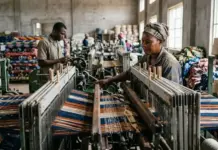




















Fashion for Good has launched the Cotton Reloop Matrix Project, a structured industry initiative designed to unlock commercial-scale adoption of recycled cotton across global supply chains. The project brings together a coalition of leading brands, manufacturers, and technical specialists to address the persistent data gaps and fragmented testing that have held the sector back.
The initiative unites Arvind, Bestseller, C&A, Interloop, Reformation, Shahi, and spinning technology expert Uster under the Fashion for Good partnership framework. Together, the coalition will assess how mechanically recycled cotton yarns align with the specific quality requirements of participating brands, directly responding to what Fashion for Good has described as “fragmented data and siloed testing” across the industry.
A Structured, Two-Track Approach
The Cotton Reloop Matrix project is designed around two parallel tracks that move from data gathering to on-the-ground production trials.
Track One: Quality Mapping
The first track focuses on mapping recycler output against brand demands across both knit and woven product categories. This work will generate a Quality Matrix — a practical tool to identify precisely where recycled cotton content meets existing market expectations and where further development is required.
Track Two: Practical Production Trials
The second track transitions into hands-on trials, where selected recyclers, working alongside project partners, will produce ten demonstration fabrics and carry out five focused trials aimed at quality enhancement during production. These trials are expected to produce a Trade-off Analysis that highlights the relationship between recycled content levels, production cost, and overall quality outcomes.
Open-Source Standards and a Sector Roadmap
Upon completion of the trial phase, the project will document its findings in an open-source Standard Operating Procedure (SOP). This resource is intended to help standardise spinning processes across global supply chains and make the learnings broadly accessible to the wider industry.
The Cotton Reloop Matrix project will conclude with the publication of a roadmap outlining the data infrastructure required to support broader adoption of recycled cotton across product ranges and regions.
Why This Matters: The Recycled Cotton Challenge
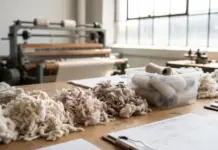
Cotton currently accounts for 19% of global fibre production. However, introducing higher percentages of recycled cotton into yarn blends remains technically challenging. The mechanical recycling process — which involves shredding and reprocessing cotton-rich textile waste — results in significant fibre loss and yields shorter, weaker fibres compared to virgin cotton.
As a consequence, most commercially produced yarns are currently limited to incorporating approximately 10% recycled content before durability is noticeably compromised. This ceiling has been a key barrier to scaling recycled cotton as a mainstream material option.
The initiative calls on brands to adopt a “fit for purpose” approach when evaluating recycled cotton blends, rather than benchmarking them exclusively against the performance standards of virgin cotton.
Industry Leadership Driving the Agenda
Fashion for Good Managing Director Katrin Ley spoke directly to the commercial intent behind the project: “Recycled cotton has been talked about as a scale-ready solution for years, but the industry has been working from fragmented data and siloed testing. This project is about closing that gap with hard evidence. By plotting real recycler capabilities against real brand quality targets, and by co-developing the operational standards to support them, we can move recycled cotton from a case-by-case experiment to a category the industry can actually plan around.”
The Cotton Reloop Matrix project represents a collective effort to move beyond isolated experiments and lay the groundwork for recycled cotton to become a category the broader industry can reliably plan around and integrate at scale.

