


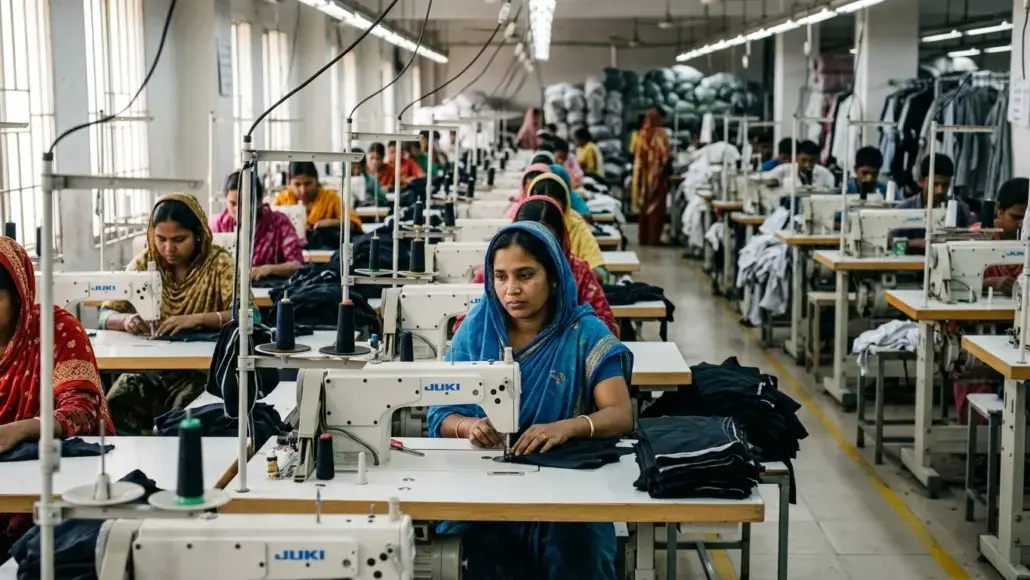
The arrest of two prominent trade union leaders in Bangladesh has drawn sharp condemnation from major international apparel industry bodies, raising serious concerns over worker rights and the country’s standing as a global garment sourcing destination.
Sultana Begum and MD Elias, both senior officials of the Green Bangla Garments Workers Federation (GBGWF), were reportedly detained this week after participating in an online webinar focused on garment workers’ calls for a revised minimum wage. Begum serves as president of the GBGWF — a woman-led federation representing more than 65,000 Bangladesh garment workers — while Elias holds the position of general secretary within the organisation.
Industry Bodies Demand Immediate Release
The American Apparel and Footwear Association (AAFA) and the Fair Labor Association (FLA) have jointly called for the immediate release of both union officials, warning that their detention undermines ongoing wage negotiations and threatens Bangladesh’s reputation as a responsible sourcing partner.
“We have urged an expedient and peaceful negotiation of a fair minimum wage. The arrest and detention of these union officials severely disrupt that process and damage the reputation of Bangladesh as a responsible sourcing partner,” AAFA and FLA stated in a shared release.
The two organisations further urged the Bangladeshi government to uphold the rights of workers and trade unions to freedom of association, particularly during the ongoing minimum wage review. “We unequivocally condemn violence, threats, and intimidation against workers and union officials. We urge the government and all parties to publicly join us in this condemnation, both during the minimum wage review and after,” the statement added.
Workers Demand Significant Wage Increase
The Bangladesh garment wage dispute escalated in late October when workers began widespread protests over the country’s existing minimum wage structure. Garment workers have been demanding a monthly minimum wage of BDT 32,000 (approximately $250), a substantial increase from the current rate of BDT 13,000 (approximately $105) per month.
In response to growing unrest, the government announced the formation of a new Minimum Wage Board, which had been scheduled to convene in Dhaka on 16 November for further discussions. However, local reports indicate the meeting was postponed with little explanation provided to stakeholders.
Adding to concerns around the Bangladesh garment wage dispute, The Times of Bangladesh reported that employers are considering proposing a monthly minimum wage of BDT 14,000 — less than half of what union leaders and workers have demanded.
International Pressure Mounts on Fashion Brands
The Clean Clothes Campaign has separately called on international fashion brands that source from Bangladesh to take a public stand in support of workers’ demands. The campaign is urging these brands to openly back the call for a BDT 32,000 minimum wage and to commit to absorbing higher costs through their future purchasing prices.
The unfolding situation places renewed scrutiny on trade union arrest practices in Bangladesh and on the broader question of worker rights within one of the world’s largest garment manufacturing economies. With negotiations stalled and union leaders behind bars, the path toward a resolution in the Bangladesh garment wage dispute remains uncertain.

