


A new research study tracking discarded textiles from across the Nordic region has shed light on the complex and often opaque journeys that used garments take once they leave collection points — travelling through European sorting hubs and, in many cases, reaching markets as far away as Mozambique, India, and Nigeria.
The findings, produced by sustainability consultancy Eunomia Research & Consulting Ltd in collaboration with Norwegian consultancy Mepex, are based on 200 digital trackers placed in discarded textiles collected from Denmark, Finland, Iceland, Norway and Sweden. The research reveals supply chain information that is rarely visible through conventional trade data alone.
Where Nordic Textile Waste Actually Ends Up
Of all the tracked garments, 71% were last recorded within Europe, with Poland accounting for the largest share at 30%, followed by Slovakia at 18%. Overall, 66% of garments had a recorded endpoint within the EU or the European Economic Area (EEA), while the remaining 34% ended up outside these borders.
Beyond Europe, tracked garments were redistributed to reuse and recycling markets across Asia-Pacific (18%), Africa (9%), and the Middle East (3%). Some garments were found to have reached second-hand clothing markets in countries such as Nigeria, where textile imports are officially prohibited.
The research makes clear that trade statistics typically capture only the first destination of exported textiles — not where those garments ultimately end up. Traceability was found to decline significantly beyond the first sorting stage, creating a substantial information gap across the used textile exports supply chain.
The Role of European Sorting Hubs in Nordic Textile Exports
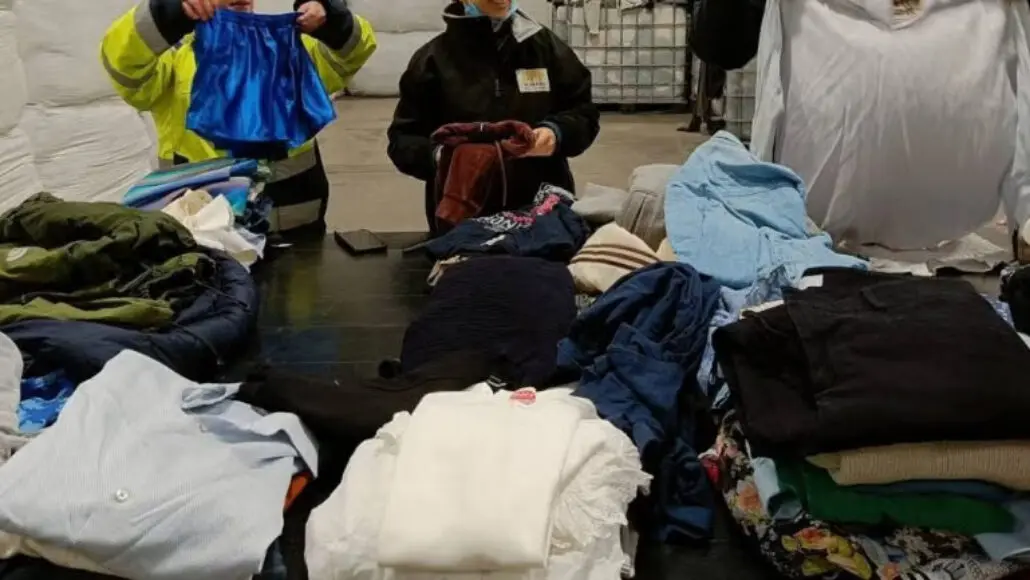
High labour costs across the Nordic countries mean that most textiles are exported unsorted, primarily to European nations with established sorting industries. These include Poland, Slovakia, Lithuania, Bulgaria, Estonia, and Germany, all of which have developed specialist expertise and grading processes to assess garments and determine the most appropriate onward destination — whether for reuse, repair, remanufacturing, or recycling.
European sorting hubs are described in the research as playing a central role within the global used textiles value chain, acting as gatekeepers that channel garments toward their next lifecycle phase. However, Nordic textile waste flows reveal that the sector still relies heavily on non-European markets to manage its lowest-grade textiles and recycling streams.
Regulatory Changes and the Traceability Challenge
The research arrives at a moment when the European textile sector is navigating significant regulatory change. Upcoming and recently introduced measures — including the Ecodesign for Sustainable Products Regulation (ESPR), revisions to the Waste Framework Directive requiring separate textile collection, and the introduction of Extended Producer Responsibility (EPR) — are expected to substantially increase the volume of used textiles entering the supply chain.
However, the research notes that a growing proportion of this material is likely to be lower quality, in part due to the proliferation of ultra-fast fashion, making it less suitable for reuse after its first life. This combination of higher collection volumes and declining material quality places added pressure on sorting and reprocessing infrastructure, while also intensifying questions around textile traceability.
The report states that existing gaps in traceability have important implications for the EU textile value chain as it adapts to new requirements on waste exports and extended producer responsibility. Improving visibility across the full journey of a garment — not just its first stop — is increasingly being recognised as essential for building a credible circular textile system.
Implications for the UK Textile Sector
Vita Ellis, sustainability consultant at Eunomia Research & Consulting Ltd, highlighted the relevance of these findings for the United Kingdom, noting that better traceability is becoming a business necessity and not simply a regulatory requirement. She pointed out that this applies to UK brands and retailers selling into the EU, who will need to comply with textile EPR schemes in those markets.
Ellis further noted that traceability alone will not create a circular textile system. As collection volumes increase and product quality declines, improving the quality and durability of textiles is becoming just as important as improving collection rates.
She also noted that with textile EPR legislation yet to be introduced in the UK, there is an opportunity for the country to learn from what the Nordic countries are currently experiencing — before the same challenges arrive domestically.
The research underlines a fundamental question facing the broader European textile sector: where will growing volumes of used textiles be sorted and reprocessed in the future? For now, used textile exports from Nordic countries continue to flow through a supply chain that, beyond its first node, remains largely invisible.