

















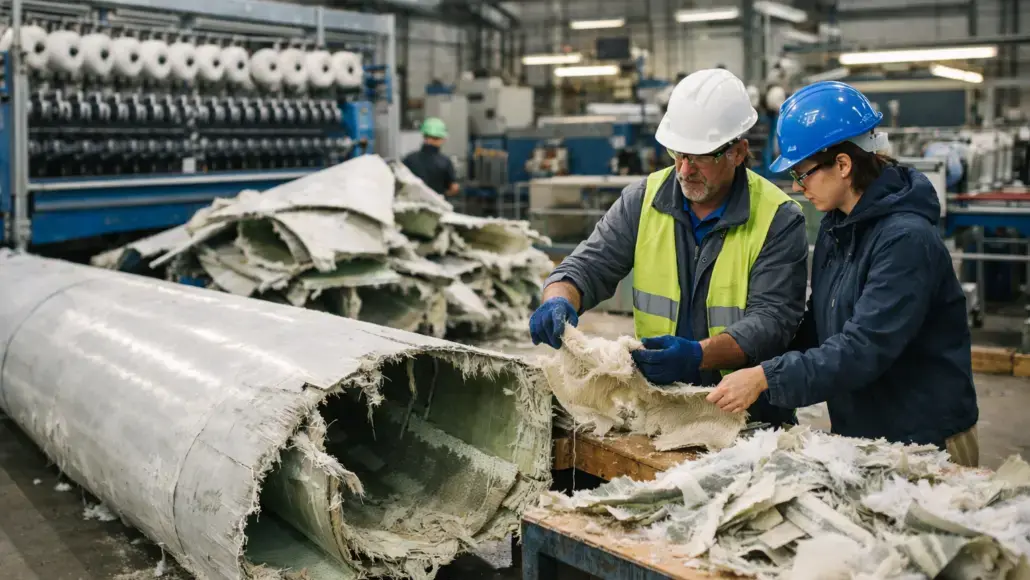
Starting in 2026, the wind energy sector in Europe has formally committed to a sustainable decommissioning strategy, ensuring that decommissioned blades are diverted from landfills. Central to this transition is the REWIND project, an EU-funded initiative focused on the circular economy. This project involves a consortium of 13 partners across seven nations, including the German Institutes of Textile and Fiber Research Denkendorf (DITF), who are collaborating to refine the dismantling and repurposing of composite materials.
Innovations in the Processing of Composite Materials
The consortium has successfully validated a predictive model that determines the mechanical behavior of recovered materials with a high degree of precision, exceeding 90% accuracy. This technical milestone ensures that the outputs of wind turbine blade recycling are high-quality and suitable for rigorous industrial applications, including the production of insulation and components for electric vehicles. By transforming these end-of-life systems into valuable resources, the project effectively reduces the environmental footprint of the renewable energy sector.
Development of Advanced Textile Reinforcement
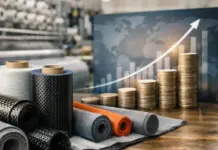
At the DITF, research efforts are concentrated on converting recycled glass fibers and carbon fibers into functional yarns and fabrics. These materials serve as the foundation for new industrial components or specialized repair kits for active wind turbines. The researchers have established two distinct processing pathways to maximize the utility of the recovered fibers.
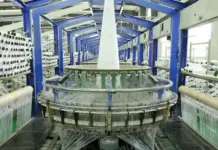
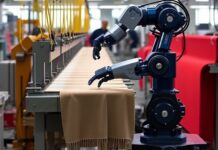
In the primary process route, recycled glass fibers are transformed into high-value textile reinforcement. The fibers undergo a sequence of pre-opening, carding, and spinning to create yarns, which are then integrated into fabrics with specific structural reinforcements. A significant development in this area is a yarn composed of recycled glass fibers and polyamide-6, featuring a fiber volume content of approximately 40%. This material is specifically designed for thermoplastic applications within automotive engineering.
Furthermore, the DITF team has produced a specialized yarn containing 98% recycled glass fibers. This yarn has been used to create a unidirectional (UD) fabric with parallel fiber orientation. This achievement represents the first time that specifically oriented textile reinforcement structures have been manufactured from recycled glass fibers to meet precise mechanical load requirements.
Investigation of Long-Fiber Delamination Tapes
The secondary process route focuses on long-fiber delamination (LFD) tapes, which are harvested directly from wind turbine blades. These tapes are a novel category of semi-finished products made from fully cured, recycled glass-fiber-reinforced plastic. Current investigations are focused on assessing how these intermediate products can function as high-performance reinforcement structures within various composite materials, further supporting the goals of a circular economy.