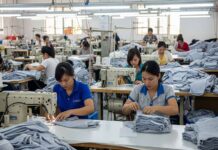




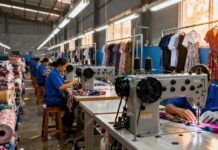




















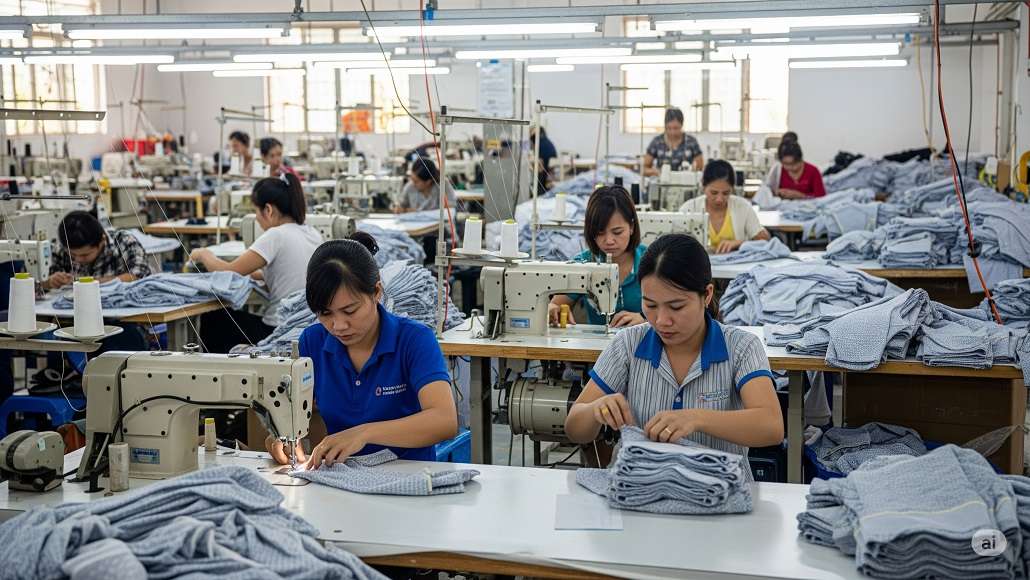
Worker conditions across the garment and footwear industry were placed firmly on the agenda in Seoul last month, as leaders from South Korea’s textile and fashion sectors met Christine Svarer, executive director of Reimagining Industry to Support Equality (RISE). The discussions reflected growing concern that long-standing labour models—built around low wages and limited worker leverage—are becoming harder to sustain as brands, manufacturers and policymakers link worker wellbeing in supply chains more directly to resilience and performance.
At a roundtable hosted by the Korea Federation of Textile Industries on 26 March, Svarer urged the industry to confront structural challenges that continue to shape employment across apparel and footwear. The sector employs roughly 60 million people globally, including around 45 million in Asia, and remains heavily dependent on female labour—often in roles with constrained progression and limited protections.
“Treating workers as the cheapest and most easily replaceable input is no longer tenable. People remain the most valuable asset in the garment industry,” Svarer said.
She argued that while pressures such as low pay, long hours and restricted opportunity are not new, the difference now is the scale and intensity of the strain, and the extent to which it is being recognised as a business risk. In her view, there is a “growing recognition” that the way workers are treated is no longer a standalone ethical issue, but a factor that can influence quality, delivery reliability, turnover and long-term supplier viability—key components of worker wellbeing in supply chains.
RISE, founded in 2023, was created to consolidate and scale existing worker-focused programmes into a more coordinated model for systemic change. The initiative brings together BSR’s HERproject, Gap’s P.A.C.E., CARE and Better Work, and has reached more than one million workers across 10 countries. While it is designed to foreground the needs of women, RISE says the benefits extend across entire workplaces through improved systems, training and management practices.
During the Seoul meetings, Svarer pointed to digital wage payments as one practical intervention that can produce measurable outcomes for both factories and employees. She said digital payments can deliver efficiency gains of at least 50%, while also supporting reduced staff turnover and stronger productivity—alongside improved trust between workers and management.
Svarer also outlined three priorities she described as “deeply interconnected”: financial health, safe and respectful workplaces, and climate resilience. She argued that progress depends on addressing these areas together rather than treating them as separate corporate responsibility workstreams.
The discussions also highlighted a shift in influence within global manufacturing networks. Korean producers manage substantial operations across Asia and Central America, employing hundreds of thousands of workers—giving manufacturers a larger role in setting and enforcing labour practices.
“Supplier voices have too often been absent from these conversations,” Svarer said, adding that bringing manufacturers into governance is critical because they “actually run factories and have a responsibility to look after their workforces.”
ShinWon Corporation was cited as an example of a manufacturer expanding worker-support initiatives. The company operates 25 entities in 10 countries, employs more than 30,000 people and sits on RISE’s steering board. Its compliance and wellbeing programmes include financial literacy training and savings support, and its vertically integrated structure was presented as a mechanism for extending initiatives into earlier, less-visible tiers of the supply chain.
Svarer concluded that manufacturers’ proximity to workers brings both leverage and accountability. As expectations evolve, she suggested the industry’s competitive edge will increasingly be shaped by whether factories and brands can deliver stable, safer workplaces—treating labour not as a cost to minimise, but as a resource to protect.