


























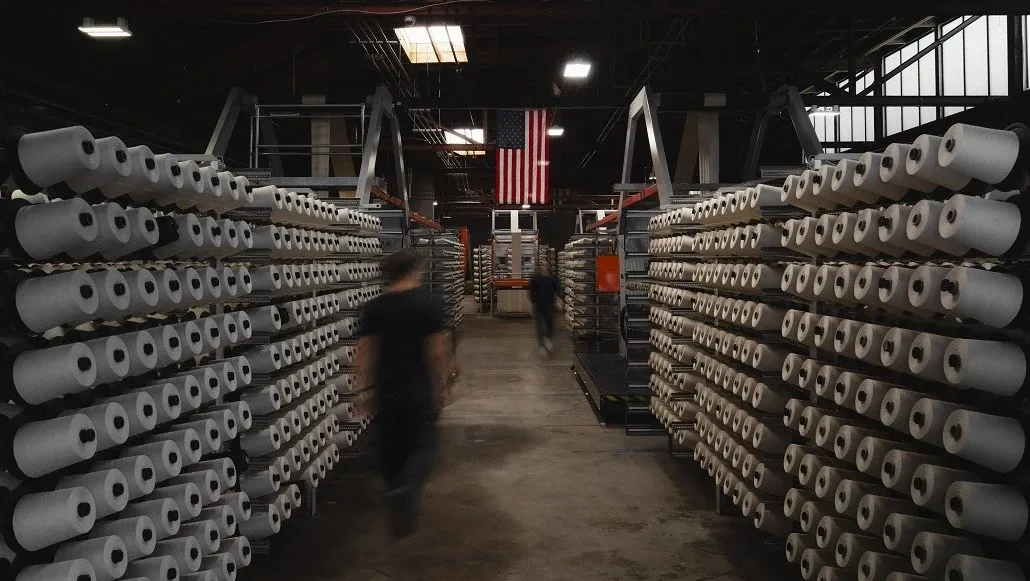
unspun is moving closer to commercial deployment of its automated manufacturing technology in the United States after securing support from major brands and industrial partners, including Walmart. The company said it has signed arrangements—structured as letters of support—with a group of backers as it advances plans to establish AI-enabled weaving facilities designed to produce garments domestically at scale.
The initiative centres on unspun’s AI-enabled 3D weaving platform, which the company says can manufacture garments directly from yarn in minutes. By consolidating what are traditionally dozens of cut-and-sew steps into a single automated workflow, unspun argues it can dramatically shorten lead times and make US-based apparel production more responsive to real demand.
Walmart is among the brands endorsing the plan. Supply chain partners Bethel Industries, Peckham and PDS Limited have also signed on to help enable the build-out, as unspun assesses what it needs to launch its first production sites. The company said initial output is “on the near-term horizon,” though it remains in the site-selection and planning phase.
CEO Arne Arens framed the project as an execution push rather than a theoretical experiment in reshoring. “We are not exploring whether domestic apparel manufacturing can work. We are building it,” explained Arne Arens, CEO at unspun. “Our clients are looking for a new production model because they see the economics: manufacturing closer to the customer, responding to demand within the same season, and creating skilled American jobs in the process.”
unspun has raised more than $50 million in venture capital to develop its 3D weaving approach. The company’s pitch to brands is that ultra-short production cycles can unlock a different retail operating model—one where products can be replenished within the same season, reducing the likelihood of overbuying and the markdown-heavy clean-up that often follows.
According to unspun, AI-enabled 3D weaving could improve gross margins by 400 to 500 basis points, largely by cutting excess inventory and limiting the write-offs that hit when demand forecasts miss. The promise is not only faster manufacturing, but a shift toward demand-led ordering that aligns production more tightly with what customers actually purchase.
Walmart’s endorsement builds on prior work with the company. The retailer previously collaborated with unspun on a pilot that produced workwear chinos using the 3D weaving system, an effort aligned with Walmart’s broader initiatives around renewable energy and emissions reduction within its supply chain.
Avisnash Bhasker, Vice President, Apparel Production Development at Walmart, said, “Our customers are proud to buy apparel made in America, and the demand keeps growing. We are excited about Unspun’s commitment and effort in helping rebuild domestic manufacturing capability that is faster, smarter, and designed for how customers actually shop.”
For now, unspun said it is continuing to evaluate potential US locations, infrastructure needs and workforce training programmes—practical requirements that will determine how quickly the first facilities can move from planning into operation.

