




























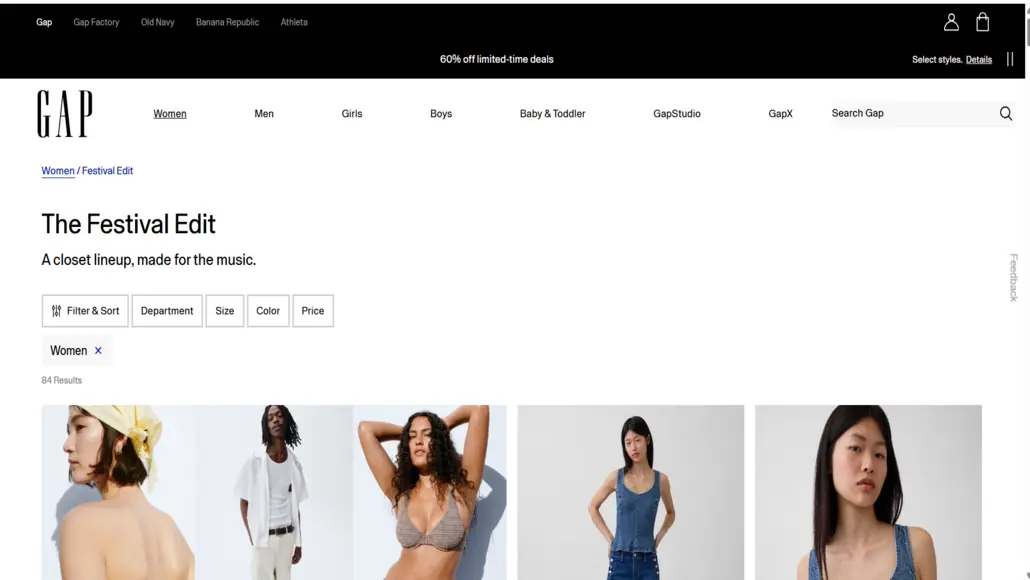
Gap is expanding its use of AI in e-commerce, rolling out new capabilities from Bold Metrics and Google to make digital apparel shopping more accurate and easier to complete. The retailer said it is introducing personalised fit guidance through Bold Metrics’ Agent Sizing Protocol and adopting Google’s new Universal Commerce Protocol (UCP), a move intended to support transactions inside AI-driven interfaces and accelerate the shift toward conversational shopping.
The company is positioning the rollout as part of a broader rebuild of its digital foundation. Using unified data on Google Cloud alongside AI-ready architecture and governance controls, Gap said it is embedding AI across customer journeys and internal workflows. The objective, it said, is to make intelligence a core part of its operating model rather than a bolt-on feature.
Gap chief technology officer Sven Gerjets said the focus is practical outcomes rather than novelty. “We are not pursuing AI for novelty. These partnerships are about solving real customer problems – helping shoppers feel confident about fit and making it easier to complete a purchase. They also reflect the holistic AI strategy we’ve built to scale intelligence across the enterprise in a disciplined way that drives measurable value over time.”
Sizing is a persistent friction point in online apparel, and Gap is targeting that directly by integrating Bold Metrics’ predictive fit technology into its AI-driven shopping flows. Instead of directing customers to static size charts, the system is designed to deliver personalised size recommendations within live, conversational interactions—placing fit guidance inside the purchase path rather than outside it. Gap said the intent is to make sizing advice an always-on component of the transaction experience and a key enabler for conversational shopping.
Alongside fit personalisation, Gap is preparing for discovery and checkout to happen increasingly inside AI-powered environments. By supporting Google’s Universal Commerce Protocol, the retailer aims to keep product listings accurate and transaction-ready within services such as AI Mode in Google Search and the Gemini app. In practice, this could allow customers to complete purchases directly from these interfaces, shortening the distance between finding an item and paying for it.
Gap said the pairing of predictive sizing and AI-native commerce should “reduce friction” both in size selection and at checkout, improving confidence and conversion while meeting customers in the digital spaces where they are increasingly browsing.
Gap sells clothing, accessories and lifestyle products across Old Navy, Gap, Banana Republic and Athleta. The company reported total net sales of $15.4 billion for fiscal 2025, reaching the upper end of its outlook