


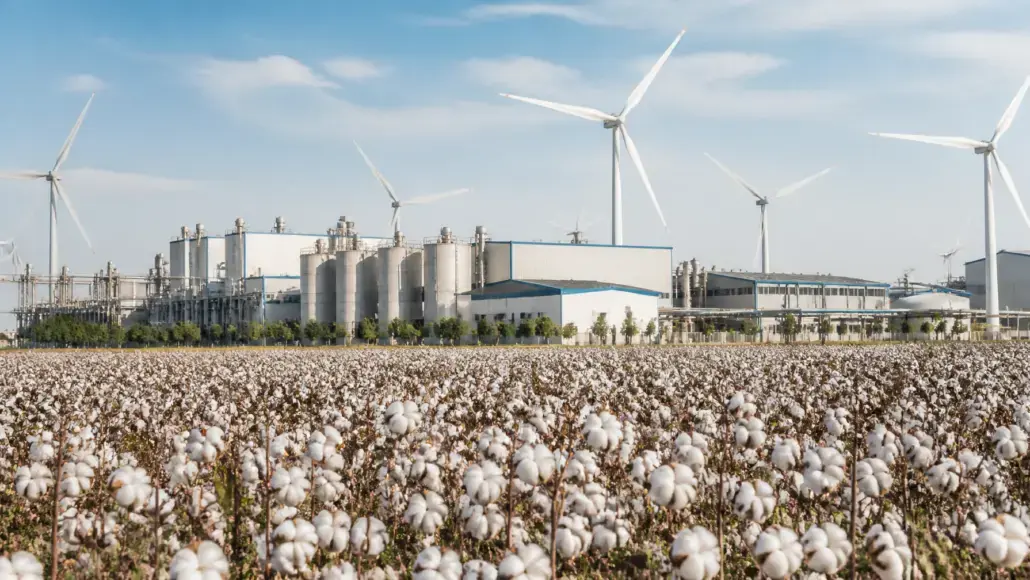
Uzbekistan’s Bukhara region is pushing forward with a sweeping series of industrial and energy investments, anchored by a $400 million cotton-textile cluster and a range of Uzbekistan renewable energy developments, following President Shavkat Mirziyoyev’s visit to the region on November 3.
According to the presidential press service, the projects were presented during President Mirziyoyev’s visit to Bukhara, where he attended a ceremony marking the launch of new facilities and the commencement of construction on upcoming developments.
Bukhara’s Renewable Energy Ambitions Gather Pace
Energy development sits at the heart of Bukhara’s investment agenda. The region has already attracted $2 billion in Bukhara investment in the renewable energy sector in recent years, commissioning wind and solar power plants with capacities of 1,000 megawatts and 750 MW respectively, alongside energy storage systems with a capacity of 63 MW.
Additional projects are currently underway to further expand the region’s generation capacity, reinforcing Bukhara’s standing as a central hub for Uzbekistan renewable energy growth.
Key Energy Projects Underway
ACWA Power is developing the 300 MW Bosh-2 wind power plant in Gijduvan district. Simultaneously, Toyota Corporation and China’s Sinoma are constructing wind power facilities with a combined capacity of 1,000 MW across Jondor and Peshku districts.
Bukhara also has plans to develop a $165 million waste-to-energy project with Chinese partners to generate electricity from municipal waste in Kagan district. This waste-to-energy initiative represents a notable addition to the region’s diversified clean energy portfolio.
In a separate infrastructure development, German company Leman is expected to participate in a $150 million project aimed at improving the reliability of pumping stations along the Amu-Bukhara canal.
Textile Industry Emerges as a Regional Priority
Alongside energy, the textile sector has been identified as a key growth driver for Bukhara. A textile complex under the Kurt Baver brand is planned for Bukhara city, with an annual production capacity of 62,000 tons.
In Romitan district, Chinese investors are developing the flagship $400 million cotton-textile cluster, which forms a central part of the region’s broader industrial expansion strategy. Together, these textile investments are expected to raise the share of higher-value-added products to 65% and generate an additional $100 million in export revenue.
The combined scale of Bukhara investment across both energy and textiles reflects the region’s growing profile as a destination for large-scale international capital, with participation from companies spanning Germany, China, Saudi Arabia, and Japan.
President Shavkat Mirziyoyev’s on-ground engagement with these projects underlines the government’s commitment to accelerating regional economic development through targeted industrial and clean energy initiatives.

