


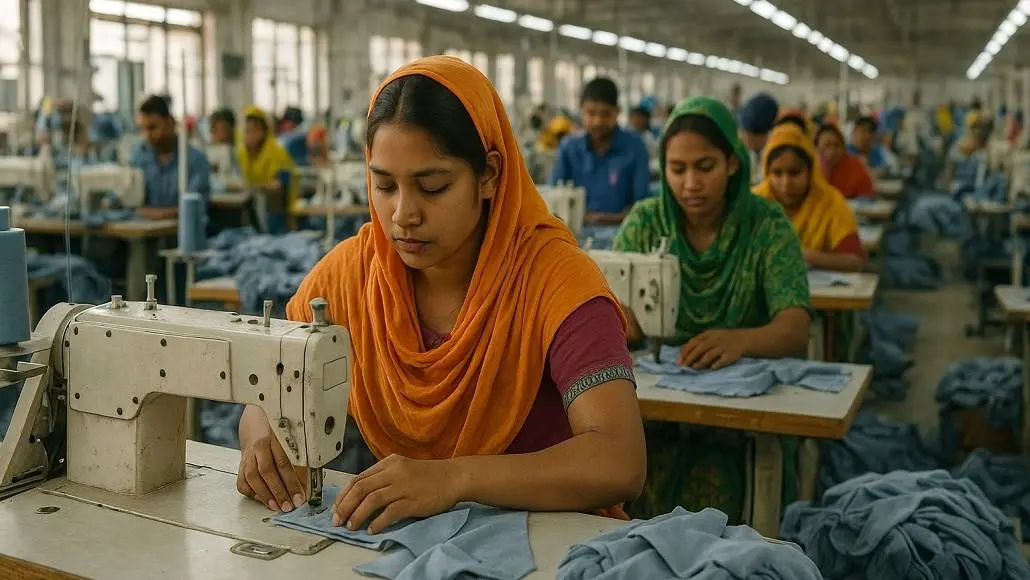
Bangladesh has reached a wage agreement that will raise the minimum monthly pay for textile and garment workers by 36%, setting the new floor at Tk 12,500 — a development that follows weeks of strikes, protests, and mounting pressure from factory workers across the country’s critical ready-made garment sector.
The deal was finalized after negotiations between government officials, factory owners represented by industry bodies, and worker representatives. The agreement brings an end — at least temporarily — to a period of significant industrial unrest that had disrupted production at numerous factories in and around Dhaka and Gazipur, two of the country’s key garment manufacturing hubs.
The New Wage Structure
The revised minimum wage of Tk 12,500 per month represents a 36% increase over the previous minimum of Tk 8,000, which had been in place since 2018. The Bangladesh textile wage revision was announced by the Minimum Wage Board, the government body responsible for reviewing and setting pay floors across various industries in the country.
The new rate applies to entry-level workers in the garment and textile sector — the grade most commonly referred to as Grade 7. Workers at higher skill grades are expected to receive proportional increases under the revised pay structure, though the specific breakdown across all grades was part of the broader negotiation process leading up to the final announcement.
Worker Protests That Preceded the Deal
The Bangladesh textile workers’ push for higher pay had been building for months, with demonstrations intensifying in October 2023. Workers had been demanding a minimum monthly wage of Tk 23,000 — nearly double what the final agreed figure reflects. The gap between worker demands and the announced rate meant that the settlement, while representing a substantial nominal increase, did not fully satisfy all sections of the workforce.
Protests during this period turned tense in some areas, with reports of clashes between workers and law enforcement, factory shutdowns, and production halts affecting export timelines. The unrest underscored the depth of economic pressure being felt by garment workers, many of whom argued that the previous Tk 8,000 floor had failed to keep pace with rising living costs and inflation in Bangladesh.
Industry and Government Positions
Factory owners, organized through bodies such as the Bangladesh Garment Manufacturers and Exporters Association (BGMEA) and the Bangladesh Knitwear Manufacturers and Exporters Association (BKMEA), had put forward a counter-proposal during the wage negotiation Bangladesh process. Their figure was lower than what workers demanded but was ultimately mediated upward through government-facilitated discussions.
The government positioned the 36% minimum wage hike as a balanced outcome, acknowledging both the financial realities faced by workers and the cost pressures on manufacturers who operate in a highly competitive global export environment. Bangladesh’s garment and textile sector is one of the largest in the world and a cornerstone of the country’s export economy, making the resolution of such disputes a matter of national economic significance.
Context Within the Global Garment Supply Chain
Bangladesh is the world’s second-largest garment exporter after China, and its RMG sector Bangladesh accounts for the vast majority of the country’s foreign exchange earnings. The sector employs approximately four million workers, the majority of whom are women. Wage levels in the industry have long been a subject of scrutiny from international buyers, labor rights organizations, and trade unions globally.
The Bangladesh textile wage deal comes at a time when global fashion brands sourcing from the country face increasing pressure from consumers, investors, and regulators to ensure fair wages and safe conditions throughout their supply chains. The outcome of this negotiation is therefore being watched closely not only within Bangladesh but by international stakeholders with an interest in the garment industry wage standards of one of the world’s most important apparel sourcing destinations.
What Comes Next
While the wage agreement has been formalized, labor observers note that implementation and compliance across thousands of factories will be a critical factor in determining its real-world impact for Bangladesh textile workers. Ensuring that the revised rates are actually paid — and that benefits and allowances tied to base wages are adjusted accordingly — will require ongoing monitoring by both government labor authorities and independent bodies.
The Minimum Wage Board’s decision marks a formal chapter in what has been a long-running conversation about fair compensation in the Bangladesh garment industry wage debate. For the millions of workers who form the backbone of this sector, the wage negotiation Bangladesh has concluded represents a step forward — though many worker advocates continue to call for further progress toward wages that reflect the full cost of living.