





























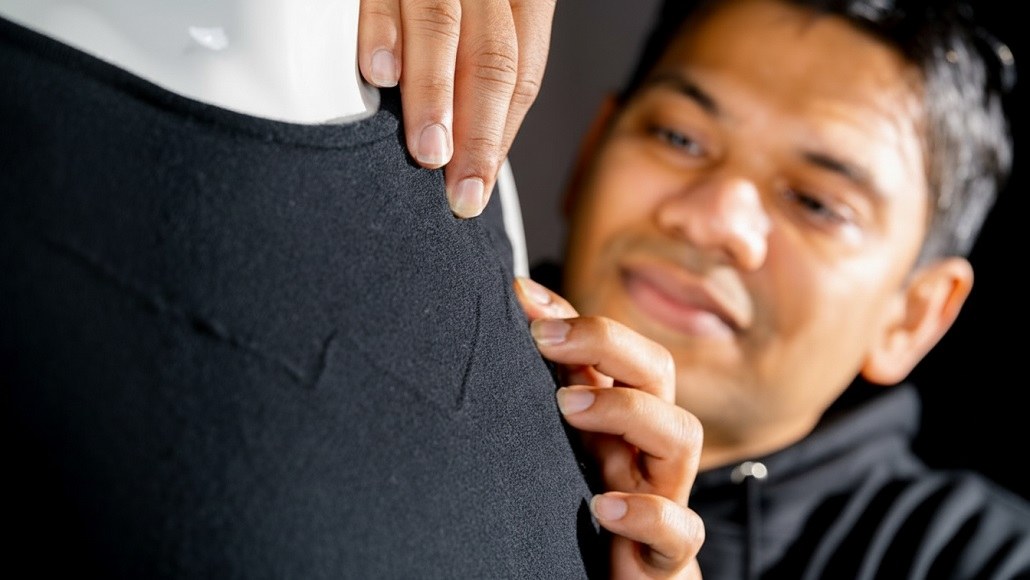
Scientists have created a smart textiles vest designed to track body temperature continuously and identify patterns that could signal hypothermia risk in older adults, a group that can lose heat quickly and may not always notice early symptoms.
The project targets a recognised vulnerability: ageing can reduce the body’s ability to regulate temperature, while chronic conditions, medications and frailty can further increase risk—especially for people living alone. The vest is intended to provide sustained monitoring and, if necessary, trigger an alert when temperature readings suggest a potentially dangerous trend.
The research is being led by Dr Theo Hughes-Riley from Nottingham Trent University’s Advanced Textiles Research Group (ATRG). The garment integrates four miniature thermistors directly into the yarn structure to detect longer-lasting shifts in temperature. Each thermistor measures roughly 1mm by 0.5mm and connects to a Bluetooth-enabled microcontroller, enabling real-time transmission to a mobile phone or other device. The system could raise an alarm if unusual readings persist.
To ensure practicality, the thermistors are sealed in resin so they can withstand washing, and are protected within a polyester braid. They are positioned at key sites for temperature monitoring—two on the chest and two over the scapula—and are designed to be imperceptible to the wearer.
The prototype has been tested through everyday movements such as sitting, walking, jumping and reaching to confirm that measurements remain reliable during real-world use. Trial data showed distinct temperature-change patterns that could support earlier identification of abnormal physiological responses before they escalate.
“Hypothermia is a very dangerous condition, particularly for those who are elderly and live alone without anyone to raise the alarm for them should they become ill,” says Dr Hughes-Riley, of the Nottingham School of Art and Design. “By combining electronic textiles with an everyday garment such as a vest, carers and medical professionals would be able to respond immediately to any detected risk and help save the lives of older people who may need urgent support.”
Technically, the sensors are placed on flat contact surfaces to maintain steady skin contact and use a semiconductor property in which resistance drops as temperature rises. The thermistors are calibrated to the yarns used in the garment, and the readings are used to infer an estimate of core body temperature.
ATRG senior research fellow Dr Arash Moghaddassian Shahidi said the aim is consistent, round-the-clock oversight for those most at risk: “By utilising smart textiles technology in this way, we can help ensure that vulnerable older people are monitored around the clock for serious health conditions like hypothermia, where it is paramount that they receive urgent treatment,” he observes. The team believes the smart textiles vest could ultimately support faster intervention and better outcomes for older people who need urgent help.