





























PSI 2026

Textile Automation Market Projected to Hit $664M by 2029

Note* - All images used are for editorial and illustrative purposes only and may not originate from the original news provider or associated company.

Subscribe

- Never miss a story with notifications

- Gain full access to our premium content

- Browse free from up to 5 devices at once

Media Packs

Expand Your Reach With Our Customized Solutions Empowering Your Campaigns To Maximize Your Reach & Drive Real Results!
– Access The Media Pack Now!
– Book a Conference Call
– Leave Message for us to Get Back

Related stories

Craft Revival and Artisanal Techniques Returning to Fashion Trends

Traditional handcrafted details, artisanal techniques, and heritage textile methods are experiencing unprecedented renaissance in contemporary fashion. From hand-weaving and embroidery to traditional dyeing and beadwork, ancient craft traditions bridge generational gaps and cultural identities while addressing modern consumer demand for authenticity, sustainability, and meaningful production narratives.

New Generation Fashion Trends Blending Comfort and Aesthetics

Contemporary fashion trends reject historical tension between aesthetic appeal and physical comfort, instead emphasizing comfort-first design philosophies delivering both visual sophistication and sensory satisfaction. New generation apparel prioritizes stretch materials, soft textures, ergonomic design, and visually appealing silhouettes—eliminating compromise between looking polished and feeling comfortable.

Luxury Fabric Choices Leading Premium Fashion Trends Worldwide

Luxury textile markets represent the frontier of fashion innovation and premium positioning. Rare fibers including vicuña, silk, cashmere, and alpaca command extraordinary pricing while delivering unmatchable sensory properties and exclusivity. Contemporary luxury fashion trends increasingly emphasize heritage techniques, rare material sourcing, and refined craftsmanship—characteristics that enable commanding premium positioning while supporting artisanal production methods.

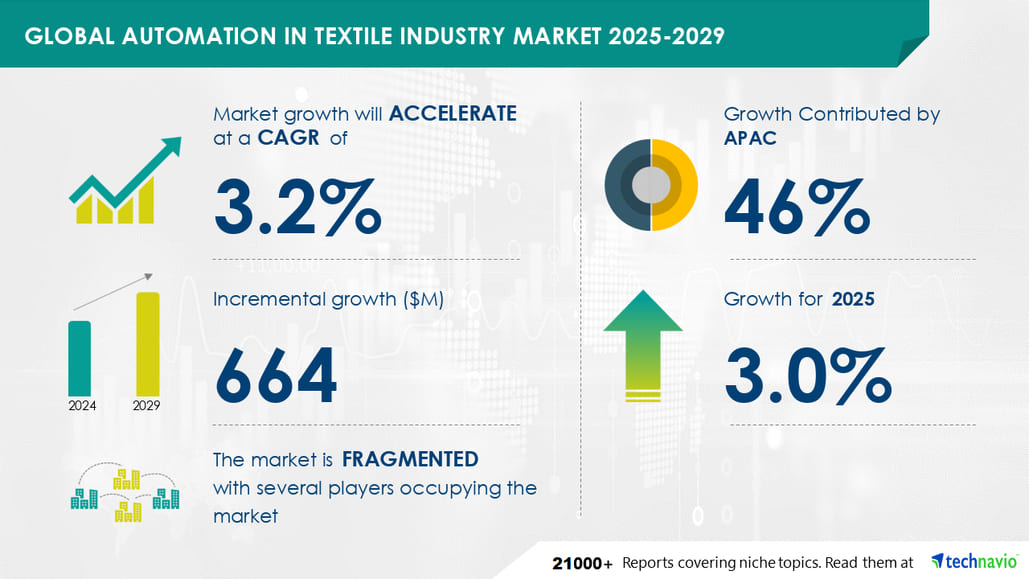
The global textile automation market is forecasted to achieve significant growth, with projections indicating a rise of $664 million between 2025 and 2029, according to a report by Technavio. The market is expected to witness a compound annual growth rate (CAGR) of 3.2%, driven by advancements in energy-efficient technologies, ERP integration, and AI-powered innovations transforming the textile manufacturing landscape.

Key Drivers and Trends

The adoption of Enterprise Resource Planning (ERP) solutions is a key growth driver, enabling streamlined operations across finance, production, supply chain management, and human resources. This integration minimizes communication gaps between departments and enhances manufacturing efficiency. Coupled with digital transformation, ERP systems are central to optimizing textile production processes.

Automation technologies, such as robotics, IoT-based controls, and smart sensors, are also reshaping the industry. Solutions like SCADA and IIoT ensure transparency and operational efficiency, while AI and machine learning boost predictive maintenance, improve accuracy, and accelerate decision-making.

Regional Insights

The Asia-Pacific (APAC) region is expected to lead the market, contributing 46% to global growth during the forecast period. Nations like China, India, and Pakistan are heavily investing in modernization to meet the increasing demand for textile products. Meanwhile, Europe and North America are focusing on energy-efficient and sustainable automation solutions.

Challenges and Solutions

A shortage of skilled labor remains a key challenge, as the demand for professionals capable of operating advanced automation systems surpasses supply. Countries like Germany reported significant gaps, with 63,000 apprenticeship positions unfilled in 2021. To address this, companies are launching training initiatives and workforce development programs to bridge the skills gap.

Tax incentives and funding programs are further encouraging the adoption of automation technologies, helping manufacturers reduce labor dependency and enhance productivity, precision, and cost management.

Market Segmentation and Players

The report segments the market based on components such as:

  • Field Devices: Motors, drives, valves, and actuators critical for textile production.

  • Control Devices & Communication Solutions: Ensuring seamless integration across manufacturing systems.

  • Hardware, Software, & Services: Comprehensive solutions for production optimization.

Key players in the market include ABB Ltd., Siemens AG, Schneider Electric SE, Honeywell International Inc., Rockwell Automation Inc., Delta Electronics Inc., and KUKA AG. These companies are at the forefront of developing innovative solutions for smart manufacturing and sustainable textile production.

Conclusion

As the textile sector embraces Industry 4.0 technologies, automation continues to play a vital role in maintaining competitiveness in a dynamic market. By integrating advanced technologies like AI, IoT, and ERP systems, manufacturers are achieving operational efficiency, reducing costs, and strengthening sustainability practices.

Latest stories

Related stories

Craft Revival and Artisanal Techniques Returning to Fashion Trends

Traditional handcrafted details, artisanal techniques, and heritage textile methods are experiencing unprecedented renaissance in contemporary fashion. From hand-weaving and embroidery to traditional dyeing and beadwork, ancient craft traditions bridge generational gaps and cultural identities while addressing modern consumer demand for authenticity, sustainability, and meaningful production narratives.

New Generation Fashion Trends Blending Comfort and Aesthetics

Contemporary fashion trends reject historical tension between aesthetic appeal and physical comfort, instead emphasizing comfort-first design philosophies delivering both visual sophistication and sensory satisfaction. New generation apparel prioritizes stretch materials, soft textures, ergonomic design, and visually appealing silhouettes—eliminating compromise between looking polished and feeling comfortable.

Luxury Fabric Choices Leading Premium Fashion Trends Worldwide

Luxury textile markets represent the frontier of fashion innovation and premium positioning. Rare fibers including vicuña, silk, cashmere, and alpaca command extraordinary pricing while delivering unmatchable sensory properties and exclusivity. Contemporary luxury fashion trends increasingly emphasize heritage techniques, rare material sourcing, and refined craftsmanship—characteristics that enable commanding premium positioning while supporting artisanal production methods.

Subscribe

- Never miss a story with notifications

- Gain full access to our premium content

- Browse free from up to 5 devices at once

Media Packs

Expand Your Reach With Our Customized Solutions Empowering Your Campaigns To Maximize Your Reach & Drive Real Results!

– Access The Media Pack Now!
– Book a Conference Call
– Leave Message for us to Get Back

Translate »