
































PSI 2026

Washable Magnetic Textile Revolutionizes Smart Clothing

Note* - All images used are for editorial and illustrative purposes only and may not originate from the original news provider or associated company.

Subscribe

- Never miss a story with notifications

- Gain full access to our premium content

- Browse free from up to 5 devices at once

Media Packs

Expand Your Reach With Our Customized Solutions Empowering Your Campaigns To Maximize Your Reach & Drive Real Results!
– Access The Media Pack Now!
– Book a Conference Call
Leave Message for us to Get Back

Related stories

How Digital Fashion Trends are Reshaping Brand Identity

Digital fashion—virtual garments, metaverse clothing, AI-styled avatars, and NFT-based digital collectibles—represents unprecedented frontier in fashion expression and brand positioning. As consumers increasingly inhabit virtual spaces through gaming, social platforms, and metaverse environments, brands develop digital-native strategies reshaping traditional fashion business models while creating opportunities for virtual-only design expression unbounded by physical materiality constraints.

Zero-Waste Design Principles Becoming Key Fashion Trends

Zero-waste design principles represent revolutionary approach to garment construction eliminating fabric cutting waste through innovative pattern design, geometric optimization, and intentional design-for-disassembly methodologies. As fashion industry confronts environmental impact of 15-20% cutting waste inherent in traditional manufacturing, zero-waste design transforms constraints into creative opportunities generating distinctive products while addressing sustainability imperatives.

Innovations Transforming Textile Recycling Technologies in 2026

The textile recycling sector is experiencing a technological revolution driven by cutting-edge innovations in chemical depolymerization, fiber regeneration, automated sorting systems, and advanced blending solutions. These technological breakthroughs are transitioning textile recycling from experimental laboratory-scale operations to commercial viability, enabling the industry to process complex waste streams including blended fabrics, contaminated textiles, and historically challenging material combinations with unprecedented efficiency and output quality.

A collaborative effort by researchers from Nottingham Trent University, Helmholtz-Zentrum Dresden-Rossendorf e.V. (Germany), and Free University of Bozen-Bolzano (Italy) has led to the development of washable and durable magnetic field sensing electronic textiles. These textiles, believed to be the first of their kind, offer the potential to revolutionize their use in clothing.

In a groundbreaking study published in the Nature portfolio journal Communications Engineering, the team details how flexible and highly responsive ‘magnetoresistive’ sensors can be embedded within braided textile yarns that are compatible with standard textile manufacturing processes.

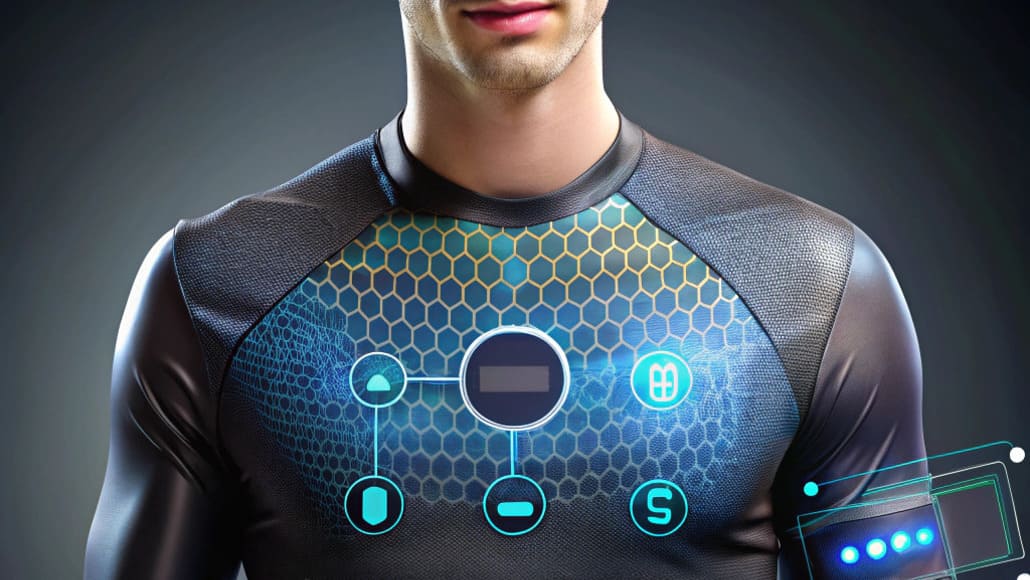
The innovative textiles can be operated via a variety of functions using accessories like a ring or glove equipped with miniature magnets. These integrated sensors are discreetly embedded into the fabric, with their positions marked through dyeing or embroidery. Acting as touchless controls or “buttons,” this seamless integration enhances functionality.

This technology extends beyond traditional uses, with applications such as textile-based keyboards or other interfaces that work underwater and in various weather conditions. An added benefit is that, unlike capacitive sensors and textile-based switches prone to accidental activation, these sensors offer precise functionality. By incorporating this technology into everyday clothing, users could interact with computers, smartphones, smartwatches, and other smart devices, effectively transforming their garments into wearable human-computer interfaces.

Potential applications include temperature and safety controls for specialized attire, gaming, and interactive fashion. For instance, users could perform simple gestures to control LEDs or other illuminating devices embedded in the fabric.

The researchers showcased the versatility of this technology by demonstrating it in applications such as a functional armband for navigational control in virtual reality environments and a self-monitoring safety strap for motorcycle helmets. This represents the first time washable magnetic sensors have been seamlessly integrated into textiles for human-computer interaction.

The study included contributions from Nottingham Trent University’s School of Science and Technology and the Nottingham School of Art & Design.

“Our design could revolutionize electronic textiles for both specialized and everyday clothing. Tactile sensors on textiles vary in usefulness as accidental activation occurs when they rub or brush against surfaces. Touchless interaction reduces wear and tear. Importantly, our technology is designed for everyday use. It is machine washable and durable and does not impact the drape, or overall aesthetic appeal of the textile,” said Dr. Pasindu Lugoda, the study’s lead researcher from Nottingham Trent University’s Department of Engineering.

“Electronic textiles are becoming increasingly popular with wide-ranging uses, but the fusion of electronic functionality and textile fabrics can be very challenging. Electronic textiles have evolved and now rely on soft and flexible materials which are robust enough to endure washing and bending, but which are intuitive and reliable,” added Dr. Theo Hughes-Riley, corresponding author of the paper and a member of Nottingham Trent University’s Advanced Textiles Research Group.

“Our design introduces a novel approach to interactive wearables, including applications in conventionally unlikely environments,” commented Kalana Marasinghe, a fellow researcher at Nottingham Trent University.

Latest stories

Related stories

How Digital Fashion Trends are Reshaping Brand Identity

Digital fashion—virtual garments, metaverse clothing, AI-styled avatars, and NFT-based digital collectibles—represents unprecedented frontier in fashion expression and brand positioning. As consumers increasingly inhabit virtual spaces through gaming, social platforms, and metaverse environments, brands develop digital-native strategies reshaping traditional fashion business models while creating opportunities for virtual-only design expression unbounded by physical materiality constraints.

Zero-Waste Design Principles Becoming Key Fashion Trends

Zero-waste design principles represent revolutionary approach to garment construction eliminating fabric cutting waste through innovative pattern design, geometric optimization, and intentional design-for-disassembly methodologies. As fashion industry confronts environmental impact of 15-20% cutting waste inherent in traditional manufacturing, zero-waste design transforms constraints into creative opportunities generating distinctive products while addressing sustainability imperatives.

Innovations Transforming Textile Recycling Technologies in 2026

The textile recycling sector is experiencing a technological revolution driven by cutting-edge innovations in chemical depolymerization, fiber regeneration, automated sorting systems, and advanced blending solutions. These technological breakthroughs are transitioning textile recycling from experimental laboratory-scale operations to commercial viability, enabling the industry to process complex waste streams including blended fabrics, contaminated textiles, and historically challenging material combinations with unprecedented efficiency and output quality.

Subscribe

- Never miss a story with notifications

- Gain full access to our premium content

- Browse free from up to 5 devices at once

Media Packs

Expand Your Reach With Our Customized Solutions Empowering Your Campaigns To Maximize Your Reach & Drive Real Results!

– Access The Media Pack Now!
– Book a Conference Call
Leave Message for us to Get Back

Translate »