



























PSI 2026

Kering Announces Several Sustainable Strategic Commercial Partnerships in China

Note* - All images used are for editorial and illustrative purposes only and may not originate from the original news provider or associated company.

Subscribe

- Never miss a story with notifications

- Gain full access to our premium content

- Browse free from up to 5 devices at once

Media Packs

Expand Your Reach With Our Customized Solutions Empowering Your Campaigns To Maximize Your Reach & Drive Real Results!
– Access The Media Pack Now!
– Book a Conference Call
Leave Message for us to Get Back

Related stories

The Environmental Benefits and Carbon Savings of Textile Recycling

Textile recycling delivers substantial and quantifiable environmental benefits spanning carbon emission reduction, water conservation, chemical usage elimination, and resource preservation. Comprehensive lifecycle assessment data demonstrates that fiber-to-fiber textile recycling achieves 87% carbon reduction compared to virgin polyester production, eliminates 99% of water consumption compared to virgin cotton cultivation, and reduces chemical usage dramatically across production stages. These environmental advantages compound across material cycles, creating cumulative environmental benefit justifying aggressive circular textile system scaling as critical climate change mitigation and environmental protection strategy.

How Textile Recycling Supports Sustainable Fashion Trends and Market Shifts

Textile recycling is fueling emerging sustainable fashion movements and accelerating market shifts toward circular business models as consumer preferences increasingly prioritize environmental impact alongside style and quality. Generational preference evolution, regulatory momentum, brand sustainability positioning, and genuine circular product availability are converging to reshape fashion industry toward sustainable and circular models. Textile recycling infrastructure and technology advancement directly enables these market shifts by providing the material foundation necessary for authentic circular fashion transition at scale.

The Global Rise of Textile Recycling and Its Impact on the Apparel Industry

The global textile recycling market is experiencing unprecedented growth, projected to reach USD 11.88 billion by 2030 from USD 8.41 billion in 2025, representing a 7.2% compound annual growth rate. This transformation is reshaping apparel manufacturing, sourcing strategies, sustainability commitments, and long-term fashion industry models as brands, retailers, and manufacturers increasingly recognize that circular economy principles are not optional but essential for competitive survival and regulatory compliance.

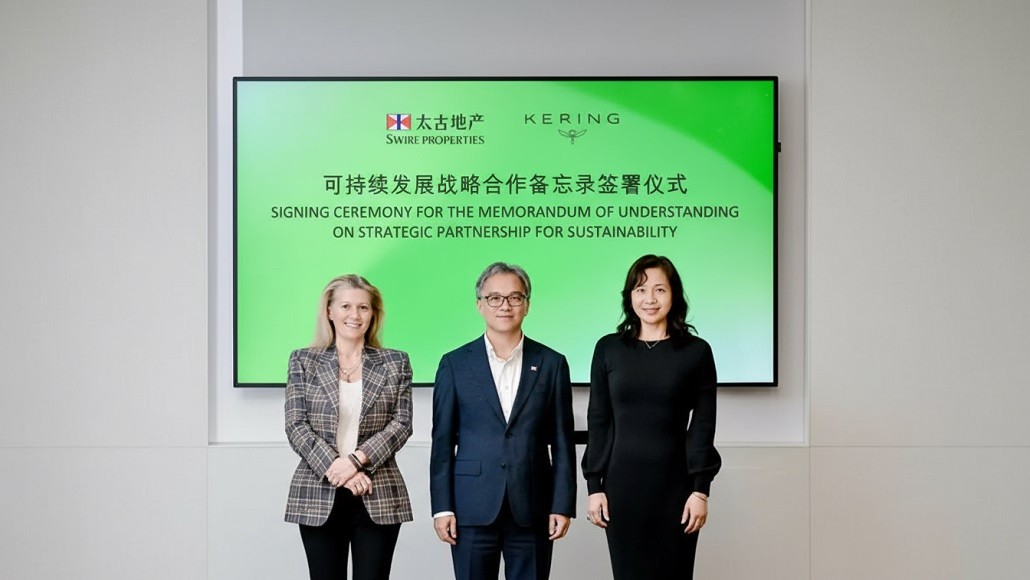
After sealing a regional agreement with Swire Properties to enhance the Environmental, Social and Governance performance across all new and existing Kering stores located in Swire Properties’ retail malls in the Chinese Mainland and Hong Kong SAR in July, Kering signed a second Memorandum of Understanding (MoU) of the kind with China Resources Mixc Lifestyle.

Through such partnerships, Kering asserts its ambition to align with China’s “dual carbon” strategy and green building standards, while collaborating with national actors to advance common ESG strategic goals, while engaging consumers and partners in the transition toward sustainable living.

On November 5th, China Resources Mixc Lifestyle and Kering officialised their target: achieving 100 % zero-carbon electricity for Kering’s brand stores in CR Mixc Lifestyle’s luxury-tier shopping centres by 2030.

“This partnership with China Resources Mixc Lifestyle reflects Kering’s determination to translate its sustainability commitments into measurable progress across all aspects of our operations. By working hand in hand with a real estate partner that shares our vision – and with the scientific expertise of Tsinghua University – we are turning ambition into action through tangible initiatives such as energy efficiency, green electricity, and carbon management. Together, we aim to set new benchmarks for sustainable luxury retail in China and to demonstrate that environmental performance and business excellence can advance in unison,” said Marie-Claire Daveu, Chief Sustainability and Institutional Affairs Officer, Kering.

Latest stories

Related stories

The Environmental Benefits and Carbon Savings of Textile Recycling

Textile recycling delivers substantial and quantifiable environmental benefits spanning carbon emission reduction, water conservation, chemical usage elimination, and resource preservation. Comprehensive lifecycle assessment data demonstrates that fiber-to-fiber textile recycling achieves 87% carbon reduction compared to virgin polyester production, eliminates 99% of water consumption compared to virgin cotton cultivation, and reduces chemical usage dramatically across production stages. These environmental advantages compound across material cycles, creating cumulative environmental benefit justifying aggressive circular textile system scaling as critical climate change mitigation and environmental protection strategy.

How Textile Recycling Supports Sustainable Fashion Trends and Market Shifts

Textile recycling is fueling emerging sustainable fashion movements and accelerating market shifts toward circular business models as consumer preferences increasingly prioritize environmental impact alongside style and quality. Generational preference evolution, regulatory momentum, brand sustainability positioning, and genuine circular product availability are converging to reshape fashion industry toward sustainable and circular models. Textile recycling infrastructure and technology advancement directly enables these market shifts by providing the material foundation necessary for authentic circular fashion transition at scale.

The Global Rise of Textile Recycling and Its Impact on the Apparel Industry

The global textile recycling market is experiencing unprecedented growth, projected to reach USD 11.88 billion by 2030 from USD 8.41 billion in 2025, representing a 7.2% compound annual growth rate. This transformation is reshaping apparel manufacturing, sourcing strategies, sustainability commitments, and long-term fashion industry models as brands, retailers, and manufacturers increasingly recognize that circular economy principles are not optional but essential for competitive survival and regulatory compliance.

Subscribe

- Never miss a story with notifications

- Gain full access to our premium content

- Browse free from up to 5 devices at once

Media Packs

Expand Your Reach With Our Customized Solutions Empowering Your Campaigns To Maximize Your Reach & Drive Real Results!

– Access The Media Pack Now!
– Book a Conference Call
Leave Message for us to Get Back

Translate »