





























Key Takeaways
- Circular fashion reduces waste by up to 87% compared to linear manufacturing through closed-loop material cycles
- Design-for-recyclability principles reduce end-of-life processing costs while improving material recovery rates substantially
- Closed-loop systems save 3kg CO₂ per reused garment vs. new production; 70 times lower environmental impact than virgin manufacturing
- Material circularity reduces water usage by 99% compared to virgin polyester or cotton production in closed loops
- Take-back programs combined with fiber-to-fiber recycling create sustainable brand loyalty while reducing material sourcing costs
- Regenerative fashion principles extend beyond waste elimination to actively restore environmental systems
The Interconnection Between Textile Recycling and Circular Fashion Systems
Circular fashion represents fundamentally different production and consumption paradigm than conventional linear fashion models. Where traditional systems follow “take-make-dispose” trajectories, circular fashion embeds principles of material regeneration, resource preservation, and waste elimination into every design and operational decision. Textile recycling functions as the critical enabler transforming circular fashion from conceptual framework into operational reality.
Foundation Principles of Circular Fashion
Circular fashion design begins with recognition that 80% of a garment’s environmental impact is determined at the design stage. Material selection, fiber composition, construction methodology, and specifications for longevity and repairability fundamentally shape whether clothing contributes to environmental regeneration or degradation across its lifecycle.
The foundational principles guiding circular fashion include designing out waste and pollution from inception, keeping materials in continuous circulation, and regenerating natural systems. These principles represent systematic departure from conventional fashion where single-use garments, non-repairable construction, and disposable positioning drive material throughput and waste generation.
Textile recycling directly addresses the “keeping materials in continuous circulation” principle. Rather than discarded garments becoming landfill waste, fiber-to-fiber recycling enables transformation of worn clothing back into production-ready fiber. This circularity is impossible without viable recycling pathways; recycling technology forms the prerequisite infrastructure enabling circular fashion implementation.
Design-for-Recyclability: Embedding End-of-Life Into Design
Circular fashion design requires explicitly considering how garments will be recovered and recycled at end-of-use. Mono-material construction garments composed entirely of single fiber type dramatically simplifies recycling processing and dramatically improves recovery economics. Polyester-only garments, cotton-only garments, or wool-only garments can be processed through chemical or mechanical recycling with substantially higher efficiency than blended alternatives.
However, mono-material design presents engineering challenges. Many apparel applications require fiber blends: polyester provides durability and elasticity while cotton provides comfort and breathability; nylon provides strength while wool provides insulation. Moving toward mono-material garments often requires design innovation to achieve performance characteristics achieved through traditional blending.
Leading brands are proving mono-material design viability. By engineering garments from single fiber types often employing high-performance synthetic yarns or advanced natural fibers designers create products meeting performance specifications while supporting recyclability. This requirement drives innovation: new fiber technologies, enhanced finishing techniques, and novel construction methods emerge specifically because circular design mandates inspire experimentation.
Detachable trims represent another design-for-recyclability principle. Buttons, zippers, and elastic components can be engineered as separate systems easily removed during recycling. This elimination of mixed materials in trimming simplifies fiber recovery and reduces contamination in recycled fiber streams.
Closed-Loop Material Systems: Practical Implementation
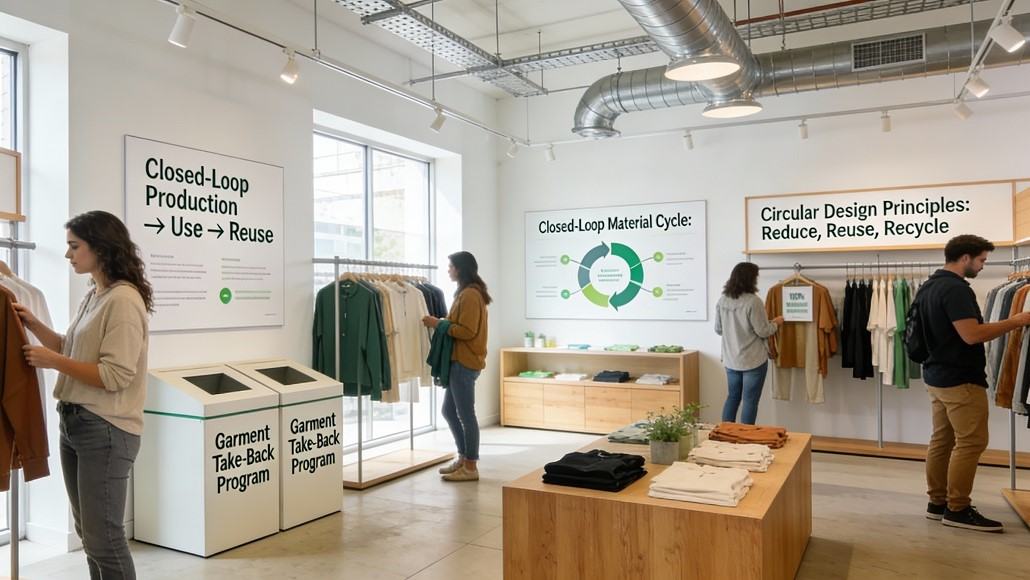
Closed-loop material systems transform textile recycling from abstract environmental benefit into operational business model. Brands establishing take-back programs accepting worn garments from consumers create material feedstock for recycling partners. This direct material flow eliminates intermediaries and enables transparency regarding material composition and contamination levels.
Patagonia’s Worn Wear program, operating for two decades, demonstrates closed-loop viability at premium brand scale. Customers return worn Patagonia products; the company processes repairable items for resale while directing beyond-repair items toward recycling. This system creates consumer loyalty while generating material feedstock for new production.
Renewcell’s partnership with Kering (luxury fashion conglomerate) illustrates closed-loop at scale. Kering’s collection of worn garments flows to Renewcell’s facilities for fiber-to-fiber recycling, producing Circulose® regenerated fiber flowing back to Kering’s supply chain for new collection development. This complete circle consumption, recovery, recycling, new production represents circular fashion materialized operationally.
These closed-loop systems work only when recycling infrastructure exists to convert recovered garments into production-ready materials. Without fiber-to-fiber recycling technology enabling virgin-quality fiber recovery, closed-loop systems default to downcycling converting clothing into lower-value insulation or wiping cloths rather than new garments. Technical viability of fiber regeneration technology directly determines whether closed loops create genuine material circularity or merely delay entry into landfills.
Sustainable Material Flows: From Virgin to Recycled
Circular fashion fundamentally alters material sourcing. Rather than virgin polyester extraction from fossil fuels or virgin cotton cultivation in water-stressed regions, circular systems draw from recovered garments and manufacturing waste. This substitution has profound environmental implications.
Virgin polyester production requires fossil fuel extraction, refining, polymerization, and transportation. Carbon footprint of virgin polyester approaches 15.2 kg CO₂ equivalent per kilogram. Recycled polyester, even accounting for collection logistics and processing energy, generates approximately 1.9 kg CO₂ equivalent per kilogram 87% lower carbon footprint.
Water usage similarly transforms. Virgin cotton requires approximately 2,700 liters of water per kilogram of fiber, primarily for irrigation in water-scarce regions. Recycled cotton through fiber-to-fiber recycling requires minimal additional water beyond processing chemicals. Water consumption drops from thousands of liters to tens of liters per kilogram.
Chemical usage in dyeing and finishing represents third major environmental impact. Virgin fiber production typically involves multiple dyeing and chemical finishing steps. Recycled fibers retain existing color or require redyeing, but the elimination of virgin fiber production eliminates upstream chemical usage. Overall chemical burden in circular systems drops substantially.
Circular material flows therefore generate cumulative environmental benefit: fossil fuel elimination, water conservation, chemical reduction, and carbon mitigation all progress simultaneously. This multiplier effect explains why textile recycling impact extends beyond waste diversion into fundamental resource conservation.
Regenerative Beyond Waste Elimination
Contemporary circular fashion thinking increasingly moves beyond waste elimination (which is defensive) toward regeneration (which is restorative). Regenerative systems not merely prevent harm but actively improve environmental conditions. In textile context, this manifests through production methods that restore soil health, support biodiversity, or generate economic value in supply chain communities.
Circular fashion combined with regenerative agriculture textile production supporting soil restoration and ecosystem regeneration creates production systems improving environmental conditions rather than merely reducing negative impact. This progression from linear (extractive) to circular (neutral) to regenerative (restorative) represents the trajectory toward truly sustainable fashion.
Textile recycling supports this progression by reducing pressure on virgin material production, allowing agricultural land previously dedicated to cotton cultivation to transition toward regenerative agriculture or ecosystem restoration. Recycled fiber supply therefore indirectly enables regenerative farming practices.
Consumer Behavior and Circular Fashion Viability
Circular fashion systems require consumer participation at multiple touchpoints. Extended product lifecycle (durability, repairability, ongoing wearability) requires consumer commitment to maintenance and care. Take-back programs require consumer willingness to return worn garments. Purchase of garments with recycled content requires consumer acceptance of products partially composed of recovered material.
These behavioral requirements represent perhaps greatest implementation barrier. Consumer familiarity with garments produced entirely from virgin materials, established preferences, and skepticism about recycled material quality create resistance. Educational campaigns, product quality demonstration, and price positioning supporting recycled-content garments remain necessary to build market acceptance.
Furthermore, consumption patterns themselves require transformation. Circular fashion systems optimize for longevity and repeated use, contrasting with fast fashion’s emphasis on novelty and frequent replacement. Shifting consumer preferences toward slower, more intentional consumption represents prerequisite for circular fashion scaling.
The Economic Case for Circular Integration
Circular fashion systems increasingly demonstrate economic advantage alongside environmental benefits. Brands establishing closed-loop supply chains gain supply security (less exposure to virgin material price volatility), reduce end-of-life liability costs, and capture revenue through take-back and resale programs. Consumers increasingly demonstrate willingness to pay premium prices for circular brand positioning.
Market research indicates sustainable fashion market growing at 8.58% compound annual growth rate, reaching USD 135 billion by 2031. Circular fashion positioning increasingly drives consumer preference and purchase decisions, particularly among younger demographics.
Conclusion: Recycling as Circular Fashion Prerequisite
Textile recycling is not ancillary benefit of circular fashion but rather fundamental prerequisite enabling its existence. Circular fashion without viable recycling pathways remains conceptual; closed-loop systems without fiber regeneration technology cannot progress beyond first iteration. The integration of textile recycling infrastructure into fashion systems represents the operational materialization of circular fashion principles into tangible environmental and economic value.