

























Key Takeaways
- Nonwovens represent 30-35% of global textile production but <5% of current recycling; market expansion potential substantial as collection infrastructure develops
- Medical nonwovens (surgical gowns, masks, bandages) and hygiene products (diapers, feminine products) represent primary nonwoven waste streams requiring specialized handling
- Fiber separation challenges in nonwovens (multiple fiber types bonded without clear structures) require different technology approaches than woven/knit textiles
- Nonwoven recycling facility capital investment (USD 8-15M for 50,000-ton capacity) exceeds woven recycling due to process complexity; offset by higher material value
- Automotive nonwoven applications (door panels, sound insulation, trim) provide established end-markets for recovered fiber with quality specifications
- Regulatory drivers (medical waste management, hygiene product waste directives) are accelerating nonwoven recycling infrastructure investment
The Underutilized Recycling Opportunity in Engineered Fabrics
Nonwoven textiles occupy distinct position in global fiber market: substantial production volume (approximately 30-35% of global textile production), diverse high-value applications, yet virtually no established recycling infrastructure. This position creates both challenge and exceptional opportunity as regulatory pressure, resource constraints, and circular economy requirements drive nonwoven recycling development.
Understanding nonwoven recycling potential requires first understanding nonwoven materials themselves distinct from conventional woven and knitted textiles in both manufacturing process and end-use applications.
Nonwoven Materials: Composition and Manufacturing
Nonwovens are engineered fabrics composed of fibers bonded together through mechanical interlocking, adhesive bonding, or thermal fusion. Unlike woven textiles created through interlacing yarns or knit textiles created through loops, nonwovens comprise fibers directly bonded without yarn intermediate.
This manufacturing difference creates distinct properties: nonwovens offer high porosity enabling fluid filtration, excellent barrier properties preventing particle passage, variable strength profiles optimizable for specific applications. These properties enable applications impossible with conventional textiles.
Nonwoven fiber composition varies by application: polypropylene dominates nonwovens for general applications (filtration, insulation, geotextiles); polyester, nylon, and acrylic serve specialized applications (sound absorption, thermal insulation); cellulose nonwovens serve medical and hygiene applications.
Primary Nonwoven Waste Streams
Medical nonwovens represent the most visibility but not the largest volume stream: surgical gowns, masks, bandages, wound dressings, sterilization wraps. This segment faced particular visibility during COVID-19 pandemic when millions of single-use masks entered waste streams daily.
Hygiene product nonwovens represent larger volume: diapers, feminine hygiene products, incontinence products. These products comprise 70-80% nonwoven by composition, generating substantial waste volumes. A single diaper contains approximately 5-7 grams of nonwoven fabric; global diaper waste exceeds 30 million metric tons annually.
Automotive nonwovens serve interior applications: door panels, sound insulation, trim components, seat padding. These applications generate pre-consumer manufacturing waste plus post-consumer vehicle end-of-life waste.
Industrial and filtration nonwovens include air filters, water filters, bag filters, geotextiles, and specialized industrial applications. This segment represents smaller volume but often higher-value material.
Technical Challenges in Nonwoven Recycling
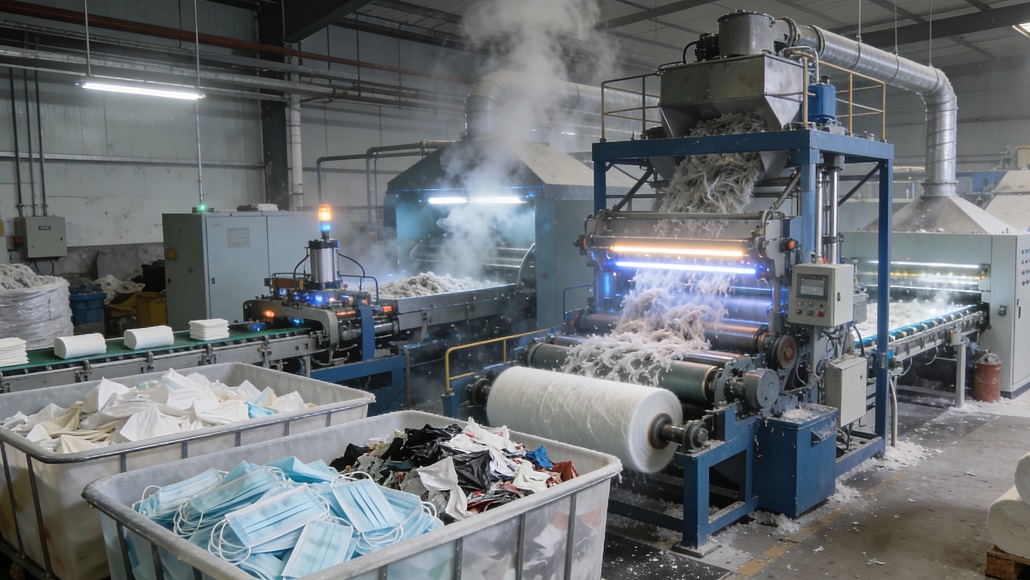
Nonwoven recycling presents distinct technical challenges compared to conventional textiles. Primary challenge: multiple fiber types bonded together without clear structural organization. A surgical gown might comprise polyester fibers bonded with polypropylene through adhesive, plus elastic trim and waterproofing coating.
Separating bonded fiber structures is technically complex. Mechanical approaches (shredding, carding) cannot selectively recover individual fibers from bonded matrices. Chemical dissolution approaches must carefully select solvents dissolving specific fibers while preserving others, often proving inefficient or uneconomic.
Contamination represents second major challenge. Medical and hygiene nonwovens are frequently contaminated with biological matter requiring specialized decontamination before recycling is possible. Rigorous sterilization, chemical disinfection, or thermal treatment is necessary ensuring output material safety.
Adhesive contamination similarly presents challenge: adhesives bonding fibers cannot be easily removed and persist through many recycling processes, potentially degrading final product quality.
Emerging Technology Approaches
Despite challenges, solutions are progressively emerging. Thermal separation employs carefully controlled heating to soften thermally-bonded nonwovens selectively, separating fiber components. This approach works particularly well for adhesive-bonded nonwovens where temperature profiles can dissolve adhesive without damaging fibers.
Solvent-based approaches employ selective solvents dissolving specific fiber types. A polypropylene-polyester nonwoven might be processed using selective solvent attacking polyester, leaving polypropylene fibers intact. Subsequent fiber recovery and regeneration enables material reuse.
Pyrolysis and thermal processing decomposes nonwoven structures into basic chemical components monomers, oils that can be further processed. While not fiber-to-fiber recovery, this approach converts waste into processable chemical feedstock.
Enzymatic approaches employ specialized enzymes degrading specific polymers or adhesives selectively. This emerging technology offers potential for precise decomposition without harsh chemical processing.
Medical Nonwoven Recycling Challenges and Solutions
Medical nonwoven recycling requires specialized approaches addressing contamination and safety concerns. Surgical masks, gowns, and bandages likely carry biological contamination requiring thorough decontamination before recycling is possible.
Sterilization through autoclaving (high-temperature steam), chemical disinfection (hydrogen peroxide, quaternary ammonium compounds), or irradiation (gamma radiation, electron beam) eliminates biological hazards. Following sterilization, fibers can safely proceed to conventional recycling pathways.
Some medical facilities are implementing medical nonwoven collection and decontamination programs. The waste volume is enormous surgical masks alone represent millions of tons globally and dedicated processing can achieve scale supporting specialized facility investment.
Hygiene Product Nonwoven Recycling: The Diaper Challenge
Diapers present particular challenge: they contain not only nonwoven but also absorbent polymer (super-absorbent polymer, SAP), elastic components, and biological contamination. Separating these components and recovering fibers presents complexity exceeding surgical gown recycling.
However, approaches are emerging. Some companies are developing thermal processes decomposing diaper structures into recovering component materials. Recovered fibers can be processed into building materials, insulation, or lower-value nonwovens. Recovered superabsorbent polymers can be regenerated or processed into other applications.
The economic case for diaper recycling remains challenging given low material value relative to processing cost. However, landfill diversion benefits and regulatory pressure are driving investment.
Automotive Nonwoven Applications and Established Markets
Automotive nonwoven recycling faces more favorable economics than medical or hygiene segments. Vehicle end-of-life processing already involves systematic disassembly and material recovery. Nonwoven components (interior trim, insulation, panels) can be captured during this process.
Recovered automotive nonwovens have established end-markets: sound insulation for construction, carpet padding, automotive interior components for lower-cost vehicles. This established demand creates viable economic pathway supporting recycling.
Automotive manufacturers’ end-of-life responsibility regulations in Europe and emerging in other regions create explicit incentive for nonwoven recovery. Manufacturers must achieve specified material recovery percentages, driving nonwoven recovery infrastructure development.
Market Opportunity and Growth Trajectory
Current nonwoven recycling represents <5% of nonwoven waste despite 30-35% composition of global textiles. This gap represents exceptional growth opportunity as infrastructure develops.
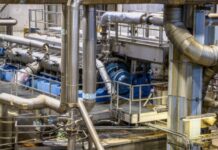
Infrastructure investment requirements are substantial. A facility capable of processing 50,000 tons annually requires capital investment of approximately USD 8-15 million, exceeding conventional textile recycling facility cost due to technical complexity. However, higher material value of nonwoven products justifies capital investment.
Market projections suggest nonwoven recycling market reaching USD 2-3 billion annually by 2030, representing 5-10% of current nonwoven waste volume. This expansion represents 400-500% growth from current baseline.
Geographic concentration near major nonwoven manufacturing centers and automotive recycling infrastructure will likely characterize early facility development. Medical and hygiene product nonwoven recycling will follow as specialized collection and decontamination infrastructure matures.
Long-Term Viability and Circular Nonwoven Systems
As nonwoven recycling technology matures and infrastructure scales, genuine closed-loop nonwoven systems become feasible. Manufacturers designing nonwovens for recyclability, collection systems capturing end-of-life material, and processing technology recovering fibers, create circular nonwoven economy paralleling emerging circular systems in conventional textiles.
This circular transition will require design-for-recyclability investment by manufacturers, collection infrastructure development, and regulatory drivers creating economic incentive. These elements are progressively converging, positioning nonwoven recycling as high-growth circular economy segment through 2030s.