


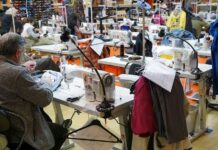





























Tag: textile
Sustainability
Why Textile Recycling Is Essential for Waste Reduction in the Fashion Supply Chain
Textile recycling plays a critical role in mitigating waste at every stage of the fashion supply chain, from initial fiber production through manufacturing, consumption, and post-consumer collection. By addressing pre-consumer waste through manufacturing efficiency and post-consumer waste through take-back programs, textile recycling fundamentally restructures how the fashion industry manages material flows and environmental responsibility throughout its entire value chain.
Sustainability
The Future of Fiber-to-Fiber Textile Recycling and Material Regeneration
Fiber-to-fiber recycling represents the ultimate achievement in textile waste management, enabling post-consumer and pre-consumer textile waste to be transformed into virgin-quality materials capable of indefinite recycling cycles. Advanced regeneration technologies now enable high-purity recovery of recycled cotton, polyester, wool, and blended materials for next-generation apparel, effectively closing material loops and enabling true circular textile systems where material value persists across multiple product lifecycles without quality degradation.
Sustainability
Textile Recycling in the Nonwoven Industry: A Growing Opportunity
Nonwoven textiles—engineered fabrics composed of fibers bonded together without weaving or knitting—represent distinct recycling challenge and opportunity. Used extensively in medical, hygiene, automotive, and industrial applications, nonwovens comprise approximately 30-35% of global textile production yet remain largely unrecycled. Emerging technologies enabling nonwoven separation, fiber recovery, and regeneration are unlocking substantial market opportunity as industries face regulatory pressure and resource constraints, positioning nonwoven recycling as high-growth segment within broader textile recycling market.
Sustainability
Sorting Technologies Revolutionizing Pre-Consumer and Post-Consumer Textile Recycling
Advanced sorting technologies—near-infrared spectroscopy, Raman spectroscopy, RFID tagging, digital identification systems, and AI-powered computer vision—are revolutionizing textile material classification and enabling automated processing at previously impossible scale and accuracy. These technologies simultaneously address the sorting bottleneck that has constrained recycling scaling, achieve accuracy exceeding 95-98%, process materials at industrial speeds, and provide cost reduction of 25-35% through labor elimination and processing optimization, fundamentally transforming textile recycling economics and feasibility.
Press Issues
The Fabric of Success: Why Textile Promotional Products Will Dominate in 2026 and Where to Find Them
Textile promotional products are a cornerstone of the haptic advertising market. Their popularity, practical use, and reach make them an effective marketing tool. In...
Sustainability
Advancements in Natural Fiber Textile Recycling for Cotton and Wool
Natural fiber textile recycling has advanced significantly through cutting-edge chemical dissolution, fiber regeneration, and advanced separation technologies enabling high-purity recovery of cotton and wool fibers matching virgin specifications. Processes like Renewcell’s Circulose® and Evrnu’s NuCycl technology now enable indefinite cycling of cotton fibers while wool recycling technologies preserve fiber properties across multiple reuse cycles, creating genuine circular pathways for natural textiles and addressing the environmental advantages of fiber recovery from conventional resource-intensive virgin cultivation.
Sustainability
The Role of AI and Automation in Advancing Textile Recycling Systems
Artificial intelligence and automation technologies are revolutionizing textile recycling by dramatically improving sorting accuracy, material separation efficiency, and overall system throughput. Machine learning algorithms, computer vision systems, near-infrared spectroscopy, and robotic automation are transforming labor-intensive manual processes into intelligent automated systems capable of identifying and processing hundreds of items per hour with accuracy exceeding 95%, enabling scalable textile recycling infrastructure that was previously economically unviable.
Subscribe
- Never miss a story with notifications
- Gain full access to our premium content
- Browse free from up to 5 devices at once
Must read


