






























Key Takeaways
- Global textile market reached USD 987.95 billion in 2024 with 3.60% CAGR growth projected through 2034
- Fashion trends directly influence fiber selection, production methods, and supply chain strategies
- Sustainability and customization are reshaping consumer expectations across all market segments
- Asia Pacific dominates production, while developed regions focus on high-value, sustainable solutions
- Digital transformation and nearshoring are becoming critical competitive advantages
- Consumer values increasingly emphasize quality over quantity, driving slow fashion movements
- D2C models and e-commerce expansion are revolutionizing how fashion trends reach consumers
Understanding Fashion’s Influence on Textile Development
The relationship between fashion trends and textile innovation has evolved far beyond simple cause and effect. Today’s fashion movements fundamentally reshape how fibers are engineered, how fabrics are constructed, and ultimately how the entire global supply chain operates. When runway collections emphasize sustainability, textile manufacturers invest billions in eco-friendly fiber development. When designers champion performance features, fabric engineers pioneer new weaving techniques and chemical treatments that enhance functionality. This intricate dance between aesthetic vision and technical capability defines the modern textile landscape.
The global textile industry stands at a critical inflection point where fashion trends no longer simply respond to market conditions—they actively create them. Brands like leading European manufacturers have demonstrated that trend-setting doesn’t require compromising on environmental responsibility. The market valuation of USD 987.95 billion in 2024 reflects this complexity, representing not just volume but value creation driven by innovation and consumer alignment with fashion movements.
The Supply Chain Revolution Driven by Fashion Movements
Fashion trends have fundamentally altered how textile supply chains operate. The traditional model of centralized manufacturing in low-cost regions is giving way to distributed, responsive systems that can rapidly adapt to shifting trend forecasts. Nearshoring has emerged as a critical strategy, with brands establishing production capabilities in Eastern Europe, North Africa, Mexico, and Central America. This geographic shift isn’t merely about cost optimization—it’s about agility. When fashion trends shift rapidly, proximity to markets becomes a competitive advantage, allowing manufacturers to respond within weeks rather than months.
The rise of direct-to-consumer models and e-commerce platforms has further accelerated this transformation. Fashion trends now propagate through digital channels with unprecedented speed, requiring textile manufacturers to maintain flexibility in their production scheduling. Brands that once committed to seasonal collections eighteen months in advance now operate within compressed timeframes, utilizing advanced forecasting tools that monitor social media signals and runway presentations to predict consumer demand with greater accuracy.
Consumer Demand Reshaping Material Preferences
Modern fashion trends reflect a fundamental shift in consumer values, particularly among millennial and Generation Z audiences. The demand for transparency, ethical production, and environmental responsibility has become non-negotiable for significant market segments. This consumer consciousness directly influences which materials textile manufacturers choose to develop and promote. Organic cotton, recycled polyester, and innovative bio-based fibers have transitioned from niche offerings to mainstream expectations.
Fashion trends emphasizing quality over quantity have particularly impacted apparel manufacturers. The slow fashion movement, once considered countercultural, now represents a substantial and growing market segment. Consumers increasingly invest in durable, versatile pieces rather than disposable fast-fashion items. This trend directly influences textile development toward enhanced durability, timeless aesthetics, and production longevity. Manufacturers now design fabrics that can withstand multiple seasons of wear, frequent washing, and the evolving fashion preferences of conscious consumers.
Regional Dynamics and Localized Trend Expressions
While fashion trends often originate in established fashion capitals like Milan, Paris, and New York, their expression varies dramatically across regions. The Asia Pacific region, commanding the largest share of global textile production, increasingly influences trend development rather than simply following Western directions. Korean fashion trends emphasizing minimalist aesthetics have driven demand for specific fabric characteristics—lightweight, wrinkle-resistant materials with subtle textures. Indian handloom techniques, once relegated to traditional wear categories, have become prominent in contemporary fashion trends through designer collaborations and celebrity endorsements.
The global textile landscape reflects this pluralistic approach to fashion. What drives innovation in sportswear fabrics differs substantially from luxury textile development. High-performance athletic trends demand moisture-wicking treatments, breathable constructions, and durability testing. Luxury fashion trends, conversely, emphasize rarity, craftsmanship, and exclusivity. Premium fabrics utilizing rare fibers command significant price premiums, supporting artisanal production methods and heritage textile techniques.
Technology Integration in Fashion-Driven Innovation
Fashion trends increasingly incorporate technological elements, fundamentally altering textile design parameters. Smart textile trends—garments embedded with sensors, conductive fibers, or responsive coatings—represent a convergence of fashion aesthetics and functional technology. Digital printing technologies enable designers to realize intricate patterns with unprecedented precision while reducing water consumption and chemical usage. These innovations directly address both fashion trend demands and manufacturing sustainability concerns.
Artificial intelligence now plays a crucial role in trend forecasting and fabric development. Machine learning algorithms analyze vast datasets—social media conversations, runway presentations, consumer purchase histories—to predict emerging fashion movements before they become mainstream. This predictive capability allows textile manufacturers to position themselves advantageously, developing materials that align with anticipated trends rather than chasing established ones. The competitive advantage accrues to companies that can anticipate fashion movements six to twelve months in advance.
Manufacturing Innovation as Fashion Response
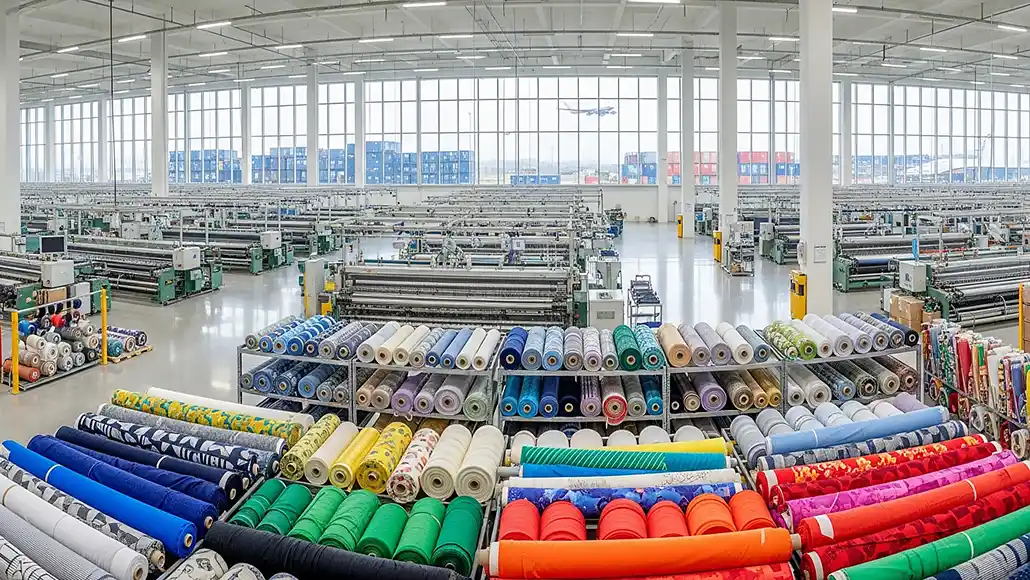
The pressure to align textile manufacturing with fashion trends has catalyzed significant innovations in production technology. Waterless dyeing systems, developed in response to sustainability trends, have become increasingly sophisticated and cost-effective. Automated weaving facilities, guided by AI-driven pattern optimization, can shift between different textile constructions with minimal downtime. These technological advances enable manufacturers to respond to fashion trends rapidly without compromising quality or environmental standards.
The customization trend represents perhaps the most significant shift in manufacturing methodology. Fashion trends increasingly celebrate individuality, uniqueness, and personalization. This consumer demand has driven investment in digital textile printing, on-demand manufacturing, and modular garment design. Manufacturers that can produce small-batch custom pieces without incurring prohibitive costs have gained substantial market advantages in an industry historically optimized for volume production.
Sustainability as Central Fashion Trend
Sustainability has transcended its position as a niche market segment to become the central fashion trend defining contemporary apparel development. The circular fashion movement—emphasizing recycling, upcycling, and extended product lifecycles—influences every stage of textile development. Manufacturers now design fabrics with end-of-life considerations, selecting fiber combinations that facilitate recycling rather than maximizing short-term production efficiency.
This sustainability-focused trend drives innovation in surprising directions. Biodegradable dyes, developed to reduce chemical persistence in the environment, have become competitive differentiators. Textile manufacturers utilizing closed-loop production systems—where dyes and chemicals are recycled rather than discharged—market this as premium positioning despite potentially higher production costs. Fashion brands have educated consumers to value and pay premium prices for these environmental commitments, fundamentally altering the economics of textile manufacturing.
The Market Outlook Through 2034
The projected growth trajectory—reaching USD 1,407.12 billion by 2034—will be driven predominantly by emerging markets and premium segments. Fashion trends in developing economies increasingly mirror established markets, driving demand for quality fabrics and sustainable production. Simultaneously, ultra-premium luxury segments continue expanding, supported by wealthy consumers valuing craftsmanship, rarity, and heritage textile techniques.
The decade ahead will likely see continued bifurcation of the textile industry. Mass-market segments will increasingly optimize for sustainability and affordability, utilizing advanced automation and efficient resource management. Premium segments will differentiate through artisanal techniques, rare fiber selection, and heritage production methods that emphasize human craftsmanship. Fashion trends, as always, will lead this evolution, with consumer preferences and aesthetic movements determining which textile innovations achieve commercial viability.