




















New research from the University of Oxford’s Smith School of Enterprise and the Environment suggests a significant Fashion Agriculture Impact, highlighting that nearly one-third of the world’s agricultural land is influenced by the fashion industry. The report, produced in partnership with DIRT Charity, estimates that the industry’s reach extends to 30.15% of global farmland, totaling approximately 1.45 billion hectares. This revised figure is notably higher than previous estimates, as it incorporates land utilized for leather and wool production in addition to standard textile crops.
Analysis of Global Land Use and Raw Material Sourcing
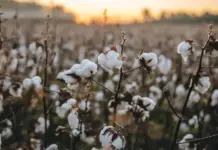
The data indicates that leather production accounts for 876 million hectares, while wool production covers 528.4 million hectares. Traditional crops used in textile production, such as cotton, occupy 34.7 million hectares, followed by linen and hemp at 5.9 million hectares and silk at 2.3 million hectares. According to the “Climate and Agricultural Impact of Textile Production” report, the environmental impact of a specific textile is often determined more by how the raw material is farmed rather than the type of fiber itself.
Variable Emissions and Material Comparisons
The study found that variations within a single material category can exceed the differences between different fiber types. For instance, the carbon footprint of leather was found to range between 8.5 and 152 kg CO2e per square meter. Similarly, mycelium-based leather alternatives showed a twentyfold difference in emissions depending on the energy source used during processing. One alternative was assessed at 2.76 kg CO2e per square meter, while another, produced using a coal-intensive grid, reached 57 kg CO2e. These findings suggest that fiber content alone may not be a sufficient indicator for tracking sustainable fashion metrics.
Similar disparities were noted in wood-based fibers. The research cited viscose emissions ranging from 0.20 to 8.30 tonnes of CO2e per tonne, with production methods and energy sources serving as the primary variables. Sam Fankhauser, report author and Director of the Smith School, stated that when leather and wool are included, roughly a third of the world’s agricultural land is linked to industry purchasing. He noted that the scale of the opportunity to influence land management through sourcing remains underestimated.
Regulatory Changes and Agricultural Methods
These findings are released ahead of new European Union regulations. Starting September 27, 2026, Directive (EU) 2024/825 will restrict generic environmental claims. Under these rules, sustainability labels provided to EU consumers must be established by public authorities or based on independently verified certification schemes. The Oxford report further explores how biodynamic farming and organic systems can enhance the environmental impact of raw materials by increasing species richness among beneficial insects, soil fauna, and birds compared to conventional methods.
Implementation of Sourcing Standards
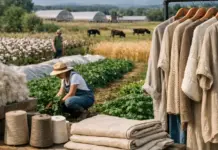
Evidence from trials in Egypt showed that biodynamic farming reduced pesticide use to less than 10% while increasing cotton yields by nearly 30%. Long-term trials in India also suggested these systems improved soil quality. Arizona Muse, founder of DIRT Charity, emphasized that brands have the opportunity to contractually demand that fibers be sourced from organic or biodynamic farms.
DIRT Charity is currently collaborating with Biodynamic Federation Demeter International to develop the Demeter Textile Standard. This proposed standard aims to cover the farming, processing, and manufacturing stages for 11 raw-material categories. By focusing on verified outcomes and farming methods, companies can better address the Fashion Agriculture Impact. Lead authors Megan Siyu Liu and Clara Cecil noted that while current results are promising, further research is required to understand the long-term viability and total land-use implications for future textile production and global sustainable fashion goals.