

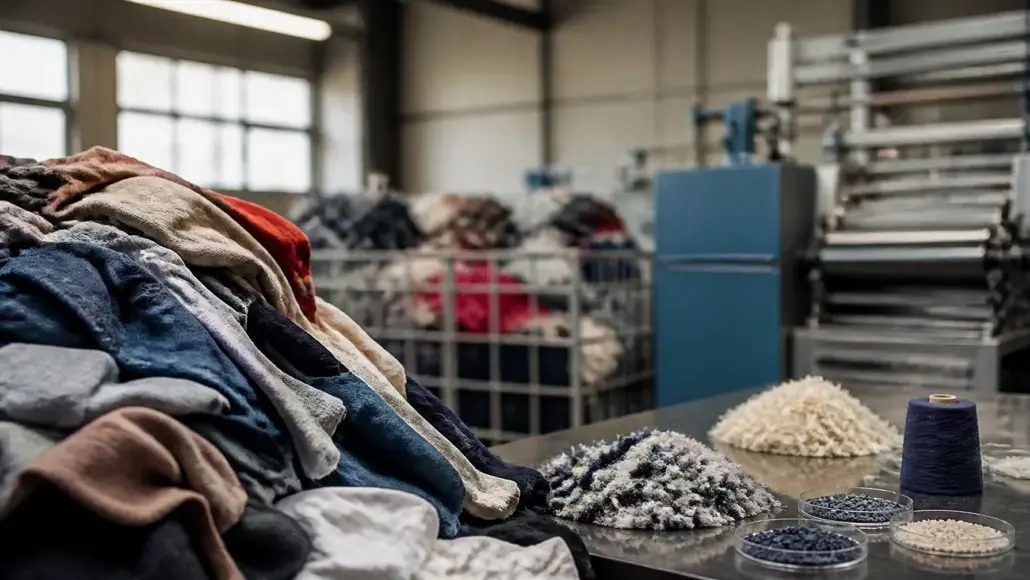
Deakin University and Salvos Stores have joined forces to develop new ways of recovering usable fibres from clothing that cannot be resold or reused. The Australian research initiative aims to turn discarded garments into quality materials that can re-enter textile manufacturing, rather than being directed towards lower-value applications or landfill.
The partnership brings together Salvos Stores’ garment collection and sorting capabilities with Deakin’s textile research expertise and pilot-scale manufacturing facilities. Supported by the Australian Government’s Trailblazer Universities Programme, the project will work with the organisation’s Textile Recovery Facility in Queensland.
The need for improved recovery systems is significant. Figures cited by the partners indicate that Australians send an average of 23kg of clothing per person to landfill each year. While wearable donations can be resold through charity stores, damaged and heavily worn garments often remain difficult to process through conventional reuse channels.
Improving fibre recovery and quality
At the Queensland facility, garments are sorted by fibre type and colour, while automated systems remove components such as buttons and zips. This separation creates more consistent material streams for subsequent recycling.
The research will investigate how recovered fibres can retain their length and quality, making them suitable for producing new clothing and other textile products. Maintaining fibre integrity is a major technical challenge in textile recycling. Mechanical processing, for example, can shorten fibres, limiting their suitability for spinning into new yarns and often restricting their use to products such as insulation and upholstery filling.
Associate Professor Chris Hurren of Deakin’s Institute for Frontier Materials said separating individual fibre types would help improve processing efficiency and the quality of recycled outputs.
The project will assess whether textile fibre recycling can deliver materials with the properties required for higher-value manufacturing applications.
Salvos Stores business development manager and textile scientist Meriel Chamberlin said the organisation continued to prioritise garments suitable for resale but was receiving increasing volumes of clothing that could not return to its shops. She said automated garment processing could help recover valuable materials without requiring manual removal of every component.
Connecting research with textile manufacturing
Deakin’s Future Fibres Facility will take the recovered materials through different textile manufacturing processes and evaluate potential end uses. The partners intend to develop product demonstrations that allow manufacturers to examine the performance and commercial possibilities of recycled inputs.
The facility could also help businesses explore opportunities for domestic textile production. According to Hurren, changes in shipping costs, renewable energy access, automation and global supply chain conditions are renewing interest in Australian manufacturing. Access to specialised pilot equipment can help companies test production concepts before committing to larger investments.
Chamberlin added that the ability to demonstrate processes at scale would be important for developing viable markets. She also highlighted the potential to recover materials from uniforms through secure decommissioning, creating another source of feedstock for textile recycling.
By combining automated sorting with fibre research and manufacturing trials, the partnership aims to establish practical pathways for keeping more textile materials in circulation and reducing clothing waste.