


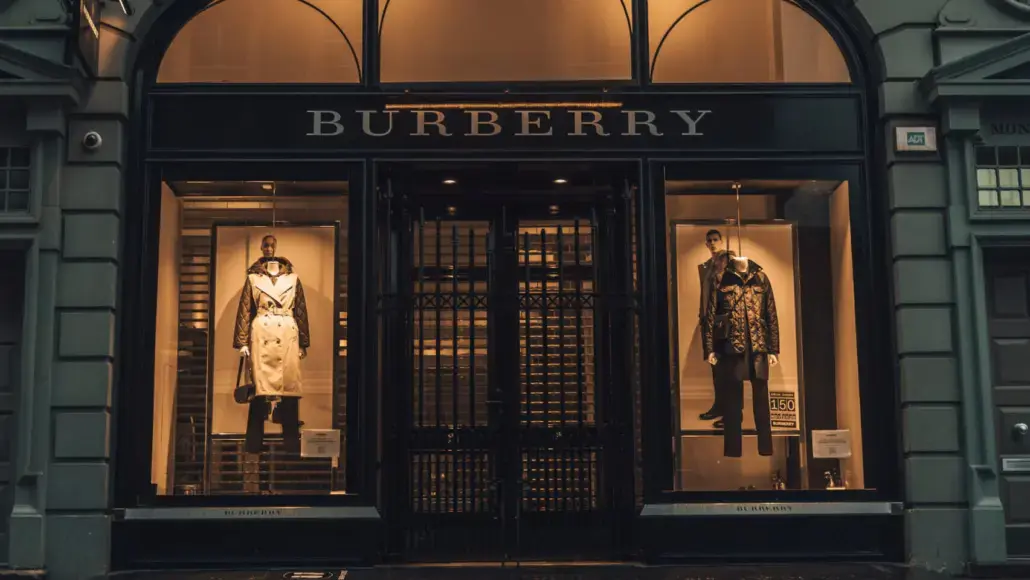
British luxury fashion house Burberry delivered a stronger-than-expected second quarter performance, with comparable retail sales surpassing market estimates as robust demand from the United States and China helped counter softness in the Europe and Middle East region.
The company posted comparable retail sales growth of 4% for the second quarter ended September 26, outpacing the average analyst expectation of 3% based on a company-compiled poll. The result puts Burberry Q2 sales firmly in positive territory at a time when several larger peers in the luxury sector continue to struggle.
Profitability Also Clears the Bar
Burberry’s adjusted operating profit for the first half of fiscal 2027 came in at £62 million, equivalent to approximately $82.19 million, well ahead of the average analyst estimate of £44 million. The beat on both the top and bottom lines underlines the momentum the British brand has been building through its ongoing turnaround strategy.
US and China Fuel the Recovery
Burberry Q2 sales growth was largely driven by strong performances in the US and China. In China particularly, the brand noted it has been successful in attracting Gen Z shoppers, a demographic that many heritage luxury labels have found difficult to engage. This ability to connect with younger consumers in one of the world’s most competitive luxury markets has been a notable factor in Burberry’s recent recovery.
The strength in these two key markets was sufficient to offset the drag from the Europe and Middle East region, which continued to weigh on overall results.
Contrast with Larger Luxury Peers
Burberry’s return to comparable retail sales growth stands in contrast with the persistently declining sales reported by larger luxury conglomerates. The company’s ability to grow in markets where broader luxury sentiment has remained under pressure reflects a different trajectory for the considerably smaller British luxury brand compared to some of its larger counterparts in the sector.
The company’s Gen Z shoppers strategy in China, combined with resilient demand in the US, appears to be supporting the brand’s broader recovery efforts, as reflected in both its Burberry comparable retail sales figures and its improved profitability metrics for the first half of fiscal 2027.