


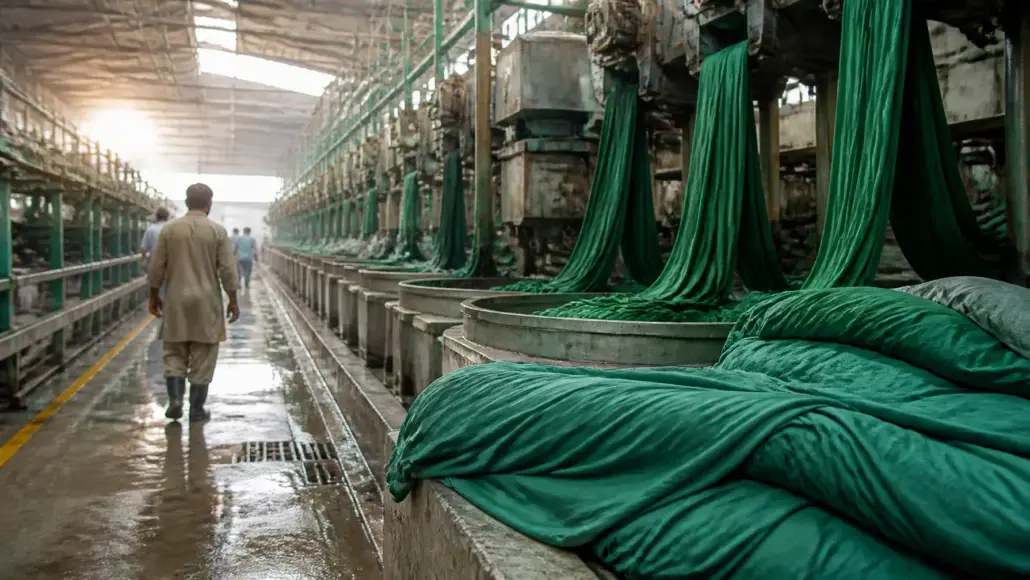
Pakistan’s textile and apparel exporters are under mounting pressure to embrace sustainable supply chains, cleaner production methods, and digital technologies. As international buyers sharpen their environmental requirements and demand greater supply chain transparency, the country’s export sector finds itself at a critical juncture.
These challenges came into sharp focus during the launch event of the second Global Procurement and Supply Chain Summit, popularly referred to as GPS 2027, held at NED University in Karachi on November 11. Organized by Horizon Summit Management, the summit itself is scheduled for January 20, 2027.
International Buyers Tightening Environmental Standards
Hafiz Kashif, Director of Artistic Milliners, addressed the gathering and outlined the shifting expectations from global buyers. He noted that buyers — particularly those catering to European markets and other environmentally conscious regions — are now actively evaluating their suppliers on a range of sustainability parameters. These include carbon emissions, energy efficiency, water conservation, and responsible sourcing practices.
Kashif stressed that reducing emissions and moving toward sustainable procurement practices are no longer optional considerations but are becoming essential conditions for maintaining access to international markets. He further pointed out that cleaner technologies, renewable energy adoption, and adherence to recognized sustainability standards are progressively defining the long-term competitiveness of exporters.
Participants at the launch also flagged that smaller manufacturers and suppliers face a compounded set of challenges. While they must keep pace with evolving environmental compliance requirements, they simultaneously struggle with rising production costs — a combination that places significant strain on their operational capacity.
The Role of Education and Digital Skills in Pakistan’s Export Future
Bridging the Gap Between Academia and Industry
Dr. Majida Kazmi, a professor at NED University and Director of its STEM Centre, highlighted a parallel dimension of the challenge — the need to build practical skills aligned with the demands of modern industry. She emphasized that artificial intelligence, automation, and digital technologies must become core areas of focus in technical education and professional training.
Dr. Kazmi called for stronger collaboration between universities and businesses to ensure that educational curricula and technical training programs are closely aligned with the evolving needs of manufacturing, procurement, and supply chain management. She also underscored the value of interdisciplinary STEM education — science, technology, engineering, and mathematics — in cultivating analytical thinking, adaptability, and problem-solving capabilities among students entering the workforce.
Participants at the summit launch broadly agreed that Pakistan’s export competitiveness will increasingly hinge on more than just manufacturing capacity and competitive pricing. Resilient supply chains and a skilled, technically equipped workforce are emerging as equally important factors in sustaining and growing Pakistan’s presence in global markets.
GPS 2027: A Platform for Sustainable and Digital Transformation
Syed Faisal Ali, CEO of Horizon Summit Management, expressed gratitude to participants and acknowledged the media’s contribution in highlighting Pakistan’s industrial capabilities and ongoing innovation efforts.
The GPS 2027 summit is designed to bring together a broad cross-section of stakeholders — industry leaders, procurement professionals, technology experts, policymakers, and academics. Discussions at the summit will cover sustainable sourcing, industrial automation, artificial intelligence adoption, and opportunities across the textile and apparel value chain.
The launch event itself drew representatives from textile, information technology, engineering, procurement, and supply chain management sectors, reflecting the multi-disciplinary nature of the challenges and opportunities that the summit aims to address.
As global buyers continue to raise the bar on environmental and ethical standards, Pakistan’s textile exporters pursuing green practices and digital technologies will find themselves better placed to protect and expand their foothold in competitive international markets. Sustainable textile transformation, combined with investment in a skilled workforce, is increasingly being seen as the path forward for Pakistan exporters looking to remain relevant in the years ahead.

