






























PSI 2026

Cause of Dip in Indonesian Textile Industry in October 2025

Note* - All images used are for editorial and illustrative purposes only and may not originate from the original news provider or associated company.

Subscribe

- Never miss a story with notifications

- Gain full access to our premium content

- Browse free from up to 5 devices at once

Media Packs

Expand Your Reach With Our Customized Solutions Empowering Your Campaigns To Maximize Your Reach & Drive Real Results!
– Access The Media Pack Now!
– Book a Conference Call
Leave Message for us to Get Back

Related stories

Advancements in Natural Fiber Textile Recycling for Cotton and Wool

Natural fiber textile recycling has advanced significantly through cutting-edge chemical dissolution, fiber regeneration, and advanced separation technologies enabling high-purity recovery of cotton and wool fibers matching virgin specifications. Processes like Renewcell’s Circulose® and Evrnu’s NuCycl technology now enable indefinite cycling of cotton fibers while wool recycling technologies preserve fiber properties across multiple reuse cycles, creating genuine circular pathways for natural textiles and addressing the environmental advantages of fiber recovery from conventional resource-intensive virgin cultivation.

The Role of AI and Automation in Advancing Textile Recycling Systems

Artificial intelligence and automation technologies are revolutionizing textile recycling by dramatically improving sorting accuracy, material separation efficiency, and overall system throughput. Machine learning algorithms, computer vision systems, near-infrared spectroscopy, and robotic automation are transforming labor-intensive manual processes into intelligent automated systems capable of identifying and processing hundreds of items per hour with accuracy exceeding 95%, enabling scalable textile recycling infrastructure that was previously economically unviable.

How Brands are Redesigning Products to Support Textile Recycling and Circularity

Fashion brands are fundamentally redesigning product architecture to support textile recycling and circular business models through design-for-recycling principles including mono-material construction, detachable trims, and simplified component design. These design transformations address downstream processing requirements, reduce end-of-life complexity, and enable brands to achieve circular positioning while simultaneously improving manufacturing efficiency and creating differentiated market positioning in sustainability-conscious segments.

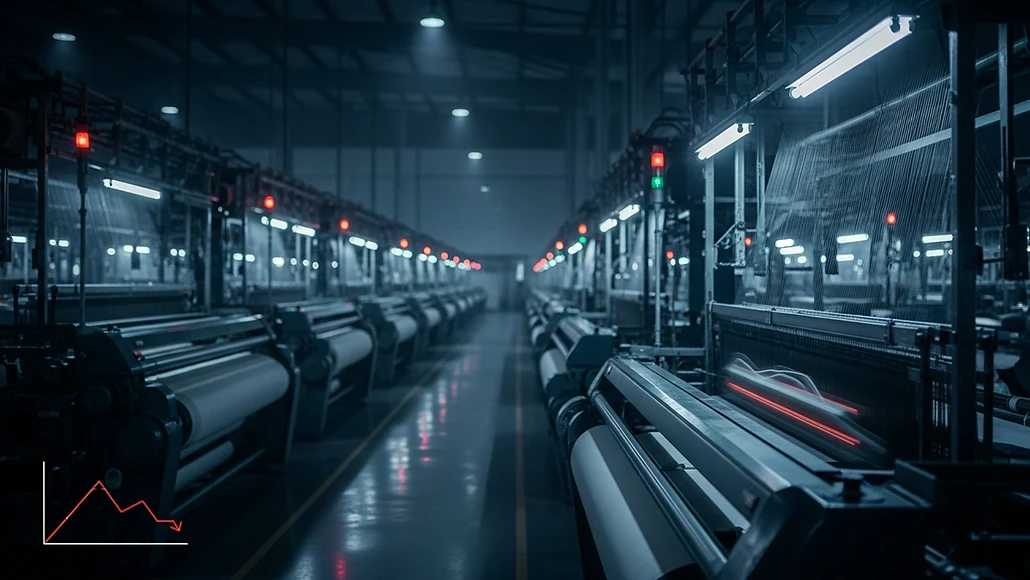
The industrial confidence index – IKI in Indonesia for the textile sub-sector got recorded at 49.74% in October 2025, which goes on to mean that the performance of the sector has seen a decline.

The Ministry of Industry – Kemenperin also went on to reveal the dip in Indonesian Textile Industry in October 25.

Rizky Aditya Wijaya, the Director of the Textile, Skin, and Footwear Industry, Directorate General of Metal, Machinery, Transportation Equipment, and Electronics – ILMATE of the Ministry of Industry, opined that the performance of the textile industry was dipping because of alterations within the dynamics of trade across the world and the cycle of demand when it comes to international textiles.

This got conveyed by Rizky in the release of IKI October 2025 at the Ministry of Industry Building, Jakarta, on Thursday, October 30.

According to Rizky, in October 2025, IKI for the textile or the KBLI 13 sector happened to be at a level below expansive, or 49.74%. The dip in Indonesian Textile Industry in October 25 majorly occurred across new orders that were influenced due to stock alterations within export destination countries like America and Europe after a large expansionary period at the start of 2025.

The slowdown within the textile sector’s performance happens to be also because of a change in the fashion mode. Rizky says that other major textile-producing nations have already experienced a similar thing.

He further said that it is also added as the fashion mode witnesses a change. A very similar phenomenon is also experienced by certain other major producing countries, like China, India, and Vietnam, that are at present balancing the delivery cycle and at the same time optimizing the efficiency of supply chains across the globe.

When one talks of the global context, says Rizky, the Ministry of Industry is going to adjust the pattern of purchase in the future. They did adjust the purchase pattern by way of a short-term buying system so as to avoid overstock much before the 2026 production season.

On the other hand, Rizky also confirms that the Indonesian textile producers have gone on to manage to tweak through diverting some of the production capacity towards the domestic market. So, at present, the national clothing industry happens to be at an expansive level.

Rizky explains that the step was also aided by the Permendag policy Number 17 of 2025 that started to control the flow when it comes to imported finished clothes, thereby growing the absorption of raw materials within the country.

He goes on to add that the present condition is indeed a consolidation phase in terms of efficiency as well as sustainability.

Their textile industry is indeed transforming into high-value products like functional textiles, recycling, and technical textiles, which happen to be in sync with the direction of the green industry and also the circular economy.

In the future, Rizky opines that the government will consistently strengthen the synergy when it comes to industrial and trade policies so as to make sure of the availability of raw materials and also expand export and domestic markets so that the national industry competitiveness remains robust.

Due to the IKI results for the textile industry sector in October 2025, one indeed needs to gauge them as indicators in terms of global alteration and not in any way weakening. Rizky says that they are pretty optimistic that by the end of 2025, the Indonesian textile industry is surely going to move back to a much more robust expansionary module.

Latest stories

Related stories

Advancements in Natural Fiber Textile Recycling for Cotton and Wool

Natural fiber textile recycling has advanced significantly through cutting-edge chemical dissolution, fiber regeneration, and advanced separation technologies enabling high-purity recovery of cotton and wool fibers matching virgin specifications. Processes like Renewcell’s Circulose® and Evrnu’s NuCycl technology now enable indefinite cycling of cotton fibers while wool recycling technologies preserve fiber properties across multiple reuse cycles, creating genuine circular pathways for natural textiles and addressing the environmental advantages of fiber recovery from conventional resource-intensive virgin cultivation.

The Role of AI and Automation in Advancing Textile Recycling Systems

Artificial intelligence and automation technologies are revolutionizing textile recycling by dramatically improving sorting accuracy, material separation efficiency, and overall system throughput. Machine learning algorithms, computer vision systems, near-infrared spectroscopy, and robotic automation are transforming labor-intensive manual processes into intelligent automated systems capable of identifying and processing hundreds of items per hour with accuracy exceeding 95%, enabling scalable textile recycling infrastructure that was previously economically unviable.

How Brands are Redesigning Products to Support Textile Recycling and Circularity

Fashion brands are fundamentally redesigning product architecture to support textile recycling and circular business models through design-for-recycling principles including mono-material construction, detachable trims, and simplified component design. These design transformations address downstream processing requirements, reduce end-of-life complexity, and enable brands to achieve circular positioning while simultaneously improving manufacturing efficiency and creating differentiated market positioning in sustainability-conscious segments.

Subscribe

- Never miss a story with notifications

- Gain full access to our premium content

- Browse free from up to 5 devices at once

Media Packs

Expand Your Reach With Our Customized Solutions Empowering Your Campaigns To Maximize Your Reach & Drive Real Results!

– Access The Media Pack Now!
– Book a Conference Call
Leave Message for us to Get Back

Translate »