


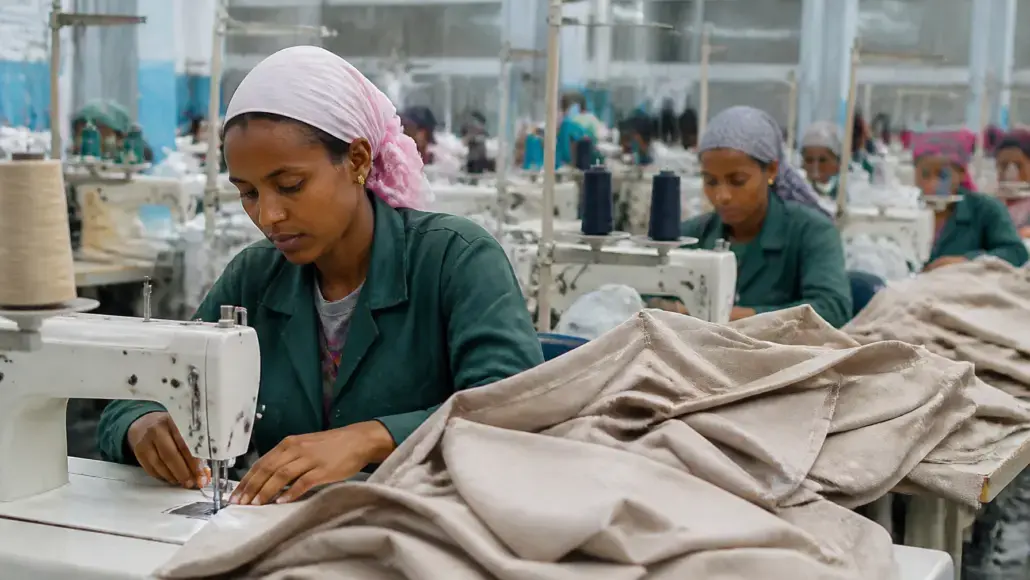
Ethiopia is actively pursuing both domestic and foreign investment to bolster its textile, garment, and leather industries — with a sharp focus on expanding local processing capabilities, strengthening manufacturing capacity, and scaling up exports of finished goods. The government’s renewed push was placed firmly in the spotlight during the 12th African Sourcing and Fashion Week, an event that served as a key platform for industry stakeholders, policymakers, and international buyers to converge around shared trade and investment goals.
African Sourcing and Fashion Week Opens in Addis Ababa
The 12th African Sourcing and Fashion Week (ASFW) officially opened on November 12 at the Addis International Convention Center in Addis Ababa. The four-day exhibition drew more than 250 exhibitors, with upwards of 6,000 trade visitors and buyers from 70 countries expected to participate over the course of the event. The gathering brought together a broad network of manufacturers, suppliers, designers, and policy representatives, all aimed at deepening trade connections and investment partnerships across the continent’s fashion and textile value chains.
Government Calls for End-to-End Industry Integration
Addressing delegates at the opening ceremony, State Minister of Industry Dagato Kumbe laid out Ethiopia’s ambition to develop internationally competitive industries by integrating production processes from raw materials through to finished products. He stressed the need to strengthen every link in the chain — from cotton production and spinning to weaving, garment manufacturing, and fashion branding — while simultaneously improving quality standards and ensuring compliance with international trade requirements.
Dagato also directed attention to the leather industry, calling for greater Ethiopia textile investment in leather processing and footwear manufacturing as a means of reducing the country’s reliance on exporting raw hides and skins. He identified the planned Mojo Leather City Industrial Park as a significant opportunity for both local and international investors looking to enter the leather industry Ethiopia supply chain.
Industrial Parks Drive Job Creation and Foreign Interest
Fesseha Yitagesu, CEO of the Industrial Parks Development Corporation, provided an overview of Ethiopia’s progress in building out its economic infrastructure. He noted that over the past decade, the country has established 14 special economic zones, which have collectively attracted more than 300 investors and created over 100,000 jobs. These industrial parks Ethiopia have been central to the country’s strategy of drawing in foreign capital and fostering manufacturing at scale.
Africa’s Cotton Potential Remains Underutilized
Goshu Negash, President of the Ethiopian Textile and Garment Manufacturers Association, raised a broader concern about Africa’s limited share in global textile exports. Despite the continent producing approximately eight percent of the world’s raw cotton, its contribution to finished textile trade on the global stage remains disproportionately small. He called for stronger policy frameworks, improved infrastructure, and deeper investment in value chains to sharpen Africa’s competitiveness in garment manufacturing Africa and beyond.
US–Africa Cooperation in Leather Trade Highlighted
U.S. Embassy Agricultural Counsellor Sarah Gillespie spoke to the existing and potential cooperation between American leather suppliers and African designers. She noted that the United States exports approximately USD 700 million worth of hides and skins globally each year, yet exports directed to Africa account for less than USD 1 million of that total — underscoring the considerable room for growth in bilateral leather trade and collaboration.
Investment and Market Access at the Core of ASFW Goals
The African Sourcing and Fashion Week was structured to serve as a bridge between Ethiopian and African manufacturers and the international buyer community. The exhibition aimed to facilitate investment partnerships, connect producers with global sourcing networks, and expand Ethiopia’s access to international markets — all consistent with the country’s broader industrial strategy around Ethiopia textile investment and export-led growth in the leather industry Ethiopia.