
































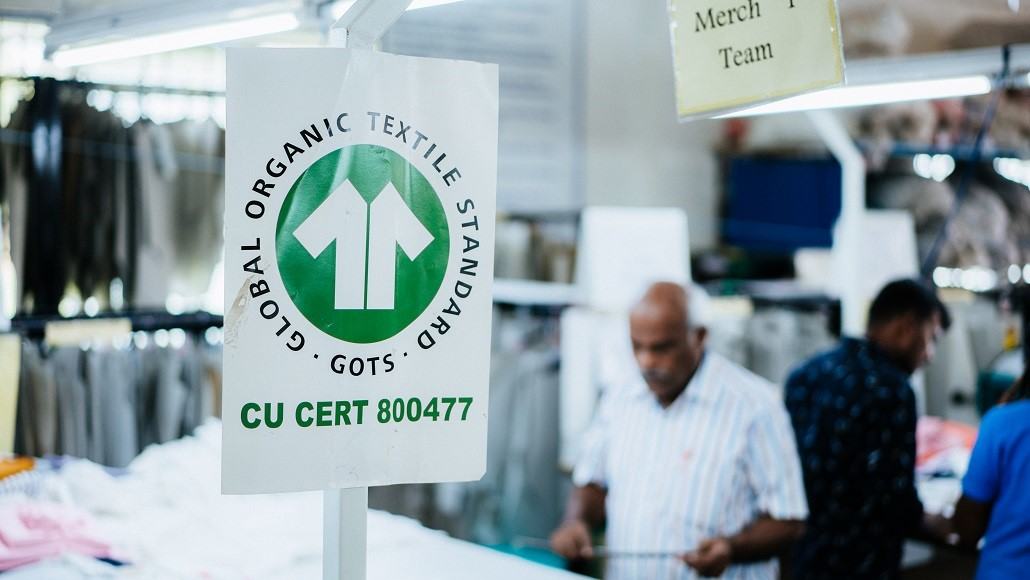

Global Standard is rolling out a major update to the Global Organic Textile Standard, introducing mandatory due diligence expectations aligned with OECD guidance and tightening oversight requirements for certified organisations under GOTS Version 8.0. The nonprofit said the revised framework raises the bar on governance and environmental controls while also modernising product and chemical requirements to reflect a fast-evolving regulatory landscape.
The organisation described the new due diligence approach as a response to the growing compliance burden facing fashion and textile businesses, saying the changes are designed to bring “greater clarity” at a time when regulatory risk is rising. Global Standard added that the new edition is the result of a lengthy revision process, including two public consultation rounds held during 2025 and broad engagement with stakeholders. The work also aimed to align with wider sustainability initiatives and referenced the ISEAL Code of Good Practice.
Global Standard managing director Rahul Bhajekar said: “We proudly present GOTS Version 8.0 as the outcome of an extensive and highly collaborative revision process, reflecting the collective intelligence of our global stakeholder community,” adding that “the diverse expertise, rigorous dialogue and shared commitment of all participants have been decisive in further strengthening the Standard and ensuring its forward-looking relevance.”
Due diligence and governance: a step change in expectations
One of the defining shifts in GOTS Version 8.0 is the introduction of new due diligence criteria intended to bring certification requirements closer to OECD-aligned frameworks. Alongside higher due diligence obligations, the standard formalises governance expectations for certified entities, including ESG disclosure elements, anti-corruption policies and conflict-of-interest protections.
To support implementation, Global Standard points to newly referenced tools, including a Due Diligence Handbook for Certified Entities. It has also expanded the Manual for Implementation, adding more detailed guidance on due diligence, human rights considerations and internal audit processes.
Environmental and climate requirements: sharper rules and clearer proof
Global Standard said the revised standard strengthens environmental controls, with tighter requirements on air emissions and waste management. It also introduces “elaborated climate criteria,” clarifying what companies must do to manage greenhouse gas emissions. That includes expectations around creating Scope 1 and Scope 2 inventories, documenting performance and showing measurable improvement over time.
Textile waste is also addressed more explicitly. The update includes strengthened waste management expectations and embeds waste hierarchy guidance, prioritising prevention first, then reuse, recycling and responsible end-of-life outcomes.
Chemical controls and testing: clearer lists and tougher limits
A further change is chemical governance. The update introduces a dedicated, clearly defined GOTS Manufacturing Restricted Substances List, setting out requirements for chemical inputs and formulators. Global Standard said controls on chemical inputs have been tightened and clarified, including updated limits for free aniline in indigo dyes.
The revision also expands requirements related to endocrine disruptors, with guidance aligned to EU legislation, and strengthens restrictions on PFAS through tighter limits and updated testing described as significantly reinforcing the existing PFAS ban.
Testing references have also been updated to increase the robustness of GMO verification, supporting stronger confirmation that cotton fibres are non-GMO.
Circularity, microfibre risk, product durability and packaging
The new version introduces provisions intended to reflect circular business models. Under GOTS Version 8.0, certified products can remain within certification through activities such as repair and resale, helping connect certification with extended product use and circularity strategies.
Microfibre management is another addition. The standard now requires risk-based measures to address microfibre release during processing and expects monitoring of fragmentation in the final product, signalling a stronger focus on fibre shedding and related environmental concerns.
For finished goods, Global Standard highlighted expanded durability and robustness testing aimed at supporting product longevity and compliance. Packaging rules have also been updated, with criteria promoting recycled content, restricting harmful materials and supporting alignment with emerging regulations.
Finally, the update strengthens product safety criteria and introduces additional testing and residue requirements for hygiene products, including tampons.
Transition timeline
Global Standard said the updated standard will be fully in force from 1 March 2027, following a transition period intended to give certified entities time to adopt the new requirements.