

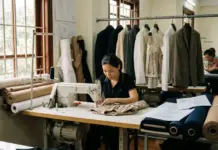

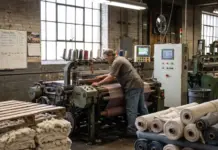
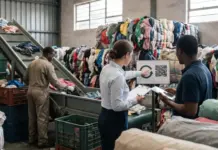

















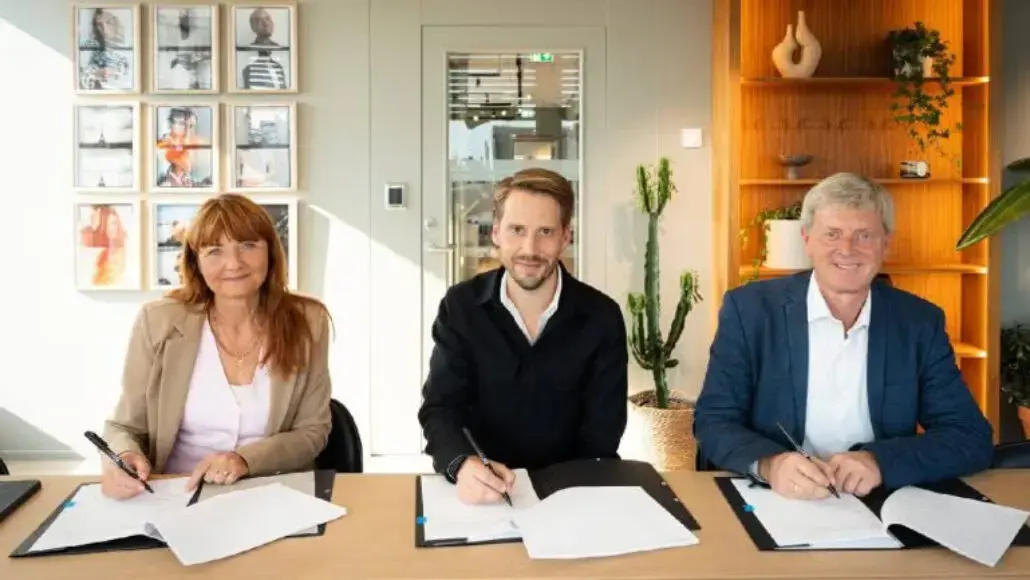
H&M Group, IndustriALL Global Union, and IF Metall have finalized a revised version of their Global Framework Agreement, building upon an eight-year partnership that first began in 2015. The updated agreement expands and reinforces provisions previously established and renewed in 2016, covering employees at approximately 1,000 manufacturing sites. The primary objective is to maintain safeguards for workplace conditions and ensure trade union rights across the entirety of the retail group’s production network within the apparel supply chain.
The revised Global Framework Agreement now integrates all core conventions of the International Labour Organization (ILO). This includes a specific focus on ILO Convention 190, which aims to prevent and address harassment and violence in the professional environment. H&M Group noted that the document also features commitments to enhanced due diligence in alignment with OECD Guidelines, alongside dedicated mechanisms to remedy and prevent gender-based violence.
Enhanced Governance and Conflict Resolution Mechanisms
To ensure effective implementation and oversight, the partners have updated the governance structure of the Global Framework Agreement. The new framework introduces several specialized bodies, including national monitoring committees, a global steering committee, and a joint industrial relations development committee. A significant addition to the agreement is a binding dispute resolution process. This system utilizes an independent mediator to make final decisions on conflicts arising within the supply chain, providing a structured approach to conflict management in the sustainable industry.
Atle Hoie, general secretary of IndustriALL, commented that the renewed agreement continues the essential task of empowering workers and unions. He highlighted the inclusion of all core ILO conventions and the emphasis on neutrality regarding union organizing as vital elements. Hoie further noted that the combination of monitoring committees and a binding dispute resolution mechanism provides the necessary foundation for the functional industrial relations required for a sustainable industry.
Continuity of Workplace Protections and Collaborative Initiatives
Beyond the new provisions, the agreement maintains a focus on promoting collective bargaining at the factory, company, and industry levels. It continues to uphold essential workplace safety protocols, including the right of workers to refuse tasks deemed unsafe. Education remains a cornerstone of the partnership, with mandatory ongoing training for both union representatives and management. These sessions cover employer responsibilities, labor rights, industrial relations, and methods for peaceful conflict resolution.
H&M Group has reaffirmed its commitment to utilizing its industry influence to encourage respect for trade union and labor rights among its direct manufacturing partners. This includes ensuring that worker representatives are protected from discrimination and granted the access necessary to perform their roles.
The updated agreement also recognizes the importance of broader collaborative efforts. Initiatives such as the ACT agreement, the Accord on Fire and Building Safety, the Ready-Made Garment Sustainability Council (RSC), and the Employment Injury Scheme (EIS) in Bangladesh are acknowledged as integral parts of the ongoing strategy to improve workplace safety and overall Apparel Supply Chain Labor Rights.