





























The International Apparel Foundation (IAF) has issued a call for the industry to respond to the current disruption in global sourcing with a stronger commitment to stability, shared responsibility and long-term reform. In a statement addressing the supply chain turmoil linked to conflict in the Middle East, the federation argues that the sector is not simply a bystander to geopolitical shocks and can help shape how those shocks play out through the choices it makes on sourcing, contracting and investment.
“As in previous crises, our role as an industry federation is to articulate how the industry should respond and adapt in order to maintain stability and resilience,” the IAF states.
The organisation frames the moment as a test of apparel supply chain resilience, and says the most effective response is to reinforce the foundations of the industry rather than rely on short-term fixes. “We believe that the best way to deal with external shocks is to build the strongest possible foundations for our industry, to improve productivity and to reduce unnecessary waste of capital, material, and human resources. Achieving this requires sustained investments in supply chain processes and deeper collaboration, supported by a framework of responsible purchasing practices.”
IAF also warns that, historically, crises have led to a familiar pattern: costs and risk being shifted onto the upstream end of the value chain. While that can protect buyers in the near term, the federation argues it erodes the ability of manufacturers to invest, adapt and even cover day-to-day operating demands—ultimately making the entire system more fragile.
“While transferring all risks and costs upstream may generate short-term benefits for buyers, depriving manufacturers of the capacity to invest, or even to meet existing operational costs, will weaken the industry and create long-term loss for all,” the IAF says.
Building the infrastructure for a more balanced model
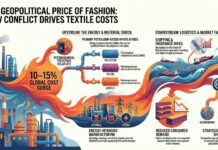
Pointing to its Sustainable Terms of Trade Initiative, IAF says it is working on practical structures that can support a “more balanced and resilient system” across the industry. The current crisis, it adds, has also sharpened attention on the sector’s exposure to energy volatility, given the disruption is centred in the world’s largest oil and gas producing region. For IAF, that makes the business case for reducing reliance on fossil fuels harder to ignore.
“The days that a shift to an energy mix with more renewable energy sources was viewed only as an environmental concern are now behind us. Investments in renewable energy are a shared strategic priority for apparel brands, retailers, apparel and textile manufacturers and governments alike.”
IAF also says it is working with the International Textile Manufacturers Federation (ITMF) through the Apparel and Textile Transformation Initiative (ATTI), an effort launched last year intended to accelerate sustainability and innovation while putting manufacturers in a stronger leadership role in driving change.
The federation said updates from ATTI pilot chapters in Bangladesh and Türkiye are expected in the coming months. It closed by reiterating that apparel supply chain resilience is not optional in today’s operating climate, arguing that stronger systems are now central to competitiveness as well as sustainability.
“In times of global uncertainty, strengthening the resilience, fairness and sustainability of apparel supply chains is an economic necessity.”