





























Epoch Biodesign has secured fresh financing to speed up the market rollout of its enzymatically recycled nylon 6,6, as the company moves from pilot-scale output toward a larger demonstration facility designed to prove commercial production. Announced in London on 25 March 2026, the round includes participation from Lululemon alongside investors such as KOMPAS VC, Happiness Capital, Extantia and Leitmotif, among others. The new capital takes Epoch’s total funding to more than $50 million.
The company’s proposition targets one of the most difficult gaps in textile and plastics circularity: how to recover nylon 6,6 in a way that can truly replace virgin input at industrial scale. Epoch says its process breaks down waste garments and other nylon materials into their original chemical building blocks—specifically the monomers adipic acid and HMDA—so that virgin-quality polymer and yarn can be made again. The goal is to create recycled nylon 6,6 that performs like new material while reducing dependence on virgin feedstock.
Epoch said the funds will be used to accelerate global commercialisation and deepen partnerships across apparel, automotive and additional end markets where nylon 6,6 is widely used. The raise follows a recent memorandum of understanding between Epoch and INVISTA, one of the world’s largest nylon 6,6 producers, and comes as Epoch nears completion of what it describes as its second—and largest to date—nylon 6,6 biorecycling facility. The new demonstration site is intended to validate production at commercial scale and support the transition from multi-tonne to multi-kilotonne capacity.
Jacob Nathan, founder and CEO of Epoch Biodesign, said the strategic mix of backers reflects the company’s plan to build demand across multiple industries. “We’re delighted to announce the closing of this strategic funding round, which includes investment from both existing investors and exciting new partners. From the apparel industry, we’re proud to receive fresh backing from Lululemon, an athletic wear brand known for innovation and quality. We also welcome Leitmotif, a deep tech investor with strong ties into the automotive industry, which is a key sector for Epoch. Nylon 6,6 is a key material for both apparel and automotive industries, but a circular solution has yet to be successful at scale.
Support from partners such as these highlights Epoch’s momentum and will accelerate our plans to progress from multi-tonne production to multi-kilotonne scale. Very soon, recycled nylon 6,6 will be available to our partners in apparel, automotive and beyond.”
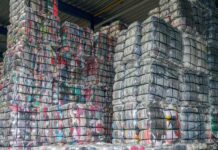
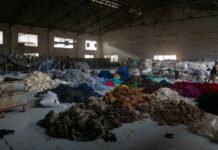
At the technology level, Epoch positions enzymatic recycling as a route to “infinite” recycling for end-of-life and scrap materials that would otherwise go to landfill or incineration. The company says its approach is capable of handling difficult feedstocks, including blended textiles, multilayer laminates, coated fibres and mixed, compounded automotive plastics—materials that often defeat conventional mechanical recycling.
Epoch also emphasised supply-chain practicality. Rather than asking brands and OEMs to overhaul sourcing relationships, the company says it is working with a broad range of yarn producers to offer a drop-in option that can improve sustainability without forcing customers to change suppliers. For brands seeking credible circular inputs at scale, Epoch’s bet is that performance parity and compatibility will be as important as the chemistry behind the process.