








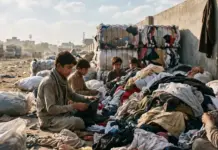
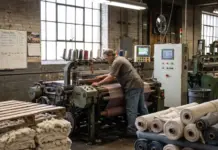











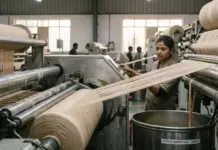











Europe’s textile waste is rising faster than the region’s ability to capture, sort and recycle it, leaving circularity ambitions constrained by basic system capacity. That is the central warning from Boston Consulting Group’s new report, Advancing Textile Circularity in Europe: The Case for System-Level Scale-Up, which argues that a fragmented collection and sorting ecosystem is limiting the feedstock available for high-quality recycling—especially textile-to-textile routes.
BCG estimates Europe generated about 15.2 million tonnes of textile waste in 2025, driven overwhelmingly by post-consumer volumes. Of the 13.3 million tonnes coming from households and businesses after use, only around 1.5 million tonnes is currently collected and sorted—roughly one tonne in nine of the post-consumer stream. With collection around 33% and sorting around 36%, the report says the “addressable base” for scaling textile to textile recycling remains small and concentrated.
The waste surge is closely tied to consumption patterns. BCG points to structural demand growth of about 4% per year since 2020, amplified by fast fashion, which it projects will expand at roughly 11% annually between 2025 and 2035. The result is accelerating churn: EU consumers buy about 95 textile pieces per year, up 12% versus 2019, as product lifetimes compress and more clothing reaches end-of-life.
Regulation is tightening across the value chain, but BCG argues policy momentum must now translate into operational build-out. From 2025, mandatory separate textile collection and the rollout of textile extended producer responsibility (EPR) are expected to improve funding and accountability. At the same time, export restrictions on unsorted textile waste and bans on destroying unsold textiles will reduce the system’s traditional “escape valves,” increasing pressure to develop domestic treatment capacity.
BCG models what it would take to lift textile-to-textile volumes from below 1% today to around 15% by 2035. That step-change would require collection via dedicated channels to rise to about 50% by 2035 and sorting to reach roughly 63%, supported by pre-processing that produces recycling-ready feedstock. On the back end, Europe would need capacity to process about 2.7 million tonnes into new textile fibres.
The investment requirement is substantial: BCG estimates incremental CAPEX of €8–11 billion and recurring OPEX of €5–6.5 billion per year by 2035. Under baseline assumptions, profitability is unattractive for several links in the chain—especially recyclers—meaning enabling mechanisms will be needed to make textile to textile recycling investable at scale. These could include CAPEX grants, eco-modulated EPR fees that reflect true end-of-life costs, recycled-content requirements, and risk-sharing tools such as offtake agreements and standards.

