







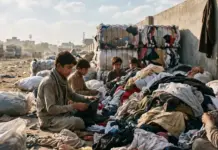


















A new WRAP report, funded by Nike, examines how extended producer responsibility policies are being applied to textile waste systems and outlines what producers need to know to remain compliant. Centered on Textile EPR regulations across multiple markets, the WRAP report focuses on implementation details, scope and the compliance steps required from producers.
Where textile EPR is in effect or advancing
According to the report, textile EPR regulations are currently in effect in the United States in California, as well as in France, Hungary, Kenya, Latvia and the Netherlands, with voluntary policies in Australia and Colombia. EPR regulations for textiles are pending in the U.S. in New York and Washington state, along with Bulgaria, Chile, Germany, Ireland, Italy, Lithuania, Spain and Sweden. Early-stage discussions of regulation have also commenced in Brazil, Canada, China, Ecuador, Ghana, India, Peru, Norway, the United Kingdom and the remainder of the European Union.
What EPR means for textiles
Extended producer responsibility shifts the end-of-life financial and operational burden of managing product waste from local governments to the product’s producer, typically using a fee structure to fund approved recycling and disposal infrastructure. Applied to textiles, extended producer responsibility could potentially strengthen circular economy efforts by increasing circularity measures and diverting textile waste from landfills.
“EPR is a proven policy instrument for ensuring the sustainable management of products post-sale and for incentivizing the products to be more durable, recyclable and circular in the first instance,” said Jordan Girling, head of EPR at WRAP. “With EPR schemes for textiles emerging rapidly around the world, there is a great opportunity to tailor EPR to the unique context of textiles and fashion products, ultimately helping the sector to minimize the environmental impact of their products and to move towards a truly circular system.”
Global scope and compliance considerations
As textiles come under these rules, the report notes the global nature of the industry makes it important for schemes to include overseas sellers as well as domestic producers. According to the WRAP report, clothing and footwear account for 43 percent of global cross-border ecommerce purchases, and 50 percent of shoppers in the U.S. and the U.K. have bought products from online stores in another country during the past 12 months.
Key takeaway for producers
The WRAP report consolidates where textile EPR is live, pending or under discussion, explains how the policies function in textile waste systems, and sets out the information producers need for compliance within an evolving circular economy landscape.

