






























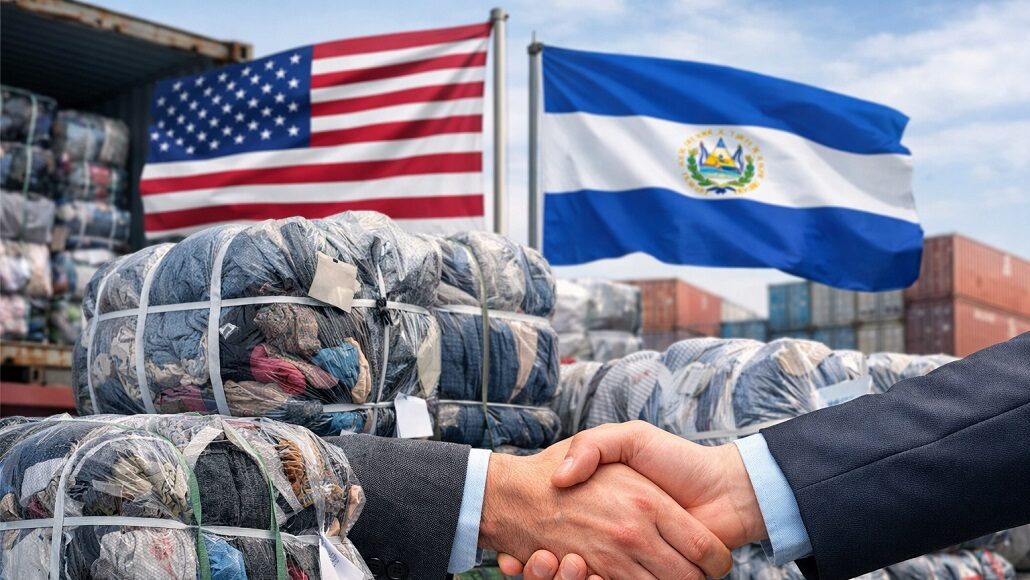

The Secondary Materials and Recycled Textiles Association (SMART) has expressed strong support for a newly confirmed trade framework that reinforces preferential access for American exports of used garments to El Salvador under the Central America–Dominican Republic Free Trade Agreement (CAFTA-DR).
The development marks the conclusion of months of industry advocacy aimed at resolving regulatory uncertainty that had affected shipments of second-hand apparel. The clarification brings greater stability to cross-border trade and strengthens the foundations of the reuse and recycling sector. It also represents a significant milestone in the evolving US used clothing trade agreement framework.
For more than a year, SMART members had faced inconsistent interpretations of import rules by Salvadoran authorities. Officials questioned whether second-hand clothing qualified for preferential treatment under CAFTA-DR, leading to delays, compliance challenges, and disruptions to established supply chains.
To address these concerns, SMART engaged extensively with US government agencies, including the Department of Commerce and the Office of the United States Trade Representative (USTR). The association urged policymakers to align trade rules with the realities of the reuse industry and eliminate regulatory ambiguity.
These discussions were reinforced through ongoing dialogue during Agreement on Reciprocal Trade (ART) negotiations. Throughout the process, SMART maintained that eligibility for trade benefits should be determined by export origin, rather than additional criteria that did not reflect how the resale market operates.
The newly confirmed arrangement now formalises this position, removing previous requirements that had created unnecessary barriers for exporters and importers alike. As a result, businesses operating in the second-hand clothing sector can now trade with greater confidence and predictability.
Commenting on the breakthrough, SMART’s vice president of government and external affairs, Jessica Franken, said:
“This outcome represents a meaningful step forward for our members and for the broader circular economy. We are grateful to the Administration and US trade officials for their willingness to engage with our industry and deliver a solution that supports responsible reuse, recycling, and legitimate global trade.”
Industry leaders view the agreement as a positive signal for sustainable commerce and responsible resource management. By reinforcing market access under the US used clothing trade agreement, the framework supports environmentally conscious business models while expanding affordable clothing options in regional markets.
Looking ahead, SMART reaffirmed its commitment to continued collaboration with policymakers, regulators, and international partners. The association said it will remain focused on advancing policies that strengthen reuse systems, promote sustainable trade, and encourage wider participation in circular economy initiatives.