


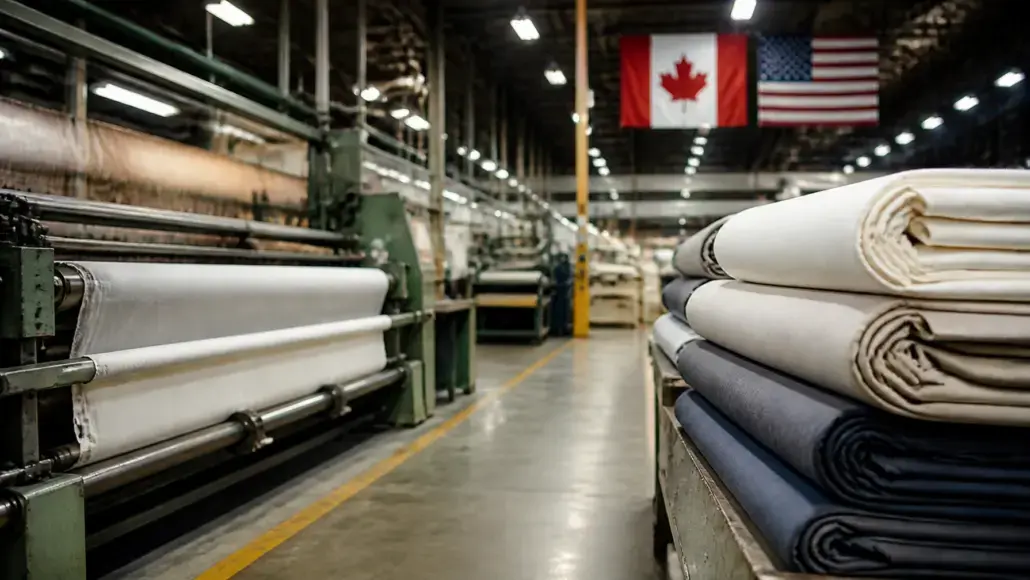
A prominent Toronto-based fabric producer is transitioning its processing operations to American contractors and initiating a strategy for full-scale factory relocation. Fine Cotton Factory, which supplies materials for apparel and bedding, cited the impact of US trade tariffs as the primary driver for moving its textile production across the border.
The company currently relies on the United States for approximately half of its total sales. According to executive vice-president Skip Kann, certain products have been subjected to tariffs as high as 50 percent, prompting many customers to delay orders and deplete existing stock. While orders are showing signs of recovery, the firm has begun shipping unfinished materials south for final processing to mitigate the financial burden of duties on finished goods. This strategy precedes a planned factory relocation to the United States, which includes the establishment of a warehouse followed by the installation of machinery for full production by early 2027. Kann noted that even a potential adjustment in trade agreements might not alter the company’s trajectory toward American expansion.
September Data Reveals Broad Softening in Industrial Sales
The shift in Canadian textile manufacturing occurs against a backdrop of weakening domestic figures. Data released by Statistics Canada for the month of September indicates that while total manufacturing sales remained flat at approximately $80.2 billion, the underlying volume tells a different story. When adjusted for price fluctuations, the volume of industrial sales across the country dropped by 1.5 percent. This represents the most significant monthly decline since the beginning of the year.
Despite the monthly contraction, overall Canadian manufacturing sales figures remained 10.9 percent higher than those recorded in September 2025. However, specific sectors experienced notable volatility. The primary metal sector saw a 9.5 percent decrease from the record highs seen in August, and wood product sales fell by 7 percent. These statistics reflect broader economic pressures affecting Canadian manufacturing rather than specific movements of individual facilities or employment figures.
Labor Recall Announced at Hamilton Steel Facility
While broader industrial sales figures showed a downturn, a positive development emerged for the workforce at a major Hamilton-based steel operation. After previous warnings regarding potential large-scale layoffs, the steel producer announced it will restart finishing operations at its Hamilton site. This move involves the recall of 175 employees who were temporarily laid off, effective December 1.
The decision to resume operations follows the acquisition of necessary customer commitments. The firm also committed to providing standard retroactive wages for the duration of the layoff period. This recall specifically addresses the 175 individuals at the Hamilton plant and does not currently extend to the broader figure of 500 potential staff reductions that were initially cautioned by industry officials during ownership transition discussions. As textile production and other sectors continue to weigh the costs of US trade tariffs, the stability of the metal sector remains a focal point for domestic economic reporting. Canadian textile manufacturing will likely remain sensitive to these international trade dynamics as firms finalize their 2027 production strategies.