






























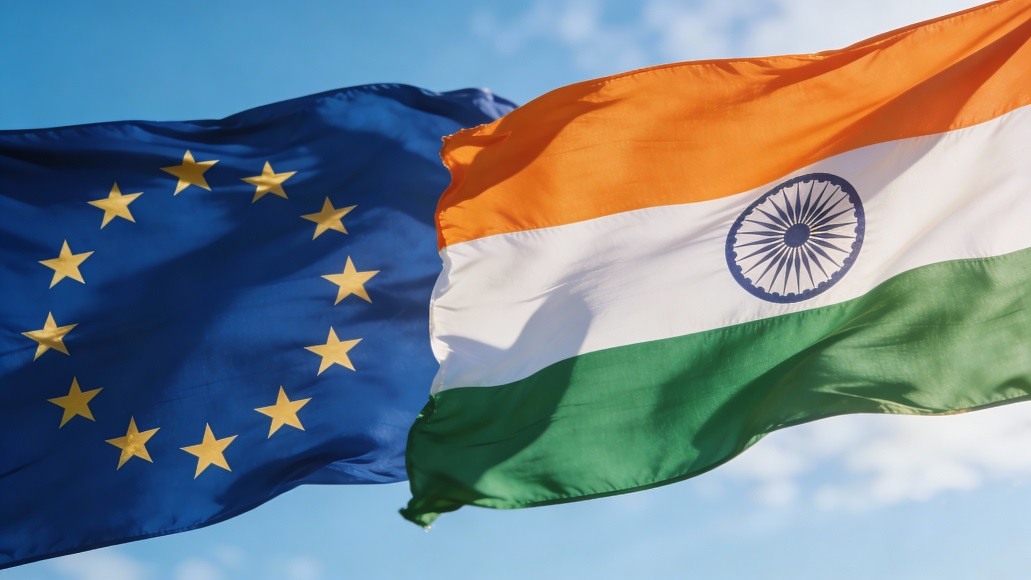

London — The landmark India–European Union Free Trade Agreement, unveiled on 27 January 2026, is being widely hailed across trade circles as a watershed moment for global commerce and is already triggering reactions from the United Kingdom’s textile and fashion sectors. While the pact does not directly involve the UK, British industry stakeholders and policymakers are scrutinising its potential impact on imports, competition and sourcing patterns in the textile and apparel markets.
The agreement, described by Indian Prime Minister Narendra Modi and EU officials as the “mother of all trade deals,” dramatically reduces or eliminates tariffs on about 96.6 % of goods exchanged between India and the European bloc, with notable cuts expected in labour-intensive sectors such as apparel, fabrics, footwear and related textiles.
What the Deal Entails
The India–EU deal cuts import duties on a wide range of products from automobiles to wines and spirits but its provisions for textiles and garments have captured the attention of industry analysts across the UK. The pact is expected to offer Indian exporters preferential access to the EU market on terms that will significantly lower trade costs and boost competitiveness of Indian clothing and textile products in Europe.
According to the trade reports, the deal goes beyond tariff elimination to reshape long-established apparel supply chains between Asia and Europe.
UK Textile Industry’s Strategic Watchlist
British importers, fashion retailers and textile manufacturers are evaluating the fallout of this landmark agreement with a mix of concern and cautious optimism:
-
Competitive Pressures from Indian Textiles
With tariff barriers slashed for Indian textile imports into the EU, Indian suppliers may pivot stronger to European markets pushing up global production volumes and scaling competitiveness in ready-to-wear, home textiles and technical fabrics. UK fashion houses that source from both the EU and UK markets are watching to see whether this reshapes pricing, delivery lead-times and inventory strategies across Europe. -
Sourcing Shifts and Supply Chain Diversification
Several UK buyers are now rethinking their procurement strategies. With India gaining advantaged access to the EU, many British buyers may increasingly integrate India into broader supply chains, treating EU and UK markets jointly rather than separately especially if harmonised rules and standards simplify trans-European distribution. -
Competitive Dynamics with Bangladesh & Turkey
Historically, EU textile imports have been dominated by Bangladesh, Turkey and Pakistan. The new agreement positions India to compete more aggressively against these economies within the EU a shift that UK retailers monitoring European sourcing hubs will not ignore. -
Post-Brexit UK-India Dynamics
Although the 2026 India–EU deal sits outside the UK, it occurs against the backdrop of the 2015 UK-India Free Trade Agreement that brought zero tariffs on almost all Indian textile imports into Britain, a move expected to bolster Indian exports into the UK market and help UK consumers access competitively priced garments.
Industry experts argue that the cumulative effect of both agreements UK–India and India–EU could make India an even more central sourcing partner for British fashion and textile businesses, with firms calibrating strategies across both markets to optimise costs and speed.
UK Business Reactions
UK textile trade bodies and fashion alliances have broadly welcomed the focus on market liberalisation but flagged concerns about competitiveness and sustainability standards:
-
Boost to consumer choice and lower prices: Retailers say that increased access to competitively priced Indian textiles can translate into lower costs for UK consumers, particularly for everyday garments and home linens.
-
Need for ESG alignment: Some British industry leaders urge Indian manufacturers to align more closely with European and UK environmental, social and governance (ESG) standards, including transparency in supply chains and improved labour practices.
-
Logistics and compliance challenges: As Indian exports to both the EU and UK grow, firms remain mindful of logistics bottlenecks, customs clearance complexities, and evolving regulations all critical to maintaining reliability for UK retail supply chains.
Looking Ahead
Trade strategists in London see the India–EU FTA as a game changer, not only for the EU and Indian markets but also as a catalyst for deeper realignment in global textiles trade. Analysts expect that:
-
UK firms may reconfigure sourcing footprints to benefit from both trade relationships.
-
European industry adjustments could spill over into UK pricing and competition patterns.
-
India’s role as a global apparel manufacturing hub is likely to deepen potentially reshaping traditional supply chains that involve South Asian and Eastern European partners.
While the India–EU trade pact itself does not bind the UK, its ripple effects are expected to shape buying strategies, pricing structures and competitive dynamics in the British textile sector well into the late 2020s underscoring how interlinked global trade has become in a post-Brexit and increasingly multipolar world.