


























PSI 2026

SHEIN Hits Milestone with Polyester Recycling Innovation

Note* - All images used are for editorial and illustrative purposes only and may not originate from the original news provider or associated company.

Subscribe

- Never miss a story with notifications

- Gain full access to our premium content

- Browse free from up to 5 devices at once

Media Packs

Expand Your Reach With Our Customized Solutions Empowering Your Campaigns To Maximize Your Reach & Drive Real Results!
– Access The Media Pack Now!
– Book a Conference Call
Leave Message for us to Get Back

Related stories

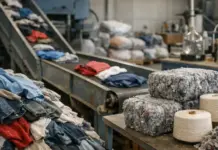
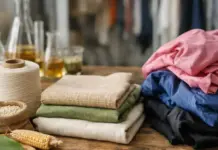
Advancements in Natural Fiber Textile Recycling for Cotton and Wool

Natural fiber textile recycling has advanced significantly through cutting-edge chemical dissolution, fiber regeneration, and advanced separation technologies enabling high-purity recovery of cotton and wool fibers matching virgin specifications. Processes like Renewcell’s Circulose® and Evrnu’s NuCycl technology now enable indefinite cycling of cotton fibers while wool recycling technologies preserve fiber properties across multiple reuse cycles, creating genuine circular pathways for natural textiles and addressing the environmental advantages of fiber recovery from conventional resource-intensive virgin cultivation.

The Role of AI and Automation in Advancing Textile Recycling Systems

Artificial intelligence and automation technologies are revolutionizing textile recycling by dramatically improving sorting accuracy, material separation efficiency, and overall system throughput. Machine learning algorithms, computer vision systems, near-infrared spectroscopy, and robotic automation are transforming labor-intensive manual processes into intelligent automated systems capable of identifying and processing hundreds of items per hour with accuracy exceeding 95%, enabling scalable textile recycling infrastructure that was previously economically unviable.

How Brands are Redesigning Products to Support Textile Recycling and Circularity

Fashion brands are fundamentally redesigning product architecture to support textile recycling and circular business models through design-for-recycling principles including mono-material construction, detachable trims, and simplified component design. These design transformations address downstream processing requirements, reduce end-of-life complexity, and enable brands to achieve circular positioning while simultaneously improving manufacturing efficiency and creating differentiated market positioning in sustainability-conscious segments.

SHEIN, the global online on-demand fashion lifestyle retailer, has marked its latest milestone in its evoluSHEIN strategy with the development of an innovative polyester recycling process with Donghua University, a leading research institute specialising in textile innovation and research, as part of a multi-year collaboration.

This innovative polyester recycling process accepts a wider range of materials, including both pre- and post-consumer polyester feedstock, such as textile waste and polyethylene terephthalate (PET) bottles. This offers greater flexibility in sourcing for feedstock, and as a result, improved cost efficiency compared to the recycled polyester options currently used in SHEIN’s products. Testing by Donghua’s team of researchers has also shown that the recycled polyester fabrics produced through this process can be recycled repeatedly without significant impact on the material properties of the resulting fabric, as the inputs are chemically broken down, refined, and reconstituted at the polymer level.

At this stage of the project, SHEIN will be partnering with selected partner fibre manufacturers, to scale up the technology from a laboratory-scale setting to a facility capable of producing recycled polyester fibres at a larger commercial scale. The facility is expected to start large-scale production of polyester fibres in June 2025, with an annual target production output of 3,000 metric tons. 

Leonard Lin, President of EMEA, Global Head of Public Affairs, and General Manager of Singapore, SHEIN said, “Our goal is to leverage innovation and technology to help solve industry-wide challenges. In line with our evoluSHEIN strategy, we have invested in the research and development of a new polyester recycling process that allows us to incorporate a broader variety of feedstock, achieve better cost efficiencies, and recycle polyester multiple times without compromising the material properties of the polyester produced. This will be a critical step towards our goal of reducing our reliance on virgin polyester and supporting a broader industry transition. SHEIN will continue to look for more opportunities to partner with ecosystem players to accelerate the use of recycled polyester”.

This collaboration with Donghua University is in line with SHEIN’s commitment to transition 31% of the polyester used in SHEIN-branded products to recycled polyester by 2030. SHEIN also continues to support innovation in circular solutions and encourage the adoption of next-generation fibres. In September 2024, SHEIN launched the evoluSHEIN x Anitta collection, featuring styles made with Regracell® – a soft, breathable fibre made from a mix of recycled textile waste and FSC-certified wood inputs. In addition, SHEIN has partnered with Aloqia (formerly Queen of Raw) since 2022, to incorporate deadstock fabrics – leftover materials from other brands – into exclusive, limited-edition designs. A limited-edition SHEIN X Rescued collection was launched in May 2024, showcasing designs by SHEIN X designers using deadstock materials sourced through SHEIN’s partnership with Aloqia.

Latest stories

Related stories

Advancements in Natural Fiber Textile Recycling for Cotton and Wool

Natural fiber textile recycling has advanced significantly through cutting-edge chemical dissolution, fiber regeneration, and advanced separation technologies enabling high-purity recovery of cotton and wool fibers matching virgin specifications. Processes like Renewcell’s Circulose® and Evrnu’s NuCycl technology now enable indefinite cycling of cotton fibers while wool recycling technologies preserve fiber properties across multiple reuse cycles, creating genuine circular pathways for natural textiles and addressing the environmental advantages of fiber recovery from conventional resource-intensive virgin cultivation.

The Role of AI and Automation in Advancing Textile Recycling Systems

Artificial intelligence and automation technologies are revolutionizing textile recycling by dramatically improving sorting accuracy, material separation efficiency, and overall system throughput. Machine learning algorithms, computer vision systems, near-infrared spectroscopy, and robotic automation are transforming labor-intensive manual processes into intelligent automated systems capable of identifying and processing hundreds of items per hour with accuracy exceeding 95%, enabling scalable textile recycling infrastructure that was previously economically unviable.

How Brands are Redesigning Products to Support Textile Recycling and Circularity

Fashion brands are fundamentally redesigning product architecture to support textile recycling and circular business models through design-for-recycling principles including mono-material construction, detachable trims, and simplified component design. These design transformations address downstream processing requirements, reduce end-of-life complexity, and enable brands to achieve circular positioning while simultaneously improving manufacturing efficiency and creating differentiated market positioning in sustainability-conscious segments.

Subscribe

- Never miss a story with notifications

- Gain full access to our premium content

- Browse free from up to 5 devices at once

Media Packs

Expand Your Reach With Our Customized Solutions Empowering Your Campaigns To Maximize Your Reach & Drive Real Results!

– Access The Media Pack Now!
– Book a Conference Call
Leave Message for us to Get Back

Translate »