






























PSI 2026

Archroma Wins Awards for Sustainability Innovation & Impact

Note* - All images used are for editorial and illustrative purposes only and may not originate from the original news provider or associated company.

Subscribe

- Never miss a story with notifications

- Gain full access to our premium content

- Browse free from up to 5 devices at once

Media Packs

Expand Your Reach With Our Customized Solutions Empowering Your Campaigns To Maximize Your Reach & Drive Real Results!
– Access The Media Pack Now!
– Book a Conference Call
Leave Message for us to Get Back

Related stories

Advancements in Natural Fiber Textile Recycling for Cotton and Wool

Natural fiber textile recycling has advanced significantly through cutting-edge chemical dissolution, fiber regeneration, and advanced separation technologies enabling high-purity recovery of cotton and wool fibers matching virgin specifications. Processes like Renewcell’s Circulose® and Evrnu’s NuCycl technology now enable indefinite cycling of cotton fibers while wool recycling technologies preserve fiber properties across multiple reuse cycles, creating genuine circular pathways for natural textiles and addressing the environmental advantages of fiber recovery from conventional resource-intensive virgin cultivation.

The Role of AI and Automation in Advancing Textile Recycling Systems

Artificial intelligence and automation technologies are revolutionizing textile recycling by dramatically improving sorting accuracy, material separation efficiency, and overall system throughput. Machine learning algorithms, computer vision systems, near-infrared spectroscopy, and robotic automation are transforming labor-intensive manual processes into intelligent automated systems capable of identifying and processing hundreds of items per hour with accuracy exceeding 95%, enabling scalable textile recycling infrastructure that was previously economically unviable.

How Brands are Redesigning Products to Support Textile Recycling and Circularity

Fashion brands are fundamentally redesigning product architecture to support textile recycling and circular business models through design-for-recycling principles including mono-material construction, detachable trims, and simplified component design. These design transformations address downstream processing requirements, reduce end-of-life complexity, and enable brands to achieve circular positioning while simultaneously improving manufacturing efficiency and creating differentiated market positioning in sustainability-conscious segments.

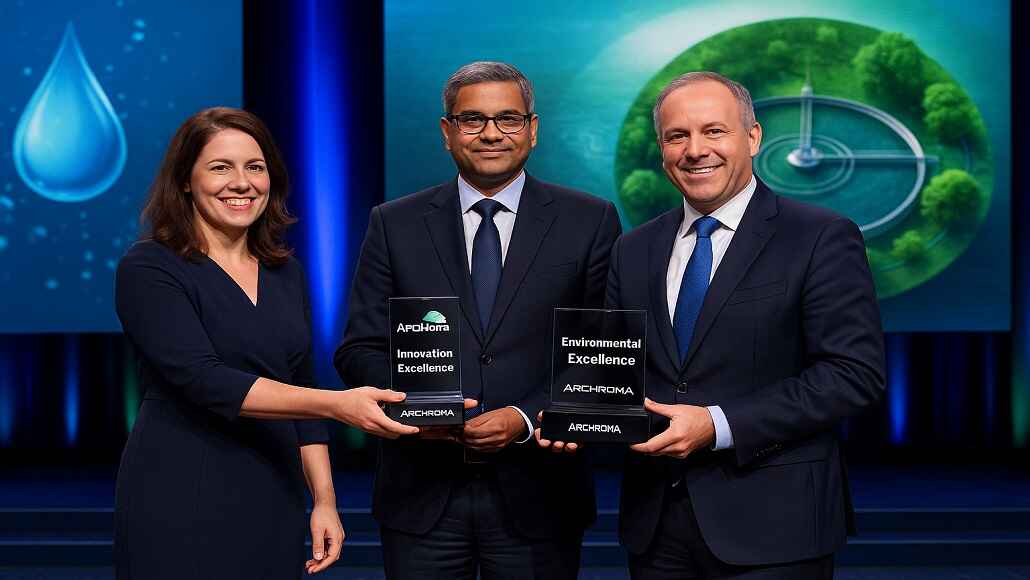
Archroma, a leading global specialty chemicals company, has garnered significant recognition at the Just Style 2025 Excellence Awards, securing major accolades in key categories. The company received the coveted Innovation Excellence Award for its bio-based PHOBOTEX NTR-50 durable water repellent (DWR) and the Environmental Excellence Award for its water circularity advancements at the Mahachai plant in Thailand.

These awards celebrate Archroma’s dedication to driving transformative change in the textile and fashion industry through innovative solutions that safeguard the environment while creating value for brands, manufacturers, local communities, and consumers.

Dhirendra Gautam, VP of Global Marketing and Strategy at Archroma, commented, “As an industry leader collaborating with brands and suppliers worldwide, we bear a significant responsibility to create impact by embedding sustainability in our innovations. Archroma tackles the industry’s most pressing challenges, such as developing cleaner, longer-lasting functional effects and minimizing water usage. We are proud to receive recognition from the Just Style Excellence Awards and will continue to prioritize people-centered sustainability for a better future.”

Innovative DWR Breakthrough

Archroma’s Just Style Excellence Award for Innovation was awarded for the development of a highly effective DWR that is both non-PFAS (per- and polyfluoroalkyl substances) and non-formaldehyde, comprising 50% renewable carbon content per ASTM D6866. The PHOBOTEX NTR-50 not only delivers exceptional water repellency across various fibers but also offers a soft feel, enhancing the comfort of fabrics while improving their durability, making it ideal for sports apparel, outdoor gear, and home textiles.

Additionally, PHOBOTEX NTR-50 boasts excellent runnability, ensuring reliable performance and safety during production, even under high temperatures. This feature aids mills in addressing production challenges such as roller build-up, yellowing, and chalk marking. As a crosslinker-free solution, it can also be combined with other products to enhance wash and dry-cleaning resistance.

Advancements in Water Circularity

The Just Style Excellence Awards jury acknowledged Archroma’s innovative achievements in water circularity, particularly its Zero Liquid Discharge (ZLD) technology at the Mahachai facility in Thailand, which successfully reclaims 90%-95% of wastewater. By utilizing advanced technologies from global water treatment innovator Gradiant, the plant converts wastewater into clean water for reuse and recovers concentrated brine for applications like resin regeneration and chlorine production. This approach significantly lessens the plant’s reliance on local freshwater supplies, establishing a sustainable model for textile dye production within a circular economy.

The Just Style Excellence Awards recognize exceptional accomplishments and innovations within the global textile and apparel sector, encouraging companies to strive for excellence and promote positive change.

Latest stories

Related stories

Advancements in Natural Fiber Textile Recycling for Cotton and Wool

Natural fiber textile recycling has advanced significantly through cutting-edge chemical dissolution, fiber regeneration, and advanced separation technologies enabling high-purity recovery of cotton and wool fibers matching virgin specifications. Processes like Renewcell’s Circulose® and Evrnu’s NuCycl technology now enable indefinite cycling of cotton fibers while wool recycling technologies preserve fiber properties across multiple reuse cycles, creating genuine circular pathways for natural textiles and addressing the environmental advantages of fiber recovery from conventional resource-intensive virgin cultivation.

The Role of AI and Automation in Advancing Textile Recycling Systems

Artificial intelligence and automation technologies are revolutionizing textile recycling by dramatically improving sorting accuracy, material separation efficiency, and overall system throughput. Machine learning algorithms, computer vision systems, near-infrared spectroscopy, and robotic automation are transforming labor-intensive manual processes into intelligent automated systems capable of identifying and processing hundreds of items per hour with accuracy exceeding 95%, enabling scalable textile recycling infrastructure that was previously economically unviable.

How Brands are Redesigning Products to Support Textile Recycling and Circularity

Fashion brands are fundamentally redesigning product architecture to support textile recycling and circular business models through design-for-recycling principles including mono-material construction, detachable trims, and simplified component design. These design transformations address downstream processing requirements, reduce end-of-life complexity, and enable brands to achieve circular positioning while simultaneously improving manufacturing efficiency and creating differentiated market positioning in sustainability-conscious segments.

Subscribe

- Never miss a story with notifications

- Gain full access to our premium content

- Browse free from up to 5 devices at once

Media Packs

Expand Your Reach With Our Customized Solutions Empowering Your Campaigns To Maximize Your Reach & Drive Real Results!

– Access The Media Pack Now!
– Book a Conference Call
Leave Message for us to Get Back

Translate »