






























Key Takeaways
- Global textile recycling market projected USD 11.88B by 2030; represents USD 3.47B investment opportunity from current market size
- Recycling infrastructure development represents largest opportunity: estimated USD 2B+ annual capital requirement through 2030 globally
- Processed fiber markets showing 8-12% annual margin improvement, with premium regenerated fibers commanding 40-60% price premiums over commodity grades
- Job creation across collection, sorting, processing, and trading roles estimated 500,000-750,000 positions by 2030, primarily in developing regions
- Startup ecosystem attracting USD 1.2B+ venture capital investment; emerging models targeting collection automation, sorting technology, fiber regeneration
The Economic Emergence of Circular Textile Value Creation
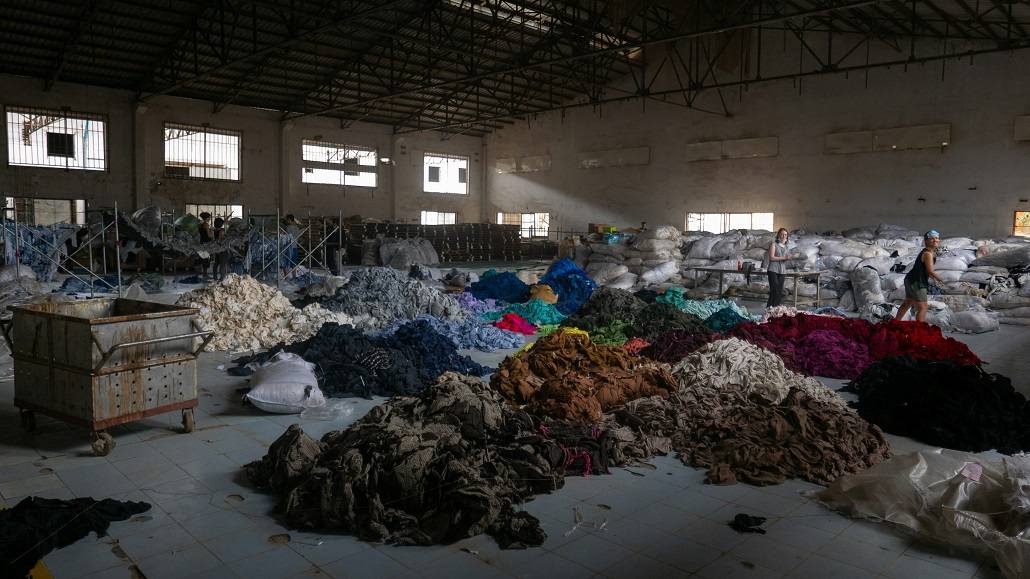
The textile recycling sector is transitioning from niche environmental initiative to significant economic opportunity. This transition is driven by market fundamentals: growing waste streams, improving technology, regulatory drivers, and brand demand for recycled materials. The result is emerging business opportunities across multiple layers of the textile recycling value chain from collection infrastructure through material recovery through processed fiber markets.
Market Expansion and Investment Opportunity
The global textile recycling market valued at approximately USD 8.41 billion in 2025 is projected to expand to USD 11.88 billion by 2030, representing 42% growth over five-year period. This expansion trajectory creates approximately USD 3.47 billion cumulative investment opportunity.
This market expansion is not concentrated in wealthy developed regions. India’s textile recycling market is expanding at 4.0% CAGR, with estimated market value reaching USD 0.53 billion by 2035. China’s market is expanding at 3.8% CAGR. Southeast Asian markets are experiencing even more rapid growth. This geographic diversification creates global opportunity rather than concentrated regional concentration.
Infrastructure Investment Requirements
Textile recycling infrastructure requires substantial capital investment. Current global recycling capacity approximately 1 million metric tons annually requires significant expansion to handle growing waste volumes and achieve circular economy targets.
Achieving 10% global recycling rate by 2035 would require processing approximately 12 million metric tons annually, necessitating capacity expansion of approximately 11 million metric tons. At average capital cost of USD 150,000-250,000 per thousand-ton annual capacity, this expansion would require approximately USD 1.65-2.75 billion total capital investment.
This infrastructure investment is distributed across equipment manufacturers, facility developers, operators, and technology providers. Equipment suppliers develop specialized sorting systems, chemical reactors, and automation equipment expanding addressable markets. Developers acquire land, design facilities, obtain permits, and construct infrastructure. Operators establish recycling businesses. Technology providers supply software, sensors, and control systems.
Each function represents distinct business opportunity. Equipment manufacturers like Aweta, BTM, and emerging competitors are capturing premium margins as sorting and processing technology becomes increasingly sophisticated. Infrastructure developers are securing sites, securing capital, and operating recycling facilities. Service providers are expanding logistics networks supporting collection and material movement.
Processed Fiber Markets and Margin Expansion
Textile recycling profitability increasingly derives from processed fiber quality and market positioning rather than collection volume. A facility processing low-quality mixed waste generates low-value commodities insulation, wiping cloths with minimal margin. A facility processing clean, consistently specified waste streams generates higher-value processed fibers commanding premium pricing.
Premium regenerated fibers virgin-equivalent polyester produced through depolymerization, regenerated cellulose through fiber-to-fiber processing command 40-60% price premiums over commodity recycled materials. A recycler producing commodity recycled polyester at USD 0.70-0.80 per kilogram can produce premium regenerated polyester at USD 1.20-1.50 per kilogram.
This margin expansion creates strong incentive for quality focus. Recyclers are increasingly implementing advanced sorting, contamination removal, and processing technologies to produce higher-grade outputs. Brand partnerships requiring specified material compositions and quality metrics are driving investment in premium processing capability.
Collection and Logistics Network Development
Behind recycling facilities lies collection infrastructure the critical challenge of gathering dispersed textile waste. This function is generating distinct business opportunity. Specialized collection companies are establishing networks of collection points, implementing take-back programs, and operating logistics for material consolidation.
Collection business models include:
Retail collection points: Partner with retailers to operate in-store collection boxes. Collect multiple times weekly, consolidate to processing facilities. Revenue from material fees minus collection cost.
Curbside collection: Integrated with municipal waste services, dedicated textile collection adds 5-10% to traditional recycling program cost but captures textiles diverted from general waste streams.
Direct-to-consumer take-back: Brand-operated or third-party programs where consumers mail worn clothing to centralized processing facilities. Technology companies are automating return logistics pre-paid shipping labels, automated tracking, logistics optimization.
Workplace programs: B2B collection targeting corporate offices, government institutions, and large employers generating textile waste.
Each model represents business opportunity for companies specializing in collection and logistics. As collection becomes professionalized, margins improve and scaling accelerates.
Technology Companies and Innovation Ecosystem
The texture recycling technology landscape is attracting significant investment and entrepreneurial focus. Emerging companies are developing:
Sorting technology: Advanced NIR systems, computer vision, machine learning algorithms enabling automated material identification. Companies like Tomra, Pellerin Milnowski, and emerging competitors are capturing significant market share.
Chemical recycling processes: Companies developing proprietary depolymerization, hydrolysis, or other chemical recycling methods. Loop Industries, DePoly, Rittec, and others are raising substantial capital for commercialization.
Fiber regeneration technology: Companies developing cellulose dissolution, regeneration, and fiber formation processes. Renewcell, Evrnu, Infinited Fiber are raising billions in capital.
Collection automation: Robotics and automation for sorting and material handling. Robotics companies are expanding textile recycling focus.
Digital platforms: Software companies developing tracking systems, material identification, logistics optimization, and marketplace platforms connecting recyclers, brands, and material buyers.
This technology ecosystem is attracting venture capital investment exceeding USD 1.2 billion cumulatively, with significant additional capital committed. Successful technology companies can achieve substantial valuations—Renewcell reaching USD 5+ billion market capitalization, Loop Industries pursuing public markets.
Brand Partnerships and Supply Agreements
Brand demand for recycled materials is creating business opportunities through supply partnerships. Recyclers securing long-term purchase agreements with major brands achieve revenue stability enabling capacity investment and operational scaling.
These partnerships often specify material composition, quality metrics, and supply volumes creating predictable business models. A recycler securing agreement to supply 5,000 tons annually of regenerated polyester to a major brand has foundation for facility development and equipment investment.
Brand partnerships additionally create premium pricing. Materials supplied under quality specifications command higher pricing than commodity market sales. This margin advantage incentivizes quality focus and premium processing investment.
Geographic Entrepreneurship and Regional Value Capture
Textile recycling’s global expansion is creating entrepreneurial opportunities across developing regions. Rather than textile waste flowing from Asia-Pacific to developed-region recyclers, emerging models establish recycling infrastructure regionally, capturing value within supply chain origin regions.
This geographic shift creates entrepreneurship opportunity for regional players. Entrepreneurs in India, Vietnam, Indonesia, Bangladesh, and other major manufacturing regions can establish recycling facilities serving regional demand and exporting processed materials. This model creates local economic value, employment, and industrial development.
Estimated Job Creation
Textile recycling expansion is projected to create 500,000-750,000 jobs globally by 2030, distributed across collection, sorting, processing, trading, and logistics functions. This job creation is geographically distributed, with majority of positions in developing regions where labor-intensive functions remain economically viable.
Job creation spans skill levels: unskilled manual sorting (declining with automation), semi-skilled equipment operation, technical roles in facility management, and professional roles in engineering, operations management, and business development.
This employment opportunity is particularly significant for developing regions where manufacturing is primary employment source. As apparel manufacturing faces automation and wage pressures, textile recycling represents alternative employment pathway utilizing existing industrial capacity and regional expertise.
Market Dynamics and Consolidation Trajectory
The emerging textile recycling economy is experiencing consolidation. Larger, well-capitalized players are acquiring smaller regional recyclers, creating integrated operations spanning collection through processing. This consolidation is increasing operational efficiency, enabling technology investment, and creating economies of scale.
However, opportunities remain for specialized players: niche technology providers, regional collection networks, premium processor focused on specific material streams, and service providers in specialized functions.
The economic opportunity is substantial and distributed. Rather than single dominant winner, the textile recycling ecosystem will likely include large integrated operations, specialized technology companies, regional processors, collection networks, and numerous service providers each capturing value across the supply chain.