























At the Textiles Recycling Expo 2025 held in Brussels, the atmosphere was charged as industry leaders converged to tackle the pressing challenges and promising opportunities in textile circularity. A key highlight of the event was the panel discussion titled “What’s Needed to Boost Textile Recycling Rates,” featuring prominent voices from across the sector.
In his opening remarks, Aurel Ciobanu-Dordea, the European Commission’s director for circular economy, expressed enthusiasm for the event and praised the innovative technologies showcased. He assured participants of the Commission’s commitment to supporting companies and associations in managing textile waste, which is now prohibited from being incinerated or sent to landfills within the EU.
Among the new initiatives discussed was the potential introduction of mandatory public procurement for specific textile categories within the EU, aimed at reducing bureaucratic hurdles while accelerating the rollout of Extended Producer Responsibility (EPR) programs across member states. A public consultation initiative on textile waste is also planned throughout the EU.
“Tomorrow will not look like yesterday for the textile industry, which has a supply chain that is long, and with manufacturing in many countries outside the EU,” Ciobanu-Dordea noted. “We want to fully include them and test our ideas against the reality out there, through full consultation.”
Innovations and Alliances
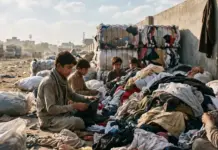
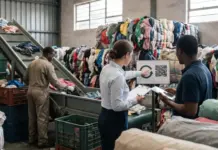
The expo showcased sophisticated systems for sorting waste textiles, currently seen as a significant bottleneck in the supply chain. Companies such as Mesdan, New Retex, Pic-Visa, and Valvan demonstrated advanced technologies, while the newly formed T2T Alliance—comprising key next-generation recycling firms—aims to exert substantial influence in the coming years.
The alliance includes Circ, Circulose, Re&Up, Samsara Eco, and Syre, all of which have unveiled significant expansion plans in recent months.
Discussing the alliance’s objectives, Dolly Vellanki, Circ’s sourcing and public affairs manager, highlighted key aspects of a new position paper.
“Firstly, both post-consumer and post-industrial textile waste need to be considered equally important in enabling our companies to access the key feedstocks which will support scaling for us now,” she stated. “We are then seeking the mandatory inclusion of 10% of recycled content in all new textiles to be introduced by 2028, rising to 15% by 2030 and 30% by 2035.”
“We then need to see the introduction of a robust verification and traceability programme incorporating both chain of custody and mass balance, but only if recycled content percentages become mandatory.”
The T2T Alliance emphasizes that this should not be a “Made in Europe” solution.
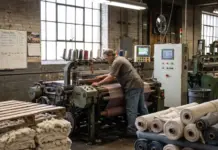
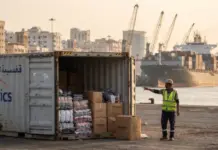
“We are very dependent on global supply chains, and protectionism is not the way forward,” remarked Marco Lucietti, head of global marketing and communications for Re&Up. “Spinning and weaving operations are changing because of recycling, and there can be no impact on quality. This needs to be done globally and is poised to become a $30 billion new industry by 2030, so there is space for everyone.”

