































For much of the last two decades, the global textile conversation has been dominated by fashion cycles, retail demand and the relentless hunt for lower costs. That logic still matters, but it is no longer the only force shaping the industry. A growing “war economy” dynamic—where geopolitical risk, energy insecurity and industrial rearmament influence procurement and investment—has begun to tilt growth toward specialised, performance-driven materials. In that context, the technical textiles boom is not a headline gimmick; it is a rational response to how risk and value are being redistributed across supply chains.
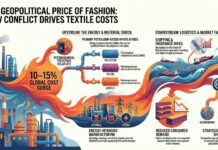
The first shock arrives through energy. Synthetic fibres are, at their core, petrochemical products. When crude oil becomes volatile, textiles feel it quickly through feedstocks such as purified terephthalic acid and monoethylene glycol, the building blocks for polyester and PET-based materials. Even when fibre prices do not move in perfect lockstep with crude, the direction of travel matters because it changes buyer behaviour. Apparel brands working on thin margins tend to delay orders, renegotiate, or switch blends when input costs climb. Technical buyers, by contrast, are often purchasing to specification for protective performance, industrial processes or infrastructure projects, where substitution is harder and compliance timelines are less forgiving. That difference alone helps explain why the technical textiles boom can accelerate even as parts of conventional apparel trade slow.
Logistics risk amplifies the divide. Disruption across the Red Sea corridor and wider Middle East has forced vessels to reroute, adding time at sea, tightening effective capacity and pushing up freight and insurance costs. For commodity apparel, where speed-to-market and price competitiveness are paramount, that is a direct hit to profitability. For technical textiles, extended transit can still be painful, but demand is frequently anchored in longer-term supply contracts, replenishment planning, and mission-critical uses. In a world where reliability is priced in, specialised textiles gain an edge.
At the demand end, the drivers are becoming clearer. Defence and security procurement has become a powerful tailwind, pulling through ballistic and stab-resistant materials, flame-resistant fabrics, chemical protective suits, and advanced composites. Industrial safety programmes and stricter workplace standards add another layer of demand for high-performance protective textiles. Meanwhile, infrastructure spending—roads, rail, ports, flood control and coastal protection—continues to broaden the market for geotextiles and geomembranes, products that rarely enter mainstream consumer awareness but are indispensable for soil stabilisation and civil engineering.
Filtration is another underappreciated engine of growth. Whether driven by water scarcity, industrial air-quality requirements, or more stringent emissions controls, filtration media demand has remained resilient. Nonwovens, engineered membranes and specialty fibre structures sit at the heart of that market, and they benefit from the same war-economy logic: governments and industries rarely treat filtration as optional when it is tied to public health, factory uptime or regulatory compliance. As this segment scales, it contributes to the technical textiles boom in a way that is structurally different from fashion-led growth.
Regulation is also nudging the market toward technical solutions. Europe’s growing focus on PFAS in textiles illustrates why. The European Environment Agency has described PFAS as persistent chemicals that can hinder reuse and recycling and pose environmental and health concerns, noting the difficulty of tracking PFAS content across global supply chains and end-of-life systems. This matters because PFAS chemistry has historically delivered durable water and oil repellency across apparel and technical applications. As restrictions tighten and transparency expectations rise, the industry is being forced to innovate—developing PFAS-free barrier technologies, redesigning finishes, and creating new material architectures that deliver performance with a more future-proof chemical profile. In effect, compliance is becoming an innovation trigger, supporting the technical textiles boom by rewarding suppliers that can combine performance with chemical credibility.
The result is a rebalancing of what “good business” looks like in textiles. Volume apparel remains enormous, but it is more exposed to consumer sentiment, discounting cycles and freight shocks. Technical textiles are not immune to macro pressure, yet their demand is more closely tied to structural needs: defence readiness, industrial production, infrastructure resilience and environmental regulation. That makes them attractive not only for manufacturers looking to protect margins, but also for governments seeking domestic capability in strategically important materials.
For textile producers and converters, the playbook is changing. Competing in technical textiles requires investment in testing, certification, traceability and process control. It demands closer collaboration with end users, engineers and regulators. It often means smaller runs, higher complexity and higher accountability. But it also offers something the apparel market rarely provides for long: pricing power rooted in performance.
The next phase of the technical textiles boom will likely be defined by two questions. First, can the industry scale responsibly, without replicating the opacity and waste that have plagued commodity fashion supply chains. Second, can innovators deliver high performance while navigating a tightening regulatory landscape, particularly around chemicals of concern. Companies that can answer both will not just ride the boom; they will shape the next era of the global textile economy.