
























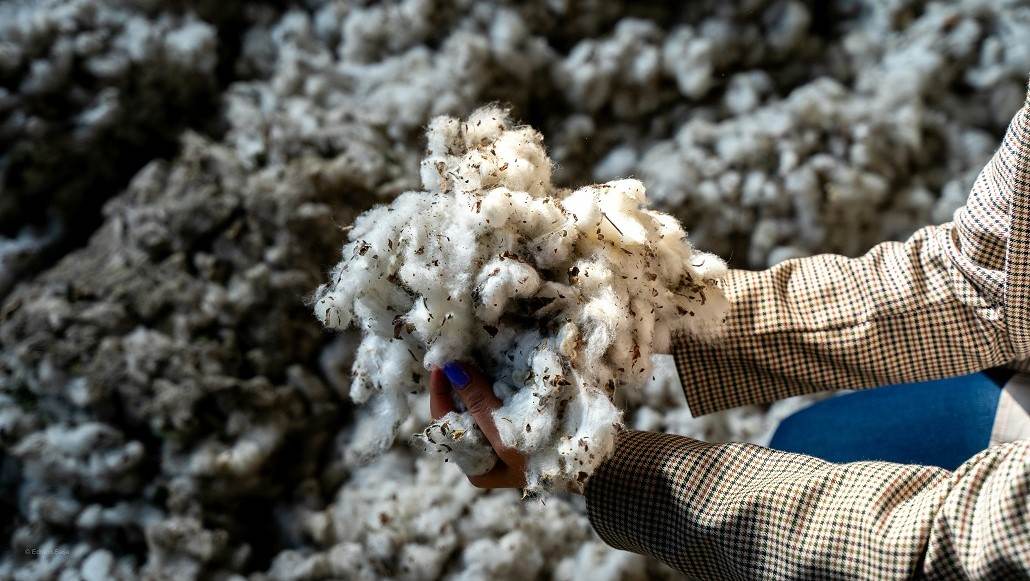
Levi Strauss & Co. has signed on to a new landscape-scale effort in Pakistan aimed at improving how cotton is grown in one of the country’s most important producing areas, linking the programme to its broader 2030 water commitments. The initiative, rolled out earlier this year, is designed to promote regenerative cotton farming practices that rebuild soil health, conserve water and help farmers cope with more volatile climate conditions.
The project—called the Levi’s Regenerative and Resilient Landscape Initiative (LRI)—began in January in Jalalpur Pirwala, located in Punjab’s Multan district. Levi Strauss describes the area as strategically significant for national cotton output. Implementation is being led by WWF-Pakistan, with additional support from the Laudes Foundation. The work also sits under a larger umbrella programme, the Regenerative Production Landscape Collaborative (RPLC), which spans Brazil, India, Pakistan and Tanzania and targets one million hectares in total.
Levi Strauss said Pakistan is a priority geography for watershed and landscape restoration given mounting environmental constraints on agriculture. “These challenges are prominently at play in Pakistan, which is why the country is already a priority focus area for watershed restoration as part of our 2030 water strategy.”
Over an initial three-year period, the LRI plans to work across 10,000 hectares, using an approach that treats farms as part of a connected system—linking cultivation practices to community outcomes, water resources and biodiversity. The company said the programme will combine farmer engagement with technical support, aiming to shift practices in a way that can be sustained beyond the project’s direct involvement.
Early progress indicators shared through March 2026 suggest the programme is already scaling participation. WWF-Pakistan and partners have held outreach sessions engaging nearly 600 farmers, established 20 field schools and trained 165 participants through practical modules focused on soil health and water conservation. The project has also taken 100 soil samples to establish a baseline for measuring improvement over time.
To strengthen delivery capacity on the ground, WWF-Pakistan also ran a four-day training-of-trainers in Multan to equip project staff with core skills in regenerative agriculture, soil management and water stewardship—capabilities intended to improve the consistency and quality of farmer support.
The next phase of the programme is expected to focus on increasing on-farm water productivity, cutting reliance on synthetic fertilisers and pesticides, and building soil organic matter—key pillars of regenerative cotton farming. It also plans to plant 100,000 trees to support biodiversity and sequester carbon, with these targets intended to be achieved by 2028.
Alongside environmental outcomes, the initiative is designed to improve household resilience by lowering input costs, supporting climate adaptation and helping stabilise farm livelihoods. The programme will also engage government and industry stakeholders in an effort to encourage wider uptake, with Levi Strauss positioning the work as part of its longer-term goal to “protect and restore” biodiversity linked to raw-material sourcing by 2030.