























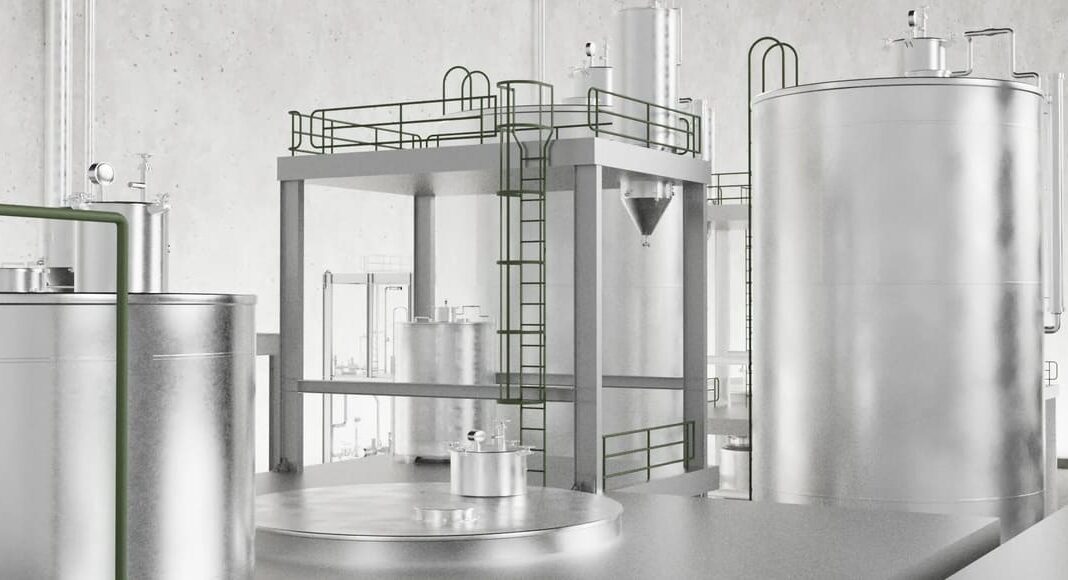
Epoch Biodesign has set out plans to bring its enzymatic nylon recycling technology out of the lab and into industrial operation, announcing a demonstration facility for nylon 6,6 that will be built at Grapht Works Imperial College London’s new manufacturing centre in North Acton. The company says the site, expected to open in the third quarter of 2026, will be the first such facility in Europe and, by capacity, the largest globally.
Designed as a scale-up step, the nylon 6,6 biorecycling plant will translate Epoch Biodesign’s patented biological process into a working site able to handle several hundred tonnes of post-consumer nylon 6,6 each year. The company’s system uses AI-engineered enzymes to break down complex nylon-containing waste streams—ranging from silicon-coated airbag fabrics and elastane-blended textiles to end-of-life clothing—into their original chemical building blocks.
Epoch says the recovered monomers are “virgin-quality” and can be fed back into nylon 6,6 manufacturing supply chains, offering a route to true material circularity. Unlike conventional chemical recycling, which often depends on high heat and capital-intensive infrastructure, Epoch positions its biological approach as selective and lower-energy, with the potential to reduce carbon emissions.
Founder and CEO Jacob Nathan said one of the key benefits is what the process avoids, enabling more flexible siting in urban environments. “One of the most important advantages of our biological process is what it does not do. It does not require high temperatures. It does not demand the heavy industrial infrastructure that has historically meant manufacturing must be sited far from where people live and work.
“The Grapht Works facility sits inside a broader urban neighbourhood in London. The fact that we can build and operate a nylon 6,6 recycling plant in Greater London is not incidental; it is a feature of the clean, low-energy process our team has developed. This is what genuinely circular, industrial biochemistry looks like.”
Epoch expects demand for compliant end-of-life options to grow quickly as new EU requirements under the Ecodesign for Sustainable Products Regulation begin to apply from July 2026, including a ban on destroying unsold garments. The company also pointed to the broader recycling gap—less than 1% of textiles currently become new textiles—as evidence that infrastructure needs to scale rapidly.
Chief commercial officer Luciano Caruso said the plant is designed to process waste sourced from apparel, automotive and industrial uses, and argued that regulatory and societal pressure is closing off traditional disposal routes. “The Grapht Works plant has the capacity to process hundreds of tonnes of post-consumer nylon 6,6 waste a year: this is sourced from apparel and automotive products, as well as various industrial applications. New EU regulations require these industries to confront what they do with end-of-life nylon, and incineration or landfill are no longer acceptable answers.
“The new plant validates our biological process both technically and commercially, demonstrating to industry partners and policymakers that a truly circular, clean, and economically viable route to nylon recycling exists today. This is the start of a sustainable, resilient supply chain of a critical material, without the pricing volatility associated with petrochemical-derived products.”
The announcement follows a Memorandum of Understanding signed in February with INVISTA, one of the world’s major nylon producers, aimed at developing commercial-scale post-consumer recycled nylon 6,6. Epoch Biodesign is also a member of the T2T Alliance and says it has raised more than $50 million from investors including lululemon, Lowercarbon Capital, Extantia, KOMPAS VC, Happiness Capital, Leitmotif and Inditex (Mundi Ventures).
With the Q3 2026 launch target, Epoch’s London project becomes a high-profile test of whether enzyme-driven recycling can move beyond pilots into a repeatable industrial model—one that could make the nylon 6,6 biorecycling plant concept viable for additional regions and larger volumes over time.