


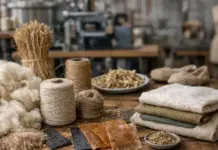
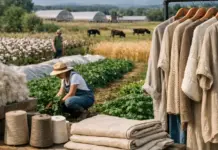











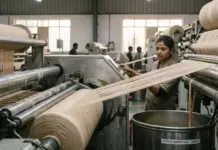










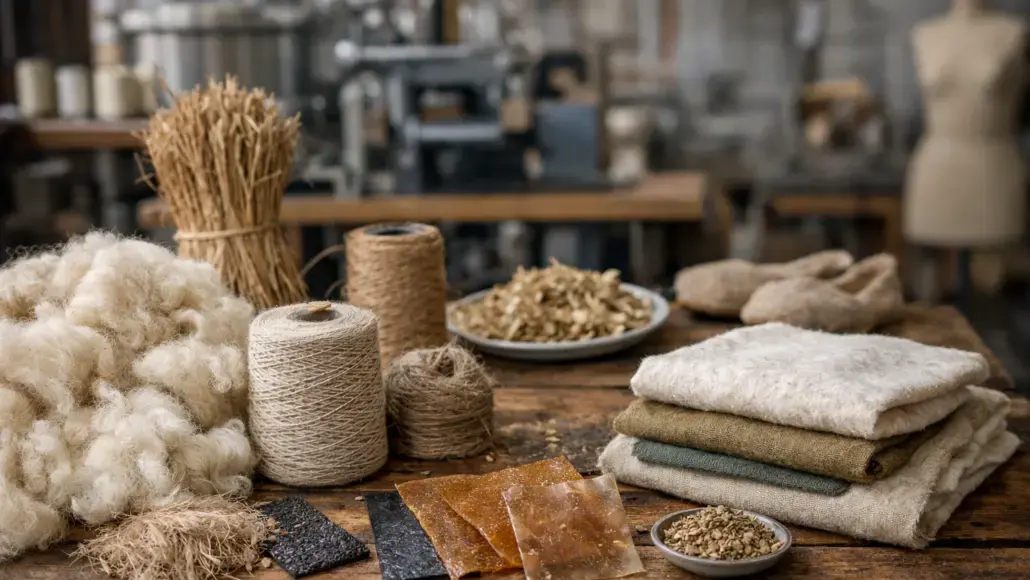
New York State is channeling $120,000 into twelve ambitious projects aimed at transforming locally grown wool, flax, hemp, and agricultural waste into commercially viable materials. The New York Fashion Innovation Center — widely known as NYFIC — has announced the recipients of its fourth round of sustainable textile innovation grants, awarding $10,000 to each selected project. The initiatives span fiber processing, biomaterials development, product creation, and workforce training.
While the individual checks are modest in size, the collective ambition is considerable. Most of the proposed products are currently at the prototype or small-batch stage, yet together they take direct aim at long-standing gaps that have prevented locally grown natural fibers from moving efficiently between New York farms, mills, designers, and manufacturers.
Turning Farm Fibers Into Finished Products
Among the recipients, Adrienne Carlile of Cochecton-based Flax Fiber Farm plans to adapt existing small-scale mill equipment to spin flax and hemp grown within the state. The project aims to produce four prototype bast-fiber yarns, offering a potential model for processing regional crops that have historically lacked local infrastructure.
Brooklyn’s Finiks Forge is taking a different approach to underused natural fibers. Founder Luca Cera intends to extract keratin from wool waste generated by New York farms, mills, and processors, using it to develop regenerated fibers for yarn and broader textile applications. The project taps into what is currently considered an industrial byproduct and works toward giving it a second life as a usable material.
At Syracuse University, researchers Li Jiang and Lihong Lao will focus on low-grade wool, converting it into BioWool batting and liners designed for quilted garments and bags. This effort reflects a growing interest in finding productive uses for wool grades that typically fall below commercial quality thresholds.
Two Long Island projects will also concentrate on regional wool. Hog Farm intends to connect local growers with home-textile production channels, while Mama Farm is launching a farm-to-fiber program aimed specifically at fashion and textile students.
Biomaterials and Alternative Inputs
Not all of the funded projects begin on a farm. Cellsense, a Brooklyn-based company founded by Aradhita Parasrampuria, received NYFIC grant funding to produce two commercial capsule collections using compostable beads and embellishments derived from algae and cellulose. The company is positioning these materials as plastic-free alternatives to conventional sequins and beading used across the fashion industry.
Also based in Brooklyn, MushLume Lighting will develop and test a compostable acoustic wall system that combines mycelium with hemp, regenerative wool, and agricultural byproducts sourced from within New York State — a project that bridges sustainable textile innovation with interior design applications.
Product Development and Community Programs
Several of the NYFIC grants lean more directly into finished product development. Brooklyn brand LowLou will use its award to expand production of sauna hats crafted from New York-grown and processed wool, while Mechanicville-based Flock & Loom plans to create a limited-edition collection of patterned blankets using wool that is both grown and woven within the state.
The remaining funded projects include an upcycled apparel and community sewing initiative from The Bad Juju Design, a youth workforce program expansion from Bronx Fashion NYC, and a dedicated study examining the systemic barriers that prevent more New York wool from entering the broader textile supply chain — a piece of research that could inform future policy and investment decisions around natural fibers and New York fashion development.
Susan Easton, NYFIC’s product and marketing director, described the direction of this funding round: “This round is about turning overlooked materials into opportunity. From low-grade wool and farm byproducts to algae and mycelium, these grantees are creating the products, markets, and connections New York’s textile industry needs to grow.”
NYFIC’s Broader Structure and What Comes Next
The NYFIC grant program is one component of the Fashion Innovation Center, which is backed by a $9 million state investment announced in 2023. The initiative is managed by a consortium led by Rensselaer Polytechnic Institute, alongside the Fashion Institute of Technology, Hudson Valley Textile Project, SUNY Morrisville, Made X Hudson, and The Field to Fiber Company.
With this fourth round of NYFIC grants included, the center has now supported a total of 36 projects. Beyond the financial awards, grantees receive mentorship, sourcing connections, and entry into a three-month accelerator program focused on customer discovery, business planning, and go-to-market strategy.
Recipients will eventually gain access to NYFIC’s textile innovation lab at Rensselaer Polytechnic Institute, which is scheduled to open to the public this fall. The facility will be equipped for fiber prototyping, testing, and product development — offering a physical infrastructure to support the work that these sustainable textile innovation projects are beginning.
A fifth and final scheduled round of the center’s $10,000 sustainable textile innovation grants is set to open on October 30, with applications due by January 6. NYFIC is also planning a separate adaptive-fashion grant program for 2027.

