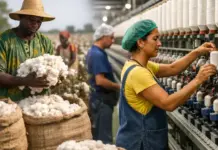
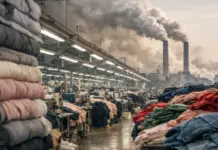





















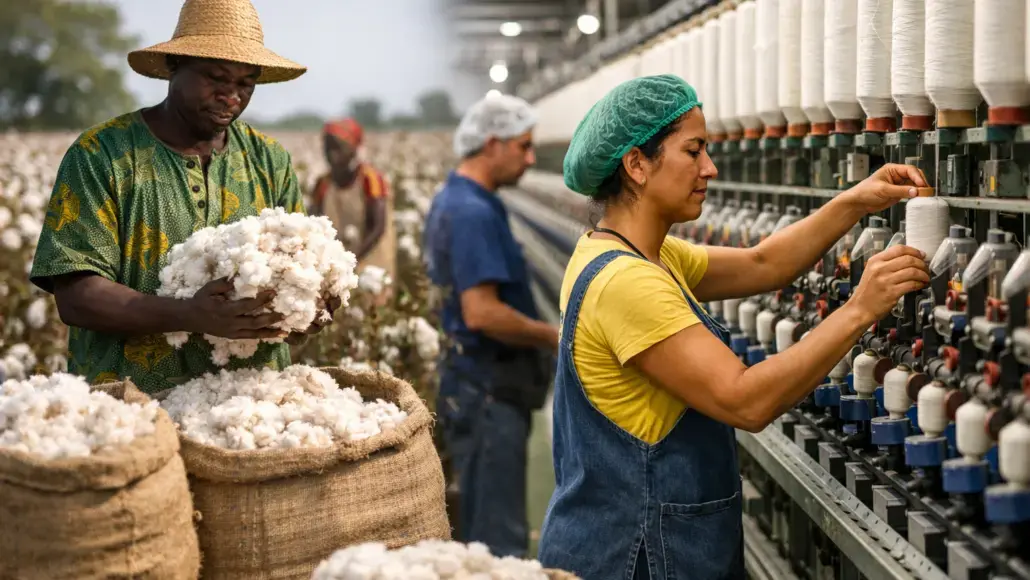
Two of the world’s significant cotton-producing nations — Burkina Faso and Brazil — are making deliberate moves to add more value to their raw cotton by developing stronger linkages toward finished textile production. Both countries are working to shift their cotton economies from exporting raw fiber toward building more robust domestic textile industries, a direction that has been gaining traction among major cotton producers globally.
Burkina Faso’s Drive Toward Domestic Textile Processing
Burkina Faso, one of Africa’s leading cotton producers, has long been dependent on exporting raw cotton fiber, with the bulk of its cotton leaving the country with minimal processing. The country is now pushing to change that narrative by encouraging local investment and infrastructure development aimed at retaining more of the value generated from its cotton output within its own borders.
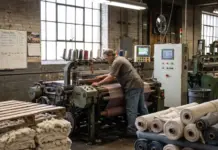
The West African nation is actively working toward strengthening its cotton value addition capacity. By developing spinning, weaving, and garment production capabilities locally, Burkina Faso aims to capture a greater share of the economic benefits that its cotton crop can generate. This approach is viewed as a path to industrialization and job creation, particularly vital for a country whose economy is heavily reliant on agriculture.
Efforts are underway to improve the domestic textile sector’s competitiveness, with an emphasis on upgrading facilities and encouraging private sector participation in textile manufacturing. The goal is to move beyond the role of a raw material supplier and become a more integrated participant in the global textile and apparel supply chain.
Brazil’s Strategic Push in Cotton Value Addition
Brazil, a global powerhouse in agricultural production, is also making strategic moves to deepen cotton value addition within its textile and apparel sector. As one of the world’s top cotton exporters, Brazil has historically been a significant supplier of high-quality cotton fiber to international markets. However, the country is now increasingly focused on retaining more of this value domestically through enhanced cotton processing and finished textile manufacturing.
The Brazilian textile industry, already one of the largest in the world, is working to more tightly integrate its domestic cotton production with its textile manufacturing base. By doing so, Brazil seeks to reinforce the link between its raw cotton output and its finished textile and apparel production, reducing dependence on imported fibers while strengthening the competitiveness of locally produced textiles.
Brazil’s cotton value addition initiatives are being supported by industry bodies and trade associations that recognize the importance of ensuring that cotton grown in Brazil feeds into Brazilian textile mills and, ultimately, into finished garments and textile products manufactured within the country. This integrated approach is seen as a means of making the Brazil textile industry more resilient and self-sufficient.
A Shared Direction for Cotton-Producing Nations
The moves by both Burkina Faso and Brazil reflect a broader recognition among cotton-producing countries that raw fiber export alone leaves significant economic value on the table. By investing in finished textile capabilities and cotton processing infrastructure, both nations are pursuing a path that many industry observers have long pointed to as essential for maximizing the returns from cotton cultivation.
For Burkina Faso, the challenge remains one of scale and infrastructure — building the industrial base needed to support meaningful cotton processing from the ground up. For Brazil, the task is more about deepening and formalizing existing linkages between its well-established cotton farming sector and its large but fragmented textile manufacturing industry.
In both cases, the push toward finished textiles represents an effort to climb higher up the value chain and secure greater economic returns from one of their most important agricultural commodities. Cotton value addition is not merely an industrial objective for these nations — it is increasingly an economic necessity, driven by the recognition that the real margins in the textile business lie not in raw fiber, but in processed, finished, and manufactured textile products.
As both Burkina Faso and Brazil continue to advance their respective strategies, the global cotton and textile community will be watching closely to see how successfully these nations can transition from raw cotton exporters to more fully integrated participants in the finished textiles market.