

















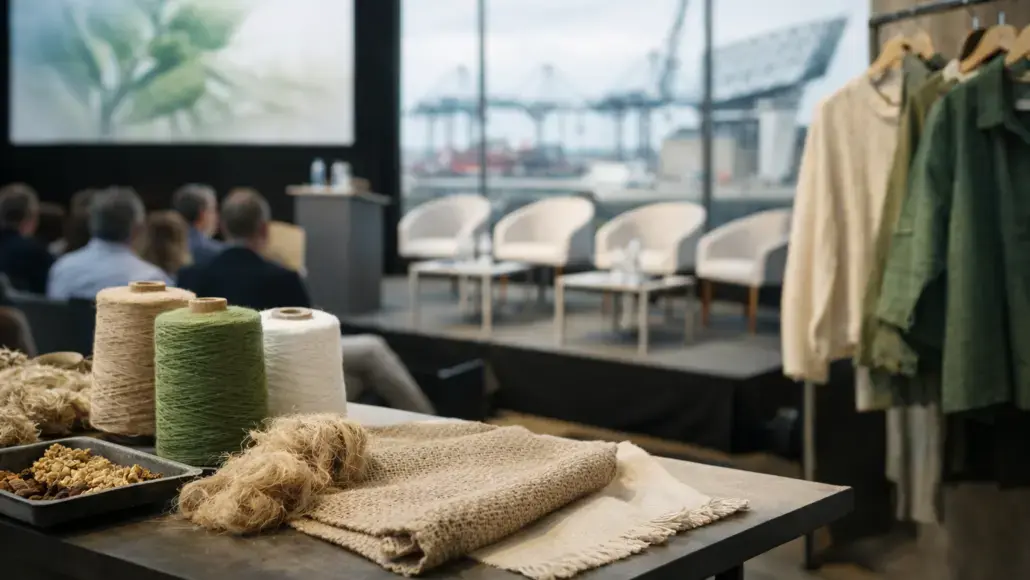
Antwerp, Belgium | September 24, 2026 – The European Technology Platform for the Future of Textiles and Clothing, widely known as Textile ETP, has launched a comprehensive new strategy outlining how Europe’s textile and apparel industry can accelerate its shift toward biobased and circular materials while reinforcing its domestic manufacturing foundations.
The Bioeconomy Innovation Strategy for the European Fibres, Textiles, and Apparel Industry was formally unveiled during the fourth ECOSYSTEX Conference held in Antwerp. Developed between February and August 2026 through Textile ETP’s Circular & Biobased Textiles Innovation Hub, the strategy was shaped in close collaboration with experts spanning the full European biotextile value chain.
The Case for Change: Fossil Dependence and Strategic Risk
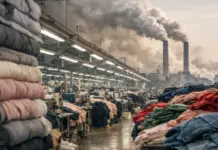
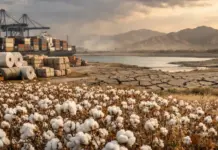
At the heart of the strategy lies a pressing concern — Europe’s growing reliance on fossil-based textile raw materials accumulated over five decades. Textile ETP highlights that rising global fibre consumption continues to be satisfied predominantly through fossil-based synthetics, and that more than 90% of global polyester production capacity is already concentrated in Asia.
This concentration, the organisation argues, places Europe in a position of increasing dependence on a limited number of non-European suppliers for strategically critical textile raw materials. The strategy identifies sustainability, strategic resilience, and competitiveness as three converging pressures that together make the transition both urgent and necessary.
At the same time, Textile ETP points to advances in biomaterials and bioprocessing as emerging opportunities for European manufacturers to differentiate themselves through innovation, intellectual property development, and higher-value production.
“Europe’s EU textile bioeconomy is not only a sustainability opportunity, it is an industrial opportunity,” said Marina Crnoja-Cosic, President of Textile ETP. “Reversing decades of rising fossil dependence can strengthen competitiveness, resilience and strategic autonomy, while creating new industrial value and high-quality jobs.”
A Vision for 2050: Biobased and Circular at the Core
The strategy sets out a long-term vision for 2050 in which biobased and circular materials account for at least half of all fibre consumed within the European Union, with the associated value chains substantially rooted on European soil.
To achieve this, the strategy is structured around four connected layers: feedstock; bio-processing and refining; fibre and material production; and market demand and end-of-life systems.
Within these layers, five core building blocks are identified:
- Biobased feedstocks and biorefinery processes
- Sustainable man-made cellulosic fibres
- Biosynthetics and novel biopolymer fibres
- Sustainably sourced natural fibres
- Bio-chemistry and biobased processing technologies
Three Scenarios Modelled for EU Fibre Consumption
The strategy is underpinned by a quantitative model tracking EU-27 textile fibre consumption from 2000 through to 2050, covering seven end markets and eleven fibre types. Three development scenarios are examined within this framework.
Business-As-Usual
Under this scenario, fossil materials continue to dominate Europe’s fibre base and the competitive standing of European industry progressively weakens.
Circular Biobased Pathway
This scenario combines targeted incentives and investment across recycling infrastructure, bioeconomy innovation, and domestic production capacity to drive a meaningful shift toward sustainable fibres.
Advanced Bioeconomy Scenario
The most ambitious of the three, this scenario is built around a stronger transition to biomanufacturing, biobased materials, and next-generation processing technologies.
Textile ETP advises stakeholders to aim for an outcome falling between the latter two scenarios, with renewable materials accounting for the majority of EU fibre consumption by 2050 and production capacity anchored within European borders. The organisation estimates that achieving this transition could mobilise tens of billions of euros annually across the European value chain and support tens of thousands of direct jobs.
Ten Policy Recommendations and Five Cross-Industry Priorities
The strategy puts forward ten recommendations directed at European policy makers. These combine supply-side measures — such as research funding, formal recognition of biobased materials, and investment in biorefinery capacity — with demand-side measures including public procurement, legislation, and the establishment of trusted sustainability claims.
Textile ETP specifically emphasises that support mechanisms must be designed to remain accessible to small and medium-sized enterprises, which represent a substantial portion of Europe’s textile manufacturing base.
Alongside the policy recommendations, five cross-industry priorities are identified. These include:
- Establishing regional biomanufacturing hubs that connect feedstock production, primary processing, fibre manufacturing, finishing, and circular end-of-life infrastructure
- Building closer ties between the textiles sector and adjacent industries including agriculture, forestry, pulp and paper, chemicals, and biotechnology
- Strengthening sustainability assessment, standards, traceability, and mass-balance accounting for biobased textile materials
- Developing demand-side coalitions supported by green public procurement and long-term off-take agreements
- Creating a pan-European bio-textile skills and talent pipeline
Implementation and Stakeholder Participation
Concrete implementation plans for the key recommendations are expected to be developed through the remainder of 2026 and continuing into 2027. Textile ETP has extended an open invitation to companies, research organisations, and other stakeholders across the sector to participate in this process.
The Circular & Biobased Textiles Innovation Hub, through which the strategy was developed, is co-led by Textile ETP alongside STFI, RISE, Centexbel, Centrocot, and CETI.
Textile ETP describes itself as Europe’s largest network dedicated to textile research and innovation, connecting industry, research, education, and cluster organisations. The Bioeconomy Innovation Strategy represents the platform’s most detailed articulation to date of how European circular textiles and biobased fibres can become genuine pillars of the continent’s long-term industrial competitiveness.