


























A recent study led by Warren Jasper, a professor at Wilson College of Textiles in the US, reveals how machine learning can significantly minimize waste in textile manufacturing by enhancing the precision of color predictions during the dyeing process.
The research, titled “A Controlled Study on Machine Learning Applications to Predict Dry Fabric Color from Wet Samples: Influences of Dye Concentration and Squeeze Pressure,” tackles a persistent issue in the industry: forecasting the appearance of dyed fabric once it dries.
Fabrics are dyed in their wet state, yet their colors frequently alter during the drying phase. This variation complicates manufacturers’ ability to ascertain the final look of the material during production. The challenge is exacerbated by the non-linear nature of color changes from wet to dry, which differ across various shades, rendering it impossible to generalize data from one color to another, as highlighted in the paper co-authored by Samuel Jasper.
“The fabric is dyed while wet, but the target shade is when it’s dry and wearable. That means that, if you have an error in coloration, you aren’t going to know until the fabric is dry. While you wait for that drying to happen, more fabric is being dyed the entire time. That leads to a lot of waste, because you just can’t catch the error until late in the process,” Warren Jasper explained.
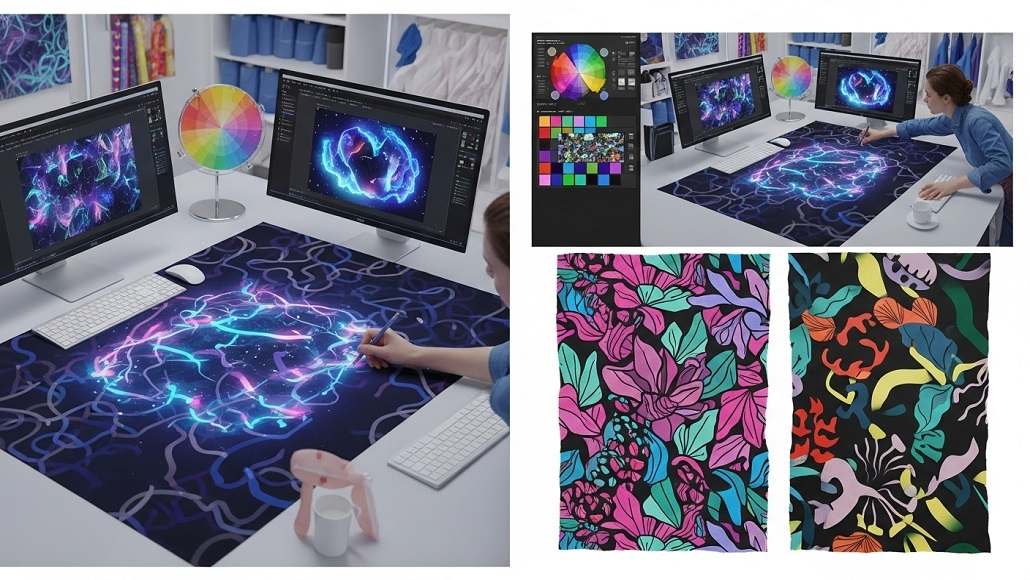
To tackle this issue, Jasper created five machine learning models, including a neural network specifically designed to address the non-linear relationship between wet and dry color states. These models were trained using visual data from 763 fabric samples dyed in a range of colors. Jasper mentioned that each dyeing process required several hours, making data collection a laborious endeavor.
All five machine learning models surpassed traditional non-ML methods in predicting the final color of the fabric, with the neural network demonstrating the highest level of accuracy. It achieved a CIEDE2000 error as low as 0.01 and a median error of 0.7. In contrast, the other machine learning models recorded error rates between 1.1 and 1.6, while the baseline model exhibited errors as high as 13.8.
The CIEDE2000 formula serves as a recognized standard for measuring color differences, and in the textile sector, values exceeding 0.8 to 1.0 are typically deemed unacceptable.
By facilitating more precise predictions of the final fabric color, the neural network has the potential to aid manufacturers in avoiding costly dyeing errors and decreasing material waste. Jasper expressed optimism that similar machine learning tools would see broader adoption in the textile industry to enhance efficiency and sustainability.
“We’re a bit behind the curve in textiles. The industry has started to move more toward machine learning models, but it’s been very slow. These types of models can offer powerful tools in cutting down on waste and improving productivity in continuous dyeing, which accounts for over 60 percent of dyed fabrics,” Warren stated.