



























The Evolution of Corporate Identity Through Fabric
The days of the ill-fitting, scratchy polo shirt emblazoned with a cheap screen-printed logo are effectively over. In the last decade, the promotional and corporate apparel sector has undergone a radical transformation, moving from a commodity-based industry to a value-driven marketplace that mirrors the sophistication of retail fashion. Today, promotional corporate apparel trends are not merely about slapping a logo on a garment; they are about integrating brand identity with lifestyle, sustainability, and technical performance.
As businesses navigate a post-pandemic world, the definition of “workwear” has expanded. The rigid boundaries between “office clothes” and “weekend clothes” have eroded, giving rise to a demand for versatility that challenges suppliers to innovate. For decision-makers in marketing and procurement, understanding these shifts is no longer optional—it is critical for ensuring that branded merchandise actually generates ROI rather than ending up in a landfill. The modern employee and consumer are discerning; they recognize quality, they demand ethical production, and they expect their corporate gear to look as good as the brands they buy for themselves.
The “Resimercial” Shift: Hybrid Workwear Dominance
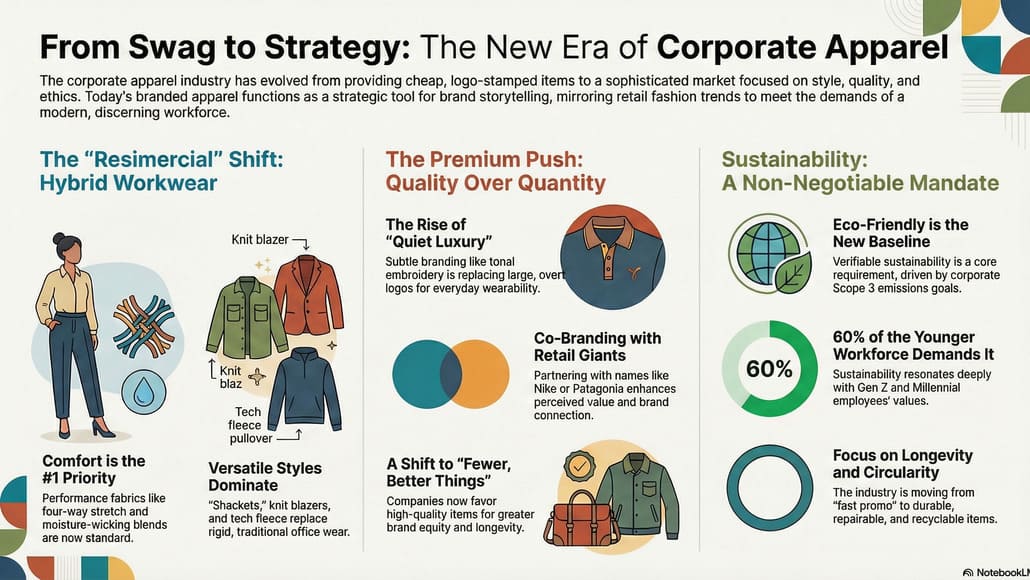
The most immediate visual shift in the market is the rise of “resimercial” apparel—a hybrid of residential comfort and commercial professionalism. With remote and hybrid work models becoming permanent fixtures for millions of employees, the stiff dress shirt and tie have largely been replaced by “elevated basics.”
Redefining the professional silhouette
The market is currently favoring unstructured blazers made from knit fabrics, “shackets” (shirt-jackets) that bridge the gap between outerwear and office wear, and performance polos that offer the look of a collar with the feel of activewear. This trend is driven by the practical reality of the modern workday, which might involve a Zoom call from a home office, a commute to a client lunch, and an evening errand run.
Comfort meets innovation
Fabrics previously reserved for high-performance athletics—moisture-wicking blends, four-way stretch materials, and odor-resistant treatments—are becoming standard in corporate uniforms. Data suggests that comfort is now the single highest priority for end-users. If a branded piece isn’t comfortable, it won’t be worn, and the brand impression is lost. Consequently, we are seeing a surge in “tech fleece” and heavyweight, high-quality t-shirts that offer a streetwear aesthetic suitable for video conferences.
The Premiumization of Branded Merchandise
There is a distinct move away from quantity toward quality. This phenomenon, known as “premiumization,” sees companies spending more per unit on fewer items. The rationale is straightforward: a single, high-quality North Face jacket with a subtle corporate logo offers significantly higher brand equity and longevity than fifty cheap, disposable t-shirts.
Retail brand partnerships
To achieve this premium feel, corporate buyers are increasingly turning to established retail brands. Co-branding with recognized names like Patagonia, Nike, Carhartt, and Yeti transfers the perceived value of those retail giants to the corporate entity. When an employee receives a branded item from a company they already trust and admire, the emotional connection to the employer or partner brand is instantly strengthened.
Intelligent simplicity and quiet luxury
Aligning with the broader fashion trend of “quiet luxury,” corporate apparel is becoming less loud. Giant, chest-spanning logos are being replaced by tonal decoration—black-on-black embroidery, subtle hem tags, or debossed leather patches. This “intelligent simplicity” makes the garment more wearable in social settings, increasing the likelihood that the brand will be seen in public spaces beyond the office walls.
Sustainability: From Nice-to-Have to Non-Negotiable
Perhaps the most profound of all promotional corporate apparel trends is the mandate for sustainability. In 2025, eco-friendly sourcing is no longer a differentiator; it is a baseline requirement for entry into the supply chains of Fortune 500 companies.
The scope 3 emissions challenge
Large corporations are under immense pressure to report and reduce their Scope 3 emissions (indirect emissions in their value chain). This means they are scrutinizing their merchandise suppliers like never before. They require data on water usage, carbon footprint, and labor practices. Apparel made from recycled polyethylene terephthalate (rPET), organic cotton, and regenerative hemp is seeing double-digit growth.
Circularity and longevity
The concept of “fast fashion” in the promo world is dying. The new focus is on “slow promo”—garments designed to last for years, not months. Innovative programs like “Worn Wear” for corporate gear are emerging, where companies facilitate the repair or recycling of old uniforms rather than discarding them. This shift not only helps the planet but also tells a compelling brand story that resonates deeply with Gen Z and Millennial workforces, 60% of whom prioritize sustainability in their purchasing decisions.
Global Market Dynamics and Growth Statistics
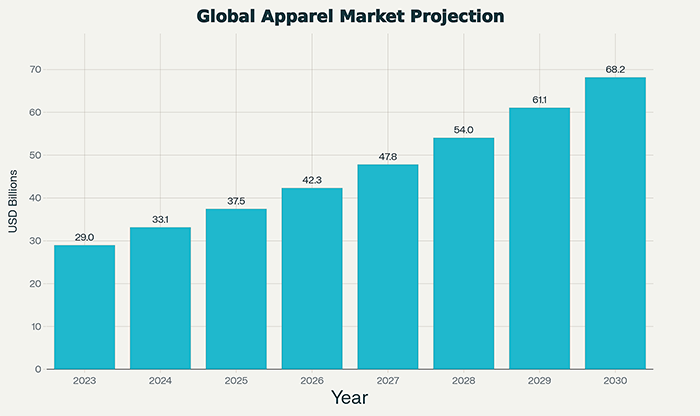
To understand the scale of these changes, we must look at the hard numbers. The sector, often referred to technically as the “Decorated Apparel Market,” is on a robust growth trajectory.
Regional market nuances
While North America remains a stronghold for premium branded merchandise, the Asia Pacific region is emerging as a dominant force, accounting for approximately 40% of the global market share. This is driven by rapid industrialization in markets like India and China, where the demand for safety workwear and corporate uniforms is skyrocketing. However, the European market is leading the charge on regulatory sustainability, pushing the rest of the world toward stricter compliance regarding textile waste and chemical safety (REACH standards).
Technology Integration in Supply Chain and Product
Technology is reshaping the industry from two angles: the functionality of the garment itself and the efficiency of its creation.
Smart fabrics and iot
In the industrial sector, high-visibility vests and hard hats are being equipped with IoT sensors that monitor heat stress, fatigue, and location. This transforms the uniform from a passive safety requirement into an active life-saving device. While still a premium niche, these “smart uniforms” represent the future of industrial corporate wear.
On-demand manufacturing
On the supply side, AI and digital printing technologies are enabling “on-demand” production. Instead of warehousing thousands of units of pre-printed inventory (which risks obsolescence), companies can now use print-on-demand services to produce individual units as they are ordered. This model drastically reduces waste and allows for a higher degree of personalization, such as adding an individual employee’s name to a jacket without high setup costs.
Future Outlook: The Strategic Imperative
As we look toward 2030, the trajectory for promotional corporate apparel trends is clear. The market will continue to shed its reputation for cheap “swag” and evolve into a sophisticated channel for brand storytelling. The winning suppliers and distributors will be those who can offer a seamless blend of retail-level style, verifiable sustainability, and technological integration.
For the corporate buyer, the lesson is simple: apparel is communication. Every thread, every fabric choice, and every design decision speaks volumes about the company’s values. In an era where talent retention and brand reputation are paramount, investing in high-quality, sustainable, and stylish corporate wear is not an expense—it is a strategic asset. The future of corporate apparel is not just about wearing a brand; it is about embodying it.