
























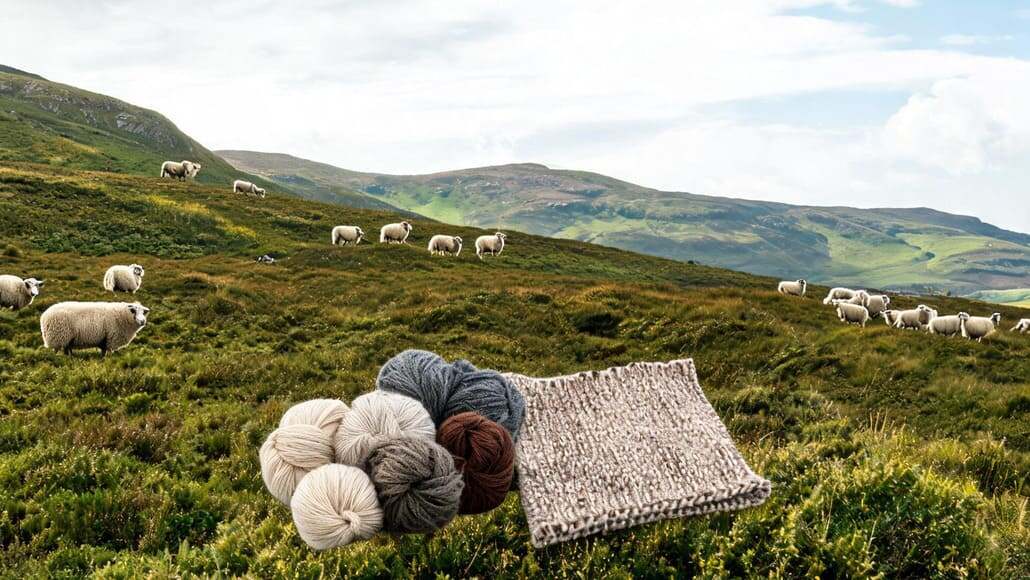
For much of the past several decades, wool once a cornerstone of the British rural economy was treated more as an afterthought than an asset. Prices were persistently low, consumer interest was waning, and many sheep farmers across the country came to regard wool as little more than a by-product of meat production. Yet something has shifted. Across Scotland and the broader UK, demand for Scottish wool is climbing again, and the reasons behind this resurgence are deeply rooted in changing consumer values, evolving fashion sensibilities, and a global reckoning with the environmental cost of synthetic materials.
This is not simply a nostalgic return to old ways. The Scottish wool revival is taking shape as something more considered and specialised a market transformation in which certain fibres, most notably Shetland wool, are commanding renewed attention and achieving prices that would have seemed ambitious just a generation ago.
Sustainability Is Rewriting the Case for Natural Fibres
At the heart of this renewed interest in British wool lies a fundamental shift in how consumers and brands think about the materials they buy. The environmental consequences of synthetic fibres from microplastic pollution to carbon-intensive manufacturing have become a growing concern, and that concern is now actively reshaping purchasing decisions across the global textile industry.
Wool offers a genuinely compelling counter-proposition. It is renewable, naturally biodegradable, and produces no microplastic waste during use or washing. In an era where sustainable wool is no longer a niche talking point but a mainstream expectation, these qualities have repositioned wool as a forward-looking premium material rather than a relic of an older industrial age. For brands navigating increasing regulatory and reputational pressure around sustainability, wool and particularly traceable, regionally specific fibres like Scottish wool provides a credible and marketable answer.
Heritage Fashion and Cultural Identity Are Fuelling Demand
Beyond environmental considerations, the cultural moment has also proven remarkably favourable for Scottish wool. Traditional British styles — tweed jackets, heritage knitwear, countryside-inspired outerwear — have experienced a significant resurgence in popularity. This aesthetic revival has been embraced not only by established luxury houses but also by a younger generation of consumers drawn to authenticity, craft, and a certain quiet permanence in the things they wear.
Scottish wool sits naturally at the centre of this narrative. Its associations with skilled craftsmanship, rural provenance, and centuries of textile tradition give it a cultural depth that mass-produced synthetic alternatives simply cannot replicate. For designers working within the heritage fashion space, sourcing from Scottish producers is increasingly both a practical and a storytelling decision.
Transparent Supply Chains Add Another Layer of Value
Alongside the aesthetic appeal, there is a growing appetite among consumers for transparency — for knowing precisely where a product originates and how it has been made. Scottish wool fits neatly into this demand. Its traceability, its clear link to specific rural communities, and its connection to long-established traditional skills all add layers of value that extend well beyond the physical qualities of the fibre itself. For manufacturers and designers alike, this transforms wool from a raw material into part of a broader, more compelling story about authenticity and responsible sourcing.
Why Shetland Wool Stands Apart in Today’s UK Market
Not all wool is experiencing the same trajectory, and it is important to understand that the UK wool market encompasses an enormously diverse range of fibre types with very different characteristics and commercial fortunes. Within this varied landscape, Shetland wool has emerged as one of the most in-demand and commercially dynamic fibres available.
What makes Shetland wool distinctive is a rare combination of qualities. It offers a fine texture and exceptional warmth relative to its weight, making it particularly prized in Scottish knitwear and high-end clothing applications. Unlike purely luxury fibres, it also possesses a natural durability that suits everyday wear. This places it in a uniquely advantageous position — soft enough for direct skin contact, robust enough to last, and deeply associated with a regional identity that carries genuine weight in premium and export markets.
Demand for Shetland wool has grown steadily among independent designers, established fashion brands, and conscious consumers seeking high-quality natural fibres with a clear and verifiable origin story. Its strong brand identity — rooted in the specific landscapes, sheep breeds, and communities of the Shetland Islands — gives it a provenance premium that few other UK wool types can match.
How Other UK Wool Types Compare
The picture for other British wool varieties is more mixed. Coarser lowland wools, while benefiting in part from the broader push toward sustainable materials, face a fundamentally different market. These fibres are generally less suited to clothing and find their applications instead in carpets, acoustic and thermal insulation, and upholstery. Demand in these sectors is steady and is growing in line with the construction and interiors industries’ increasing interest in sustainable alternatives, but it is price-sensitive and far less influenced by the fashion-driven premiums that benefit finer wools.
Mid-range wool types — including many of those used in tweed and traditional structured outerwear — occupy a more promising middle ground. The popularity of heritage fashion has given these fibres a modest but meaningful revival. They offer durability and a characterful texture suited to tailored garments, and they benefit from many of the same provenance and sustainability narratives driving interest in Scottish wool more broadly. Even so, they do not command the same premium positioning as Shetland wool, which benefits from a sharper, more globally recognisable identity and greater versatility across clothing categories.
Value Over Volume: A Strategic Shift for the Industry
Perhaps the most significant structural change in the current market is that growth is being driven by value rather than volume. The UK wool market is no longer attempting to compete with cheap synthetic fibres on the basis of price alone — that battle was effectively lost decades ago. Instead, the industry is repositioning itself as a producer of high-quality, sustainable, and story-rich materials for niche and premium markets where price sensitivity is lower and brand differentiation matters enormously.
This shift is allowing certain wool types — particularly those with distinctive physical qualities or strong regional branding — to achieve meaningfully higher prices, even as overall production volumes remain relatively stable or in some areas continue to decline. For Shetland wool and, to a lesser extent, other premium Scottish fibres, this dynamic creates genuine commercial opportunity.
Challenges That Still Confront the Sector
It would be premature, however, to describe what is happening as an unqualified renaissance. Synthetic fibres continue to dominate the global textile market by volume, driven by cost advantages and manufacturing scalability that natural fibres cannot easily match.
Many sheep farmers across the UK still depend more on meat sales than wool as their primary source of income. Ongoing labour constraints—especially the shortage of skilled shearers—continue to challenge the sector’s long-term sustainability. Against this backdrop, the recent uptick in demand is better understood as a rebound rather than a full-scale revival.
Overall, interest in Scottish wool is growing, but this growth mirrors wider shifts in the global marketplace. Today, sustainability, provenance, and quality are taking precedence over the former emphasis on high-volume, low-cost production.
In this changing environment, Shetland wool has emerged as a particularly sought-after fibre, thanks to its distinctive blend of performance, heritage, and strong brand appeal.
At the same time, other varieties of UK wool are carving out niches, especially in areas like eco-friendly construction and heritage-led fashion. Looking ahead, the industry’s success will likely depend on its ability to position itself at the premium end and stand apart in an increasingly crowded market.