

























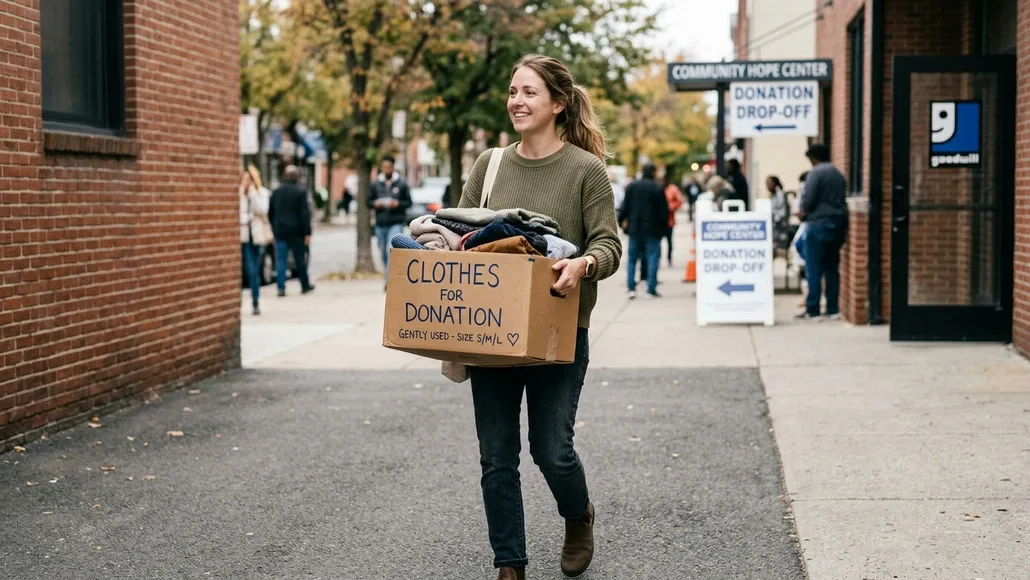
A bag of unwanted shirts dropped at a charity shop can feel like a small act of responsibility. Clear the closet, do some good, and keep textiles out of landfill or so the familiar narrative goes. For years, the public-facing story has been simple: donate what you no longer wear, and someone else will use it.
The reality is more complex, and in many cases, far more unsettling. In cities where clothing consumption is high, donation systems are now receiving volumes that outstrip what local secondhand shoppers can absorb. That imbalance has quietly reshaped what donation means in practice, turning it into a sorting-and-disposal challenge as much as a pathway to reuse.
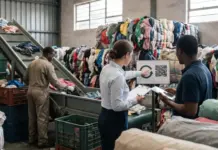
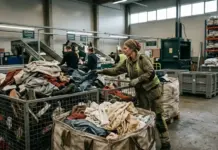
Understanding where donated clothes go begins behind the scenes, long before anything reaches a rack. Donations typically flow to charity warehouses and commercial collectors where items are graded quickly. The best pieces clean, durable, and still desirable may be priced and sold locally. That is the part people see, and it reinforces the idea that donation automatically equals reuse.
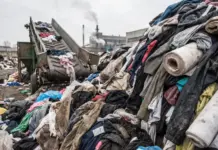
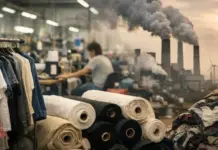
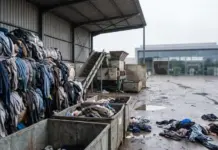
But charities and collectors are flooded. The incoming stream is so large that most organisations cannot sell more than a fraction of what they receive. What remains is a mixture of low-demand garments, inconsistent quality, and fast-fashion pieces that have already been worn hard or were never built to last. Some of it is discarded domestically because it is damaged or contaminated. Much of it is bundled into bales and exported, often thousands of kilometres away, to secondary markets.
This is the uncomfortable truth about where donated clothes go: the problem doesn’t disappear when the clothing leaves the country. Exporting simply shifts the pressure to other places—often to communities with less capacity to manage textile waste, fewer formal recycling routes, and limited landfill alternatives. The environmental and economic burden is redistributed rather than resolved.
At Global Textile Times, the reporting and data point to a clear conclusion: donation has been mistaken for a circularity solution when it is, at best, a collection mechanism. When donation is expected to “fix” overconsumption and overproduction, it becomes a pressure valve that moves surplus textiles elsewhere instead of preventing them. The circular economy cannot be built on overflow management; it requires fewer garments entering the system, better products staying in use longer, and local infrastructure that can actually handle what is collected.
Multiple city-based tracking efforts have found the same pattern across wealthy regions like Austin, Toronto, Melbourne, and Oslo: high donation volumes, limited local demand, and heavy reliance on exports. The system may vary by country, but the structural logic repeats—too many garments coming in, too little resale capacity, and too few local options for repair, remanufacture, or recycling at scale.
The strain also exposes a mismatch between what charities are designed to do and what they are being asked to do. Charity shops exist to fund social programmes and support communities, not to operate as a de facto waste-management industry for the fashion sector. Yet rising donation volumes have pushed them into exactly that role. Sector observers note that society has grown used to charities doing the heavy lifting, even though many have been unable to fully handle the volume of donated clothes for a long time. These organisations are driven by social welfare values and must raise funds for their programmes, but their operations are often ill-equipped to deal with the sheer scale of textiles that now need to be reused or recycled.
The deeper cause is not what happens at the donation bin; it starts well before that. Two forces dominate: oversupply and overconsumption. Clothing has become cheaper, faster, and increasingly disposable. People buy more items than they need, wear them fewer times, then offload them quickly often with the belief that donation neutralises the impact. Meanwhile, garment quality has deteriorated in many segments. Fibres and construction often can’t withstand multiple owners, and blended materials can be difficult to recycle. Even the most efficient sorting operation cannot turn fragile, low-quality products into endless reuse.
There is a knock-on effect, too. When donation streams are dominated by low-grade items, they can weaken local secondhand markets. Resale businesses may struggle to source consistently wearable clothing from local inflows and, in some cases, import higher-quality secondhand product to meet customer expectations. More donations do not automatically translate to more successful reuse; in saturated systems, more donations can simply mean more waste.
This is where the idea of “sufficiency” becomes essential. Recycling and reuse matter, but they cannot solve an ever-rising volume problem on their own. Sufficiency means buying less, keeping clothes longer, and repairing rather than replacing. Without sufficiency, “circularity” becomes a permanent exercise in dealing with excess.
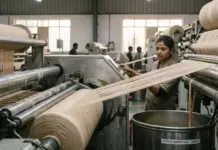
Cities have a decisive role to play. The study’s recommendations echoed by a growing body of urban circularity work suggest that textiles need to be treated as a managed material stream, not as a charity issue. That requires investment in local collection, sorting, and processing capacity, so that wearable items are routed into resale, repairable pieces are channelled into services, and non-reusable textiles are dealt with through local recycling or responsible disposal rather than being exported by default.
Practical changes can help keep clothes in use longer: accessible repair services, mending education, swap events, and support for circular businesses through grants or reduced rent. Urban planning choices also matter. When cities centre new-mall development while repair cafés and resale shops are pushed to the outskirts, they design a landscape where fast fashion has the advantage. Some European cities are beginning to rebalance this by offering incentives to repair and reuse businesses, recognising that circularity needs convenience and visibility to compete.
Advertising and promotion can amplify or undermine these efforts. Fast fashion dominates public attention with budgets and prime locations, while secondhand and repair often operate quietly. Researchers argue that cities should actively amplify reuse ecosystems through grants, lower rents, and better high-street placement while limiting the dominance of fashion advertising in public spaces. When secondhand and repair are harder to find, and new fashion is everywhere, the system all but guarantees that fast consumption wins.
For individuals, the message is straightforward, if not always comfortable: the most meaningful impact comes from reducing the rate of buying and discarding. Wear what you own more, repair early, and buy better when you must buy new. Donate only what is clean, wearable, and likely to be reused and remember that donation is not a moral “reset,” but one step in a system under strain.
Donating can still be valuable, but it is not a magic solution. Many donated garments will travel across borders. Some will be resold. Too many will still end up as waste just in a different country. The real fix requires change at every level: brands that slow production and improve quality, cities that build local textile systems, and consumers who treat clothing as durable goods rather than short-lived purchases. Only then does the path of donation begin to align with the responsibility people hope it represents.

